No anonymous crypto: EU’s new AML laws to cap large transfers, ban privacy coins
EU crypto users and players are set of double regulatory pressure by next year.



The European Union (E.U) zone is set for tougher crypto regulation in 2027 as a new anti-money laundering (AML) policy goes live. The AML law, first issued in 2024, will officially go into effect from July 2027.
It will cap payment transfers at €10,000 and ban privacy coins like Zcash.
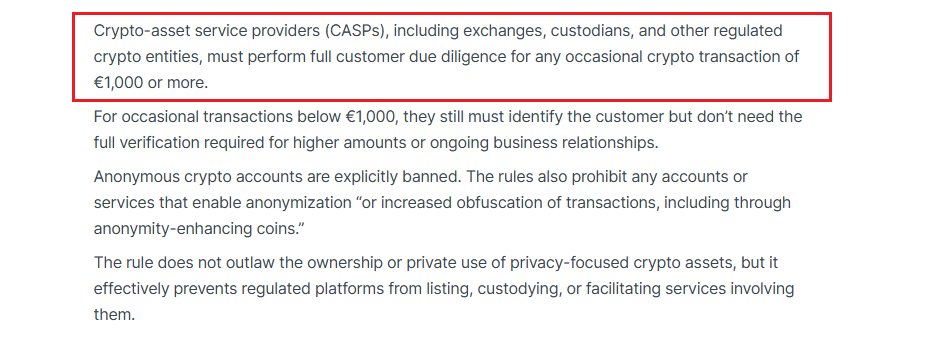
Additionally, there will be increased crypto identity checks via mandatory KYC (know your customers). In other words, no anonymous crypto accounts in a bid to curb illicit capital flows that aid terrorism financing.
Like most countries pushing for strict crypto capital controls, the EU’s move is heavily influenced by G7-backed FATF (Financial Action Task Force). The organization sets standards against money laundering and terrorist financing.
But the timeline for the AML laws has raised more questions.
Is the EU paving the way for digital euro?
According to some market watchers, the implementation timeline was not purely coincidental. Notably, the European Central Bank (ECB) digital euro is set to formally begin its testing phase in mid-2027.
The holding of digital euro, which is a Central Bank Digital Currency (CBDC), will be capped for individuals at €3K to €4K, while businesses will have no limits. However, one analyst pointed out that banning privacy coins and strict KYC are meant to kill competition for the digital euro.
Squeeze every private alternative right as your own product goes live. Cash gets capped, privacy coins get delisted, crypto gets ID-tagged, and the digital euro shows up with no competition left standing. All purely coincidental!
The scheduled AML laws will kick off a year after the EU’s broader crypto regulatory framework, MiCA, deadline set for 1st July, 2026.
The MiCA deadline alone is projected to affect 60% of E.U crypto users. In fact, most of the exchanges, including Binance, have not been granted an operating license.
For Coingecko CEO Bobby Ong, Binance, the world’s largest crypto exchange, may opt to buy out another exchange with a MiCA license in the next few days.

Still, the few MiCA-compliant platforms will have to adhere to strict AML laws by mid-2027. Interestingly, Tether, the world’s largest stablecoin issuer, is not interested in the EU market amid strict regulation.
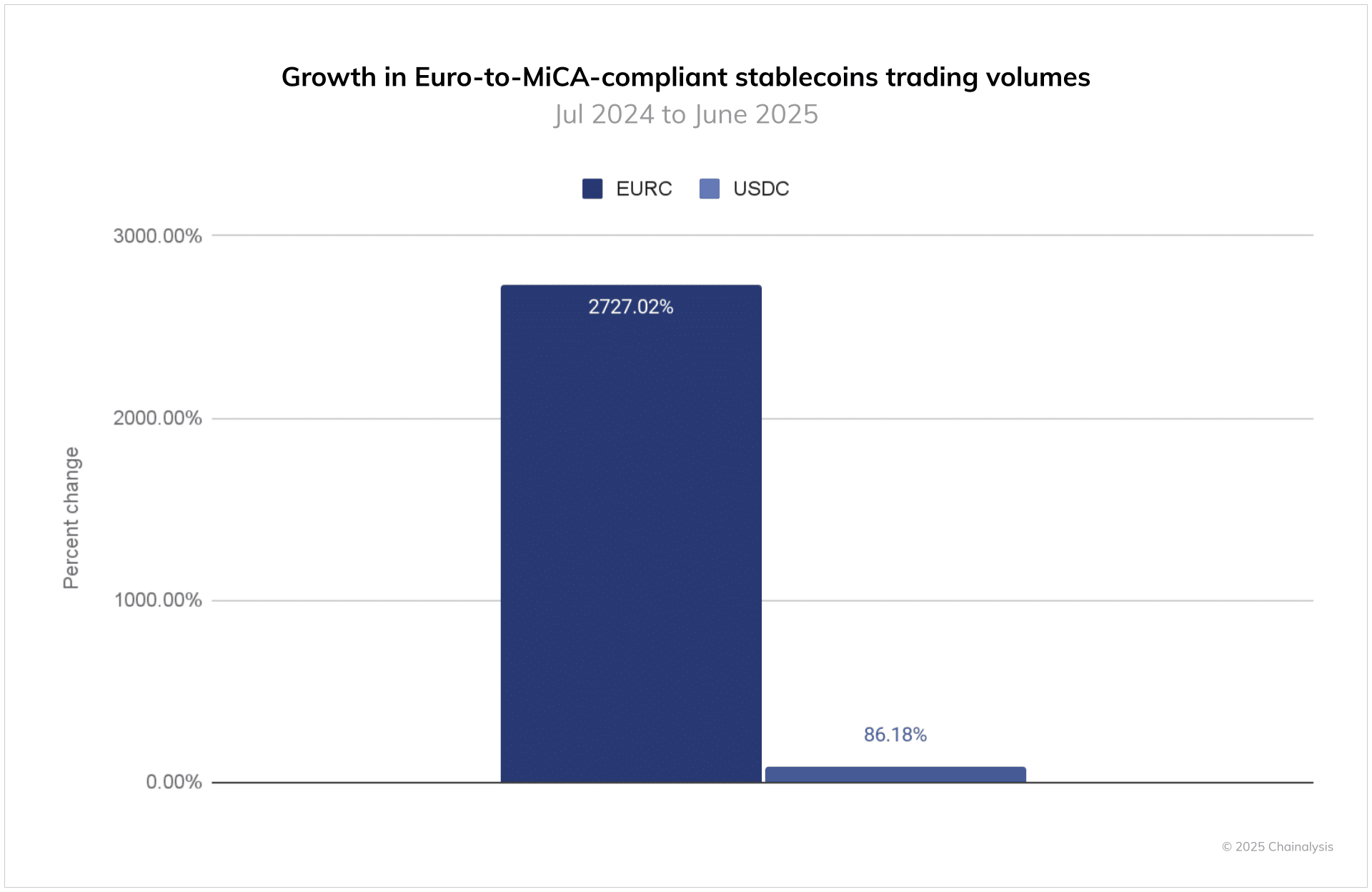
This has made its rival, Circle’s EURC (Euro-based stablecoin), gain prominence, according to Chainalysis. But it remains to be seen whether the MiCA and AML laws will affect broader crypto adoption across the continent.
Final Summary
- After the MiCA deadline next month, strict crypto AML laws and caps will follow from 2027.
- Analysts speculated that the AML deadline would help push the ECB’s digital euro rollout.