



Suspicion surrounding geopolitical prediction markets increasingly intensified after nine connected Polymarket wallets reportedly generated over $2.4 million from Iran war betting activity.
Investigators already linked the cluster to more than 80 highly accurate positions with reported win rates near 98%.
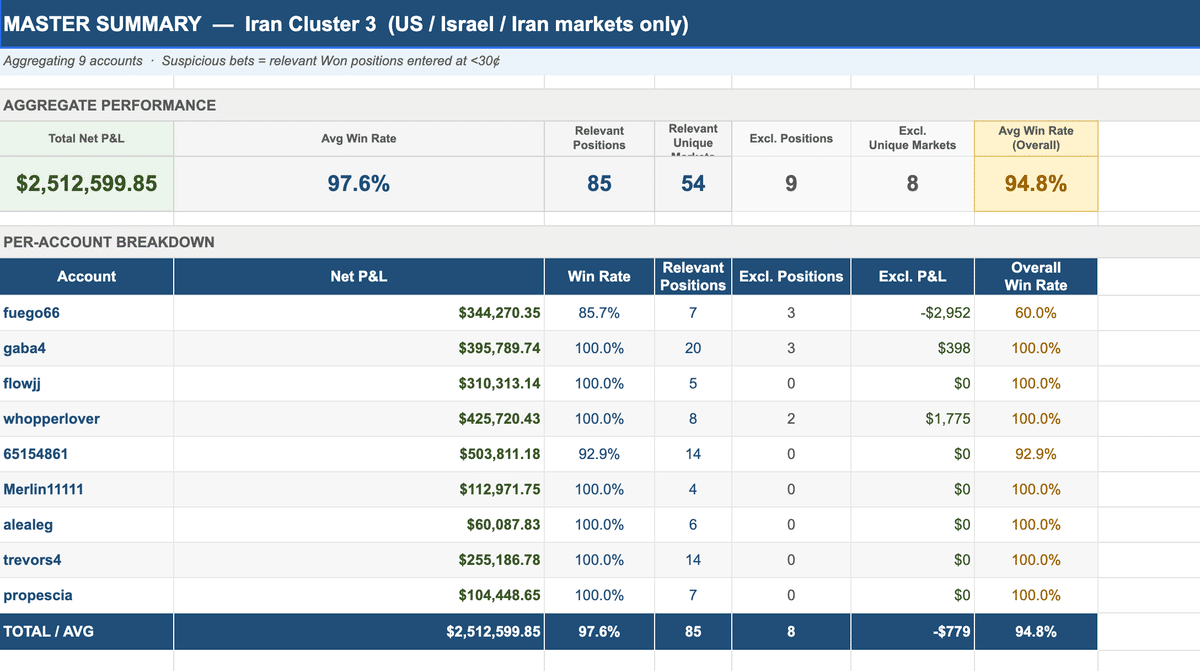
Those accounts allegedly predicted the exact timing of U.S. strikes, leadership developments, and eventual ceasefire announcements before broader public confirmation emerged.
Bubblemaps Co-Founder and CEO Nicolas Vaiman later stated that statistical probability alone could not reasonably explain the trading precision behind those positions.
Scrutiny also strengthened after authorities indicted a U.S. Army soldier last month for allegedly using classified intelligence to earn over $400,000 through Polymarket activity. Meanwhile, prediction market volume on military outcomes surpassed $1 billion during 2026.
That progression increasingly exposed insider-information risks across anonymous geopolitical betting markets.
Political betting rapidly reshapes prediction markets
As insider-trading concerns increasingly spread across prediction markets, speculative capital also continued accelerating into geopolitical and regulatory event trading.
TRM Labs data already showed monthly prediction market volume expanding from roughly $1.2 billion during early 2025 toward nearly $20 billion by early 2026.

That momentum strengthened further once traders increasingly treated military developments, political shifts, and crypto legislation like tradable financial assets.
Polymarket users also currently assign nearly 64% odds for the CLARITY Act becoming law during 2026, beneath roughly $952,000 in cumulative contract volume.
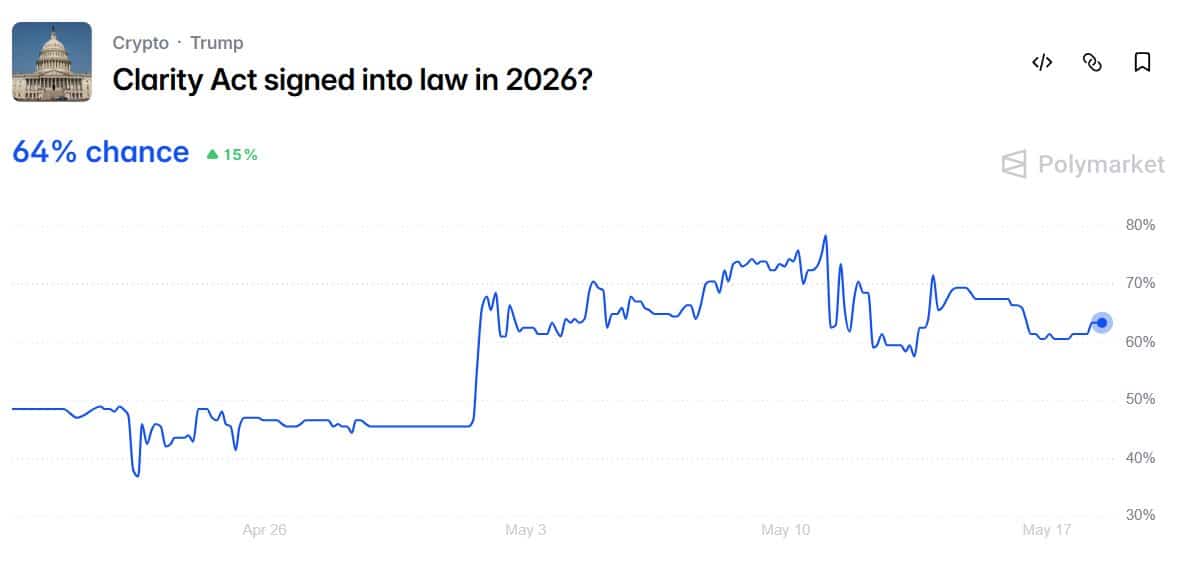
Legislative sentiment, meanwhile, continued to fluctuate sharply around Senate proceedings and committee developments, reinforcing broader positioning volatility. However, growing liquidity and political sensitivity increasingly raise informational asymmetry risks across anonymous betting markets.