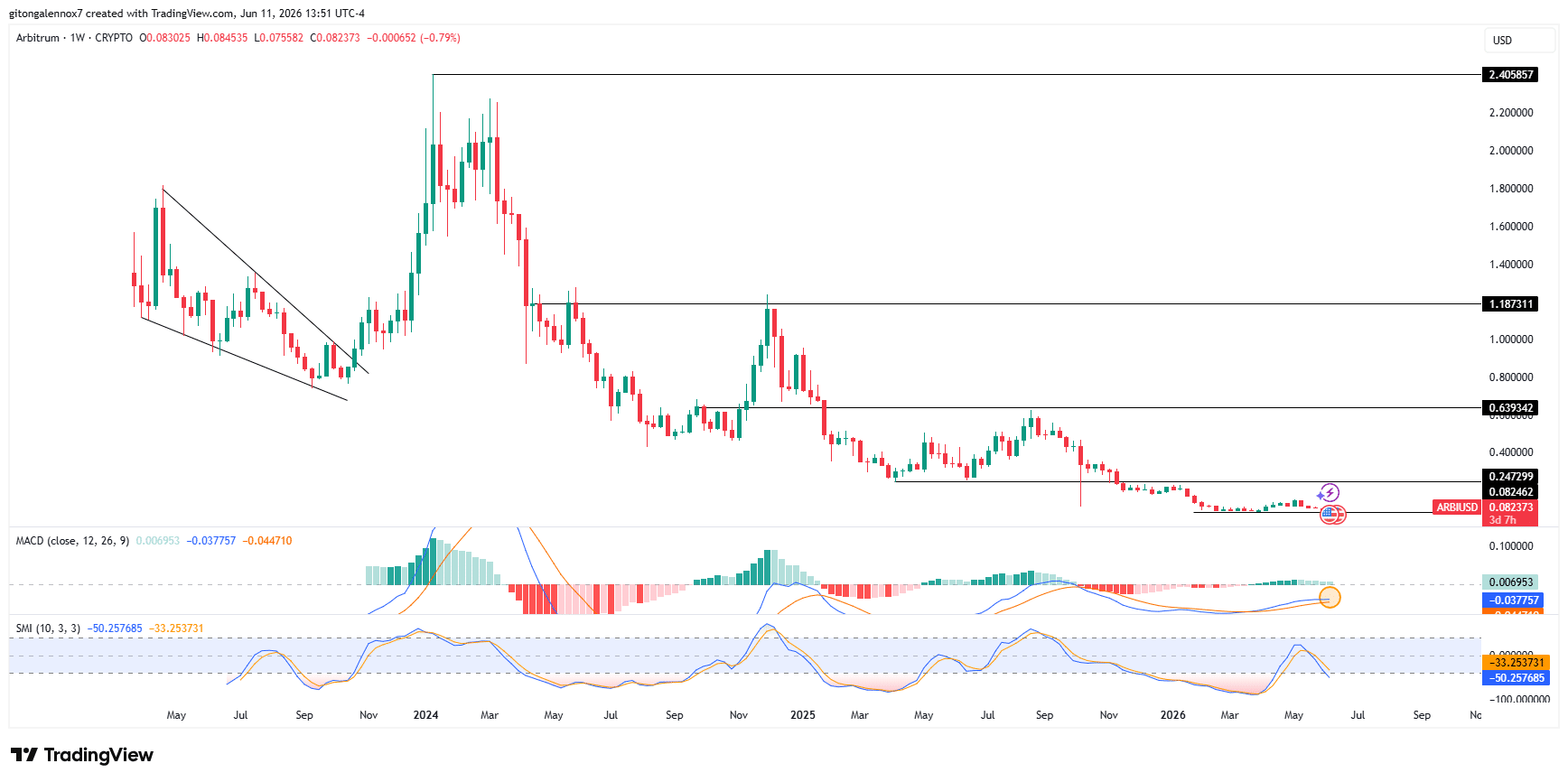
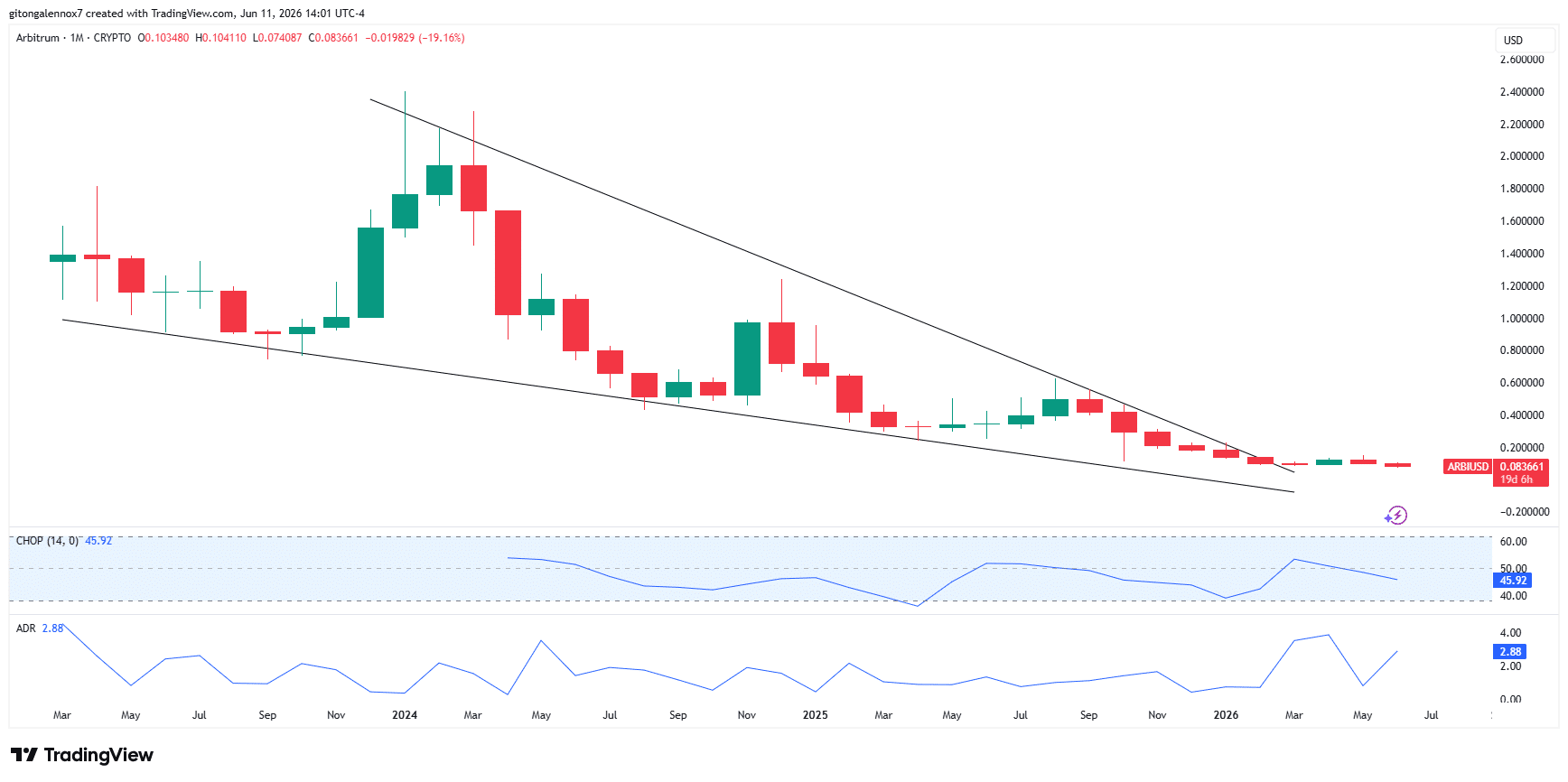
Arbitrum One is a Layer-2 blockchain built on Ethereum [ETH]. Its native governance token is ARB.
The network was launched on the 31st of August, 2021, after being developed by Offchain Labs. The company was co-founded by Steven Goldfeder, who serves as CEO; Ed Felten, Chief Scientist; and Harry Kalodner, Chief Technology Officer [CTO].
Offchain Labs later moved Arbitrum toward a decentralized governance model through the Arbitrum DAO.
Arbitrum was designed to make Ethereum transactions faster and cheaper. It does this through Optimistic Rollups, Optimistic Assumptions and Fraud Proofs. These mechanisms allow the L2 blockchain to process transactions off-chain while inheriting security from Ethereum’s main network.
Before launch, Offchain Labs raised capital across several funding rounds. Its Series B round raised $120 million, led by Lightspeed Venture Partners. Other early backers included Pantera Capital, Polychain Capital, Coinbase Ventures and Mark Cuban.
Capital has continued flowing into the Arbitrum ecosystem. Arbitrum Gaming Ventures committed about $10 million to game developers, alongside institutions such as Paradigm and Framework. Other major names linked to the blockchain’s ecosystem expansion include BlackRock, Franklin Templeton, PayPal, GMX and Aave.
Arbitrum launched ARB with a fixed total supply of 10 billion tokens. The Arbitrum DAO Treasury received 42.78% of the supply. The team, future teams and advisors received 26.94%. Investors received 17.53%, individual wallets received 11.62%, and ecosystem DAOs received 1.13%.
According to current CoinMarketCap data, ARB’s unlocked circulating supply stood at 5.57 billion tokens. This represented 55.71% of the total supply. By April 2027, the unlocked supply is expected to reach 66.46%.
ARB does not have an automatic burn mechanism because Arbitrum uses ETH for gas fees. However, ARB has a 2% annual inflation rate, which began in March 2024 to fund ecosystem growth and development. Separately, ARB buybacks using excess ETH accumulated by the Arbitrum DAO are permanently burned.
After its mainnet launch in August 2021, Arbitrum introduced a major upgrade called Arbitrum Nitro in August 2022. Nitro reduced fees and improved Ethereum Virtual Machine compatibility by moving the execution engine to a WebAssembly architecture.
In March 2023, Arbitrum launched its governance token, ARB. In August 2024, Arbitrum Orbit went live, allowing developers to build Layer-3 chains using ARB or ETH.
Several developments are currently shaping Arbitrum’s roadmap. Arbitrum Stylus has expanded smart contract development by allowing builders to use languages such as Rust, C, C++ and Move, instead of relying only on Solidity.
Another key upgrade is Bounded Liquidity Delay, or BoLD. It enables permissionless block validation while reducing the risk of delay attacks. The platform is also expanding into institutional finance and real-world assets through tokenized asset integrations.
The broader roadmap aims to improve cost efficiency during traffic spikes through the ArbOS “Dia” implementation. Other planned upgrades include the Decentralized Sequencer Framework, which would move Arbitrum away from a single centralized transaction orderer.
Trustless Bridging is another major roadmap item. It aims to upgrade Arbitrum’s current seven-day rollup bridge into a fully decentralized asset transfer system, reducing bridge-related risks.
The L2 blockchain has also faced security incidents and ecosystem-level exploits. In September 2022, the team prevented the Arbitrum Nitro Bridge Bug, which could have allowed attackers to impersonate users and steal incoming ETH deposits.
In January 2025, the Moby Trade liquidity app was exploited. The attacker withdrew WETH and WBTC, although a programmer reportedly intercepted the hacker and rescued $1.47 million in USDC.
In January 2026, the TMX project was exploited for $1.40 million. The attacker minted and staked TMX LP tokens using USDT, then sold and extracted USDG stablecoins.
In April 2026, KelpDAO Bridge was reportedly exploited for $292 million through LayerZero. The Arbitrum Security Council later intervened and froze 30,766 ETH worth around $71 million.