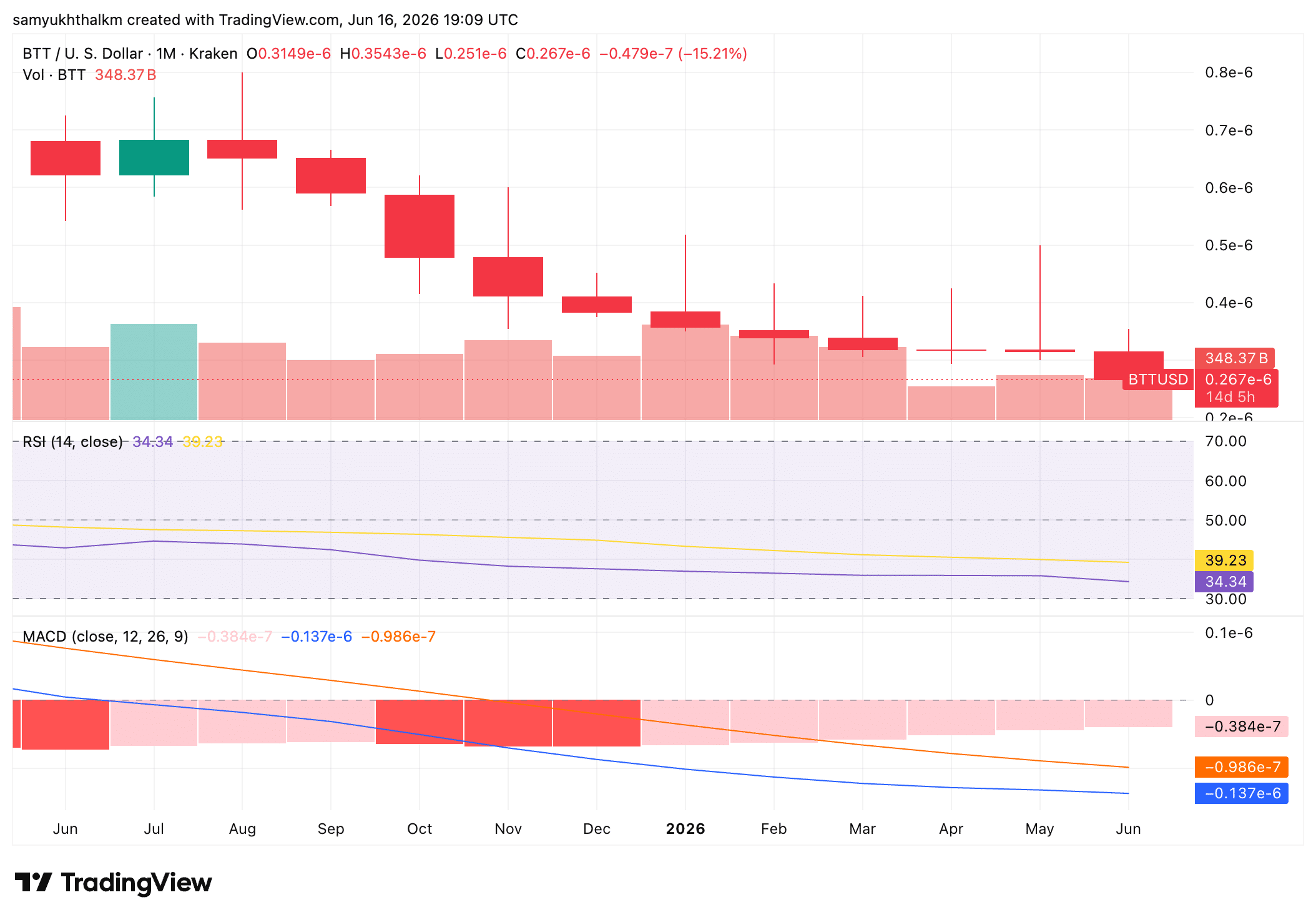
BitTorrent Token, commonly known as BTT, is the native crypto asset of the BitTorrent ecosystem and BitTorrent Chain or BTTC. The project brings one of the internet’s most loved and oldest peer-to-peer file-sharing networks with blockchain-based incentives, cross-chain transfers, and decentralized application infrastructure.
BitTorrent itself was created by Bram Cohen in 2001 as a peer-to-peer protocol for distributing large files across many users instead of relying on a central server. That original network design made BitTorrent one of the earliest mainstream examples of decentralized internet infrastructure.
The blockchain chapter of BitTorrent began after TRON acquired BitTorrent Inc. in 2018. The acquisition brought BitTorrent’s large user base and file-sharing products into the TRON ecosystem, while giving TRON a practical consumer-facing network to experiment with tokenized bandwidth, storage, and data-sharing incentives.
Following the acquisition, BTT was introduced as a utility token designed to add economic incentives to the BitTorrent network.
BTT’s first major use case was BitTorrent Speed. With this feature, downloaders can use BTT to bid for faster download speeds, while seeders can earn BTT for keeping files available and contributing bandwidth to the network. This model was designed to solve a long-standing issue – Users often download files but stop seeding once they are finished. By rewarding seeders, BTT attempts to make file availability and network participation more economically sustainable.
Over time, the project expanded beyond file-sharing incentives into blockchain infrastructure. BitTorrent Chain is a scalable cross-chain protocol linked to the TRON ecosystem. It uses a proof-of-stake design, supports smart contracts through sidechains, and is compatible with Ethereum-style smart contracts.
This EVM compatibility allows developers to migrate or deploy decentralized applications without rebuilding everything from scratch. BTTC also supports interoperability across major networks, including TRON, Ethereum, and BNB Chain.
Within BTTC, BTT works similarly to a gas token. Users need BTT to transfer assets, interact with smart contracts, and use applications on the network. This gives the token a core utility role inside the chain. The ecosystem also includes tools such as the BTTC bridge.
One important milestone in BTT’s development was its migration from the older TRC-10 token format to a TRC-20 token standard. This helped expand BTT’s compatibility with smart contracts and made it easier to integrate with DeFi and cross-chain applications. The newer BTT token has a total supply of 990 trillion tokens, with the large denomination structure reflecting the project’s re-denomination and migration process.
BTTC’s importance comes from trying to combine peer-to-peer file distribution and blockchain-based value transfer. Few crypto projects are connected to an internet protocol with BitTorrent’s history, brand recognition, and user footprint. At the same time, BTTC gives the project relevance beyond legacy file sharing. The network has processed hundreds of millions of transactions.
Going forward, BTT’s relevance will depend on whether BitTorrent can increase real utility across file sharing, storage, cross-chain transfers, and DApps.