September FOMC is coming – Bitcoin’s 2026 track record reveals why it’s bad news
The broader trend of tightening monetary conditions and rising bond yields has kept Bitcoin in a bearish regime.



On Friday, the 30th of January, 2026, U.S. President Donald Trump officially nominated former Federal Reserve governor Kevin Warsh to the post of Chair of the Federal Reserve.
Interestingly, Warsh had previously spoken favorably of Bitcoin [BTC] as a store of value and is considered pro-crypto in general. Regardless, the markets expected Warsh’s policy stance to be one of interest rate cuts as well as aggressive balance-sheet reduction.
Crypto markets had already shifted into a bearish regime and did not take Trump’s announcement favorably. Expectations of higher rates for longer led to a market rout.
Bitcoin fell by 7% from $84.6k to $78.7k. The wider crypto market recorded the highest liquidations for 2026, unsurpassed figures even now in August.
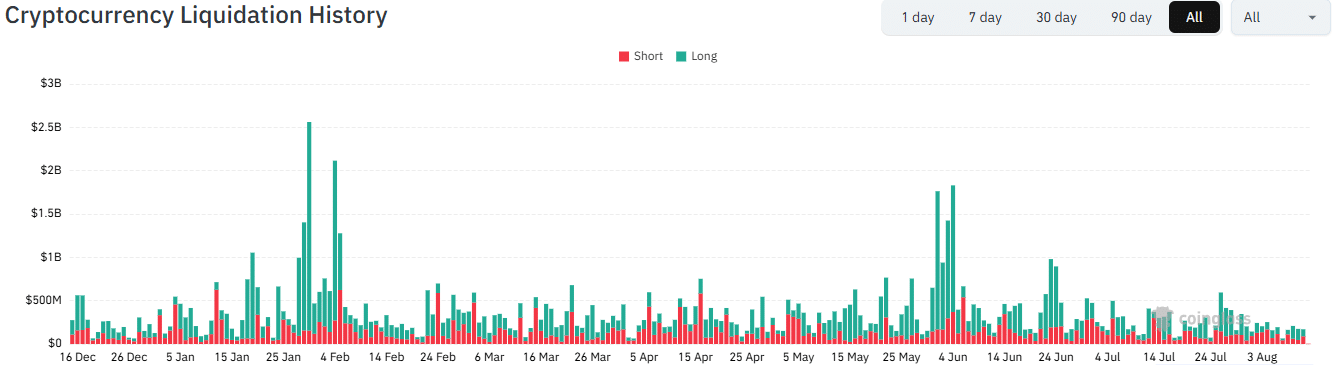
This price slide saw $2.407 billion in long positions liquidated across the market, compared to $154.7 million in short positions. The expected difference in leadership from the previous chair, Jerome Powell, led to uncertainty and sell-offs in crypto.
Though the chair is only one vote among twelve in setting the Federal Reserve’s target interest rate, the post’s influence on the decision is heavy.
What is the Fed interest rate, and why does it matter to crypto?
The Federal Open Market Committee (FOMC) is the branch of the Federal Reserve that sets the U.S. national monetary policy. It sets the interest rate and can decide to raise or lower the rates or hold the rates steady, as they have throughout 2026.
Raising rates is typically bearish for risk assets such as crypto, as it makes borrowing costs higher to cool down inflation. Rate cuts have the opposite effect, making capital “cheaper” to stimulate growth, which is usually bullish for crypto but can raise inflation over time.
The Fed can also use tools such as quantitative easing (QE) to buy assets to inject capital into the system. When COVID-19 struck, the U.S. slashed interest rates to near zero and ramped up QE, leading to a surge in risk appetite and helping fuel Bitcoin’s bull run.
The Fed can also choose quantitative tightening (QT) to reduce its balance sheet and withdraw liquidity. Rising inflation in 2022 saw the Fed decide to raise interest rates aggressively while also pursuing QT.
Vanishing liquidity, risk appetite, and the FTX implosion marked the depths of the previous Bitcoin bear market.
Bitcoin vs. interest rate decision days in 2026: Price trends
As the chart on liquidations earlier showed, the liquidations following the January decision, which was followed by Kevin Warsh’s nomination, spanned the heaviest crypto liquidations seen so far in 2026.
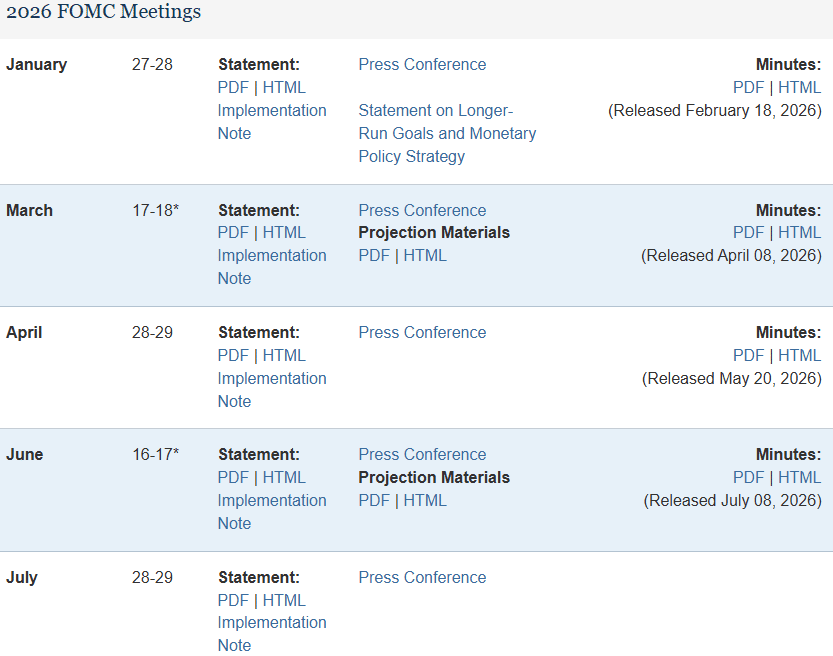
The decision days so far in 2026 are shown above. The decision has been to maintain the interest rates between 3.50% and 3.75% for five consecutive times this year. The next meeting will be on the 15th-16th of September.
The data from the FedWatch Tool, at the time of writing, showed a 65.2% probability of another rate decision that opts to keep the rate at 3.50%-3.75%. There is a 34.8% chance of a rate hike to 3.75%-4.00%.
The crypto liquidations during each rate decision announcement have been around the $300 million-$500 million threshold, barring the January announcement, a day which saw nearly $1 billion wiped out in crypto derivatives markets.
Most of the liquidations were long, and the price action shows why.
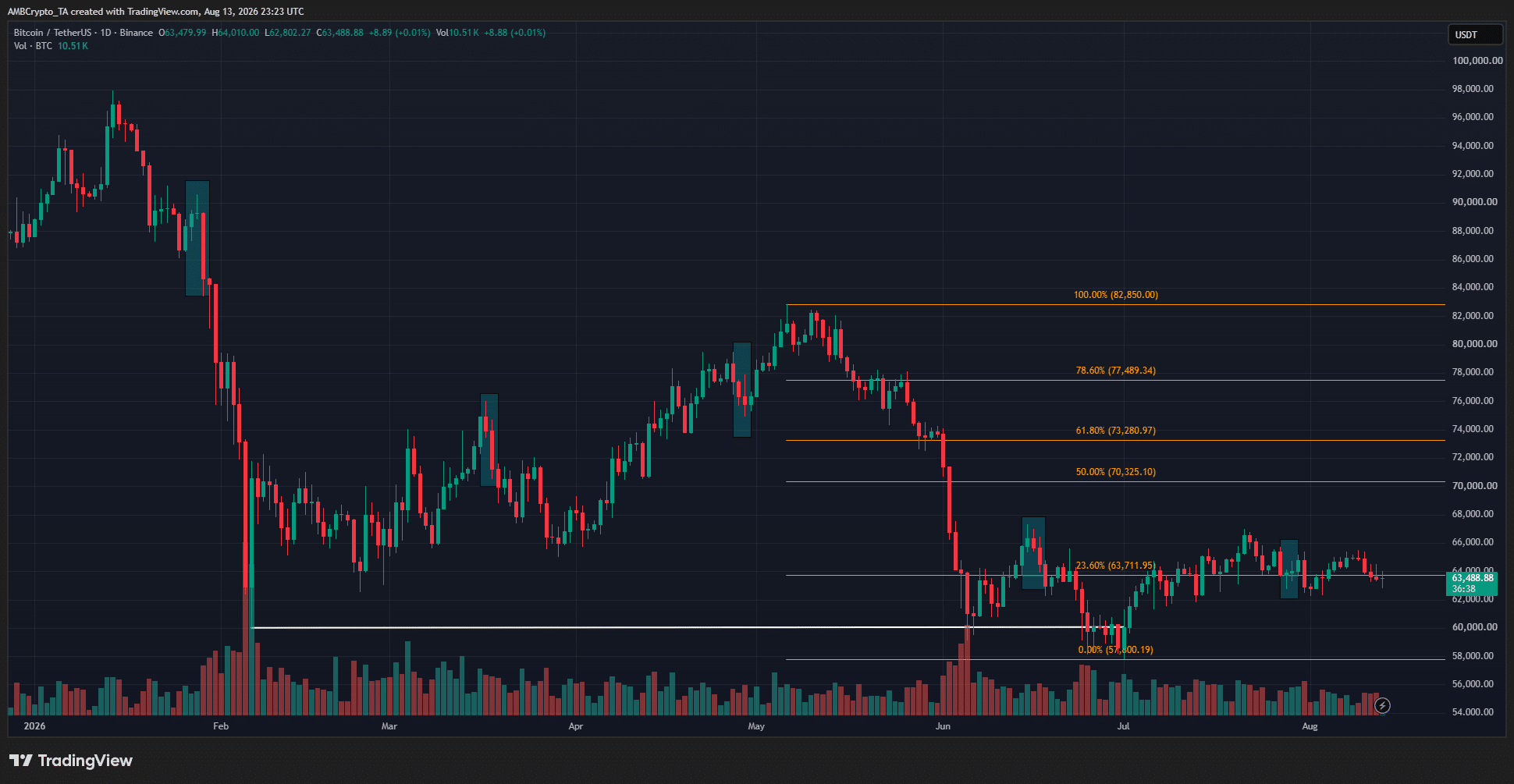
The Bitcoin price action on FOMC meeting days and the day after are highlighted in cyan on the 1-day price chart above. Of the five decision days so far, three (January, March, and June) have been clear bearish pivots.
The others were indecisive, such as July, or saw a bullish uptick, like the April decision.
The spot ETF flows in the 48 hours around the interest rate decision’s announcement have also been illuminating. January 28th-29th saw -$837.4 million (negative for outflows); March 18th-19th measured -$253.7 million; April 29th-30th was -$114.1 million; and June 17th-18th added up to -$172.9 million.
Only July 29th-30th showed net inflows totaling $265.2 million.
Expectations for the next decision
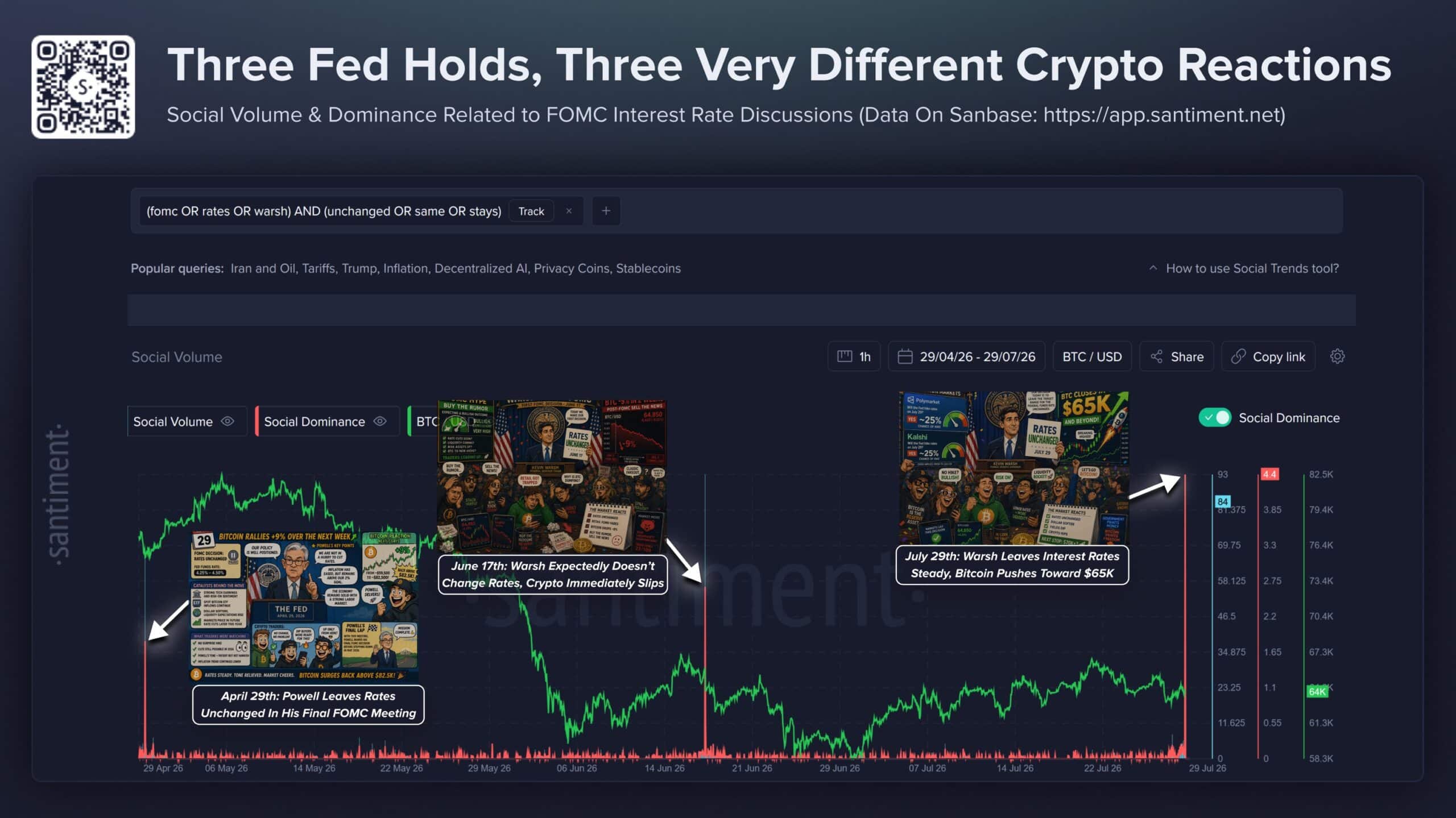
Crypto intelligence platform Santiment highlighted how the three previous rate decisions were essentially the same, but Bitcoin had reacted differently to each one.
It was Powell’s final meeting on the 29th of April that delivered a bullish reaction and a Bitcoin move that reached $82.5k in May.
This was due to his reassurances that softer liquidity conditions, which refer to tighter capital, cautious commercial banks, and reduced economic activity, would not result in over-tightening from the Fed that leads to a credit crunch.
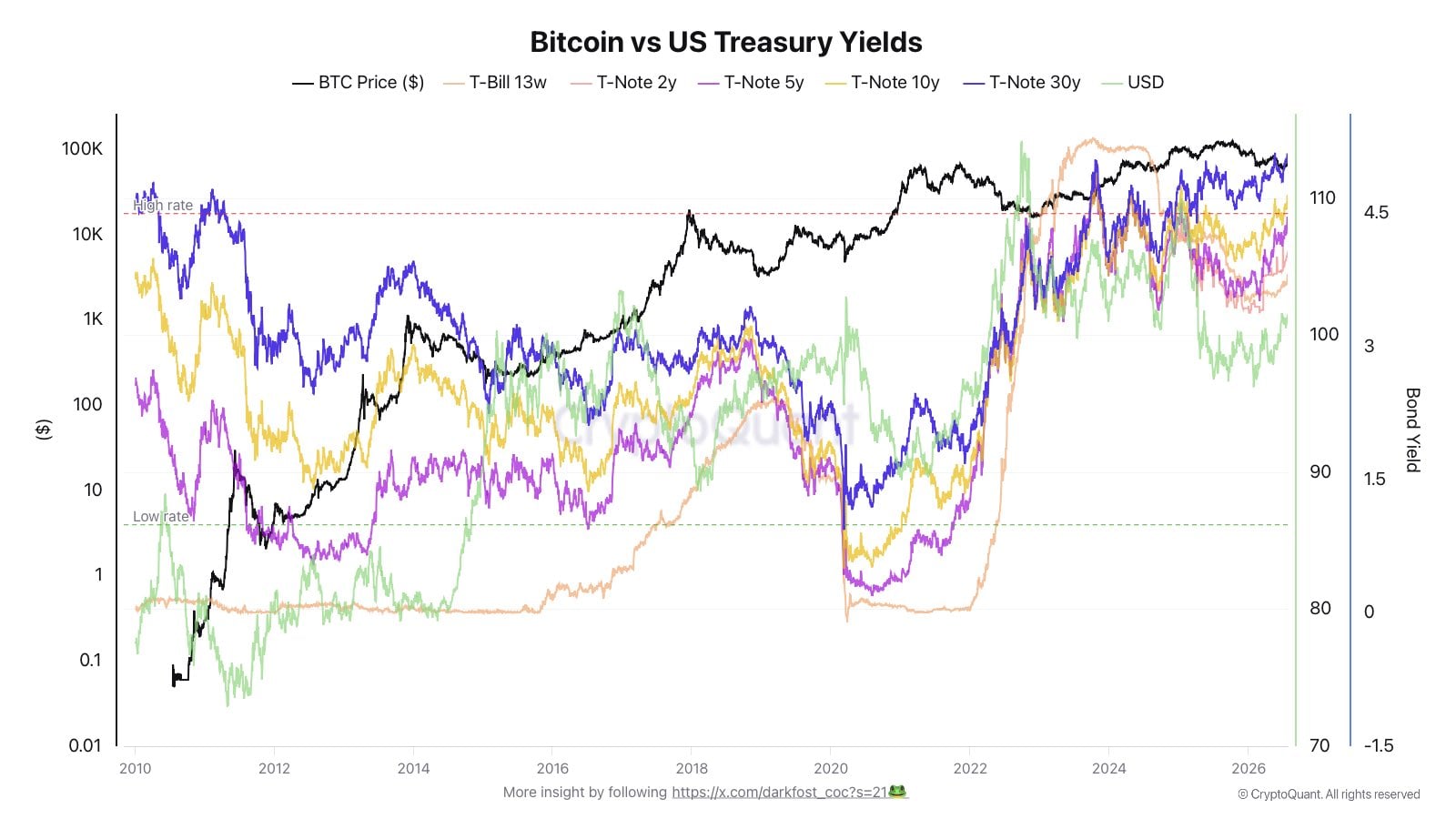
In July, analyst Darkfost observed in a post on X that the 10-year Treasury note yield reached 4.7%, and the 30-year note yield was above 5.2%, a record not seen since 2007.
Interest rates were on hold, the longest pause since 2008. Long rates climbing higher meant that investors were losing confidence due to tightening monetary conditions.
The analyst concluded that investors in U.S. debt do not believe in its ability to control inflation and the deficit. Holding its debt is riskier, warranting higher returns.
Such tightening capital conditions do not bode well for a risk asset such as Bitcoin.
A shift in macro conditions will be needed to help catalyze the next bull run. Long-term investors can employ a wait-and-watch strategy in the meantime or even opt to buy Bitcoin in small quantities (dollar-cost averaging) as the bear market drags on.
Final Summary
- Bitcoin’s 2026 FOMC track record shows consistent selling pressure, with three of five rate decision days triggering bearish pivots and January’s Warsh nomination sparking $2.4B in liquidations.
- With rates likely to hold steady through September, Bitcoin may struggle to break out without a clear shift in liquidity conditions or a dovish signal from the Fed.