Solana’s rent reform could free 3.08M SOL – But is it really an ‘airdrop’?
Could cheaper accounts improve network access while reclaimed SOL increases short-term selling?


The Solana network and its ecosystem underwent two significant changes within one week. Validators first approved a plan to reduce future SOL issuance by 18.9 million.
AMBCrypto previously reported on the disinflation proposal. Now, Solana’s rent system is also changing, potentially unlocking millions of SOL held inside existing accounts.
How does Solana’s rent reduction work?
On September 3rd, Solana activated rent reduction. With the activation, the network will reduce storage bins for onchain accounts by approximately 90%.
According to Solana Floor, the first stage lowers the Lamports-per-byte requirement from 6,960 to 6,333, through five feature gates. This will mark a 9% drop.
The already existing accounts will keep their lamports, so each activated reduction will leave them above the new minimum. The excess funds could be withdrawn without closing the account.
How much could be surplus funds?
Solana activated its rent reduction on the 3rd of September. The complete rollout will reduce storage costs for on-chain accounts by approximately 90%.
According to Solana Floor, the first stage reduced the Lamports-per-byte requirement from 6,960 to 6,333. This represented a 9% reduction across five feature gates.
Existing accounts will retain their Lamports, leaving them above the newly reduced minimum.
Consequently, account holders could withdraw the surplus without closing their accounts. That shift could turn previously locked storage capital into spendable SOL.
Over 1.16 billion token accounts held a combined 3.425 million SOL in rent balances.
After SIMD-0437’s five-stage rollout, approximately 3.08 million SOL could become reclaimable. Those tokens were worth roughly $307 million.
Solana Floor described the potential release as an “airdrop” worth around $319 million.
However, the rent reduction will not distribute an automatic refund. Eligible token programs must withdraw the surplus before holders can spend it.
Therefore, the change resembles capital recovery rather than a conventional airdrop. It also creates an unusual supply tension. Solana is reducing future issuance while simultaneously making previously restricted SOL liquid.
Did Solana’s price react?
SOL rebounded from $99 and reached a local high of $105. At press time, Solana [SOL] traded around $104 after gaining 4.01% on the daily chart.
The recovery also forced bearish traders from the market.
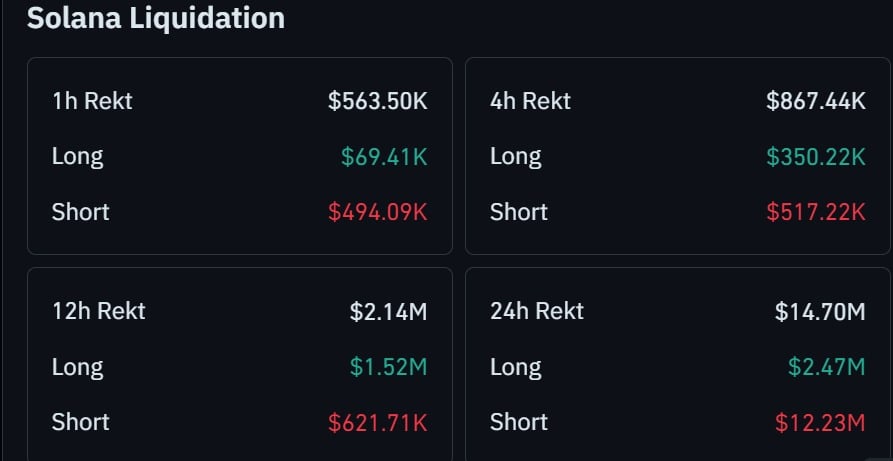
Short Liquidations exceeded $12.2 million, compared with only $2 million in Long Liquidations.
Short squeezes can support further gains as traders cover positions and potentially switch toward longs. However, those Liquidations reflected forced buying rather than guaranteed organic demand.
Can SOL hold the $100 support?
Despite SOL’s rebound, Spot Netflow showed that some holders continued realizing profits. The metric remained positive for three consecutive days.
On the 3rd of September, Spot Netflow reached $39.6 million before falling to $4.9 million.
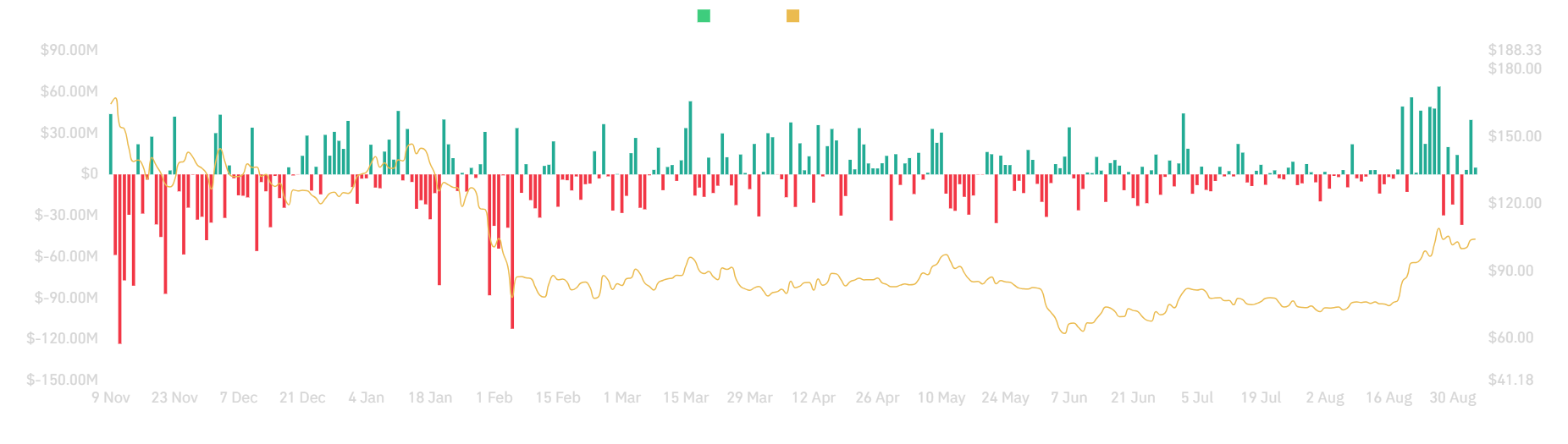
Positive Spot Netflow indicated that more SOL entered exchanges, increasing potential selling pressure.
Continued profit-taking could weaken the $100 support. By contrast, easing Exchange Inflows may allow SOL to revisit $110 and extend its recovery. The next debate extends beyond price: will reclaimed rent strengthen participation or simply create another source of sellable SOL?
Final Summary
- Solana began reducing account storage costs on the 3rd of September.
- The full rent reduction could make approximately 3.08 million SOL reclaimable.