South Africa proposes activity-based crypto reporting – Here’s what it entails
Does the new draft crypto manual from South Africa indicate more stringent capital controls?



A draft version of the Crypto Assets Manual for cross-border activities has been made available for public review by the South African Reserve Bank (SARB) and the South African National Treasury.
The main goal of this handbook is to fill regulatory gaps pertaining to cross-border cryptocurrency transactions.
Notably, the draft does not legalize or promote cryptocurrency as money. Instead, it ensures that digital assets don’t serve as a conduit for illegal financial flows, capital flight, or regulatory arbitrage.
What do South Africa’s crypto rules cover?
That said, the proposed framework would supplement current supervision by the South African Revenue Service (SARS), the Financial Intelligence Centre (FIC), and the Financial Sector Conduct Authority (FSCA). It would also give SARB’s Financial Surveillance Department (FinSurv) greater visibility into cross-border cryptocurrency flows.
The manual introduced an activity-based reporting framework. It outlined when cryptocurrency activity qualifies as a reportable cross-border transaction.
The report further added,
At this stage, this proposed approach neither distinguishes between different types of crypto assets, nor does it declare crypto assets an official currency in South Africa.
Why is it not good news for everyone?
For those unaware, the manual supplemented the draft Capital Flow Management Regulations, 2026, released in April.
However, back then, Pierre Rochard, former Vice President of Research for mining company Riot Platforms, had criticized this when he said,
This is a horrible Bitcoin policy, they should go in the opposite direction and make Bitcoin tax-exempt.
Additionally, the proposal states that a trigger point could arise when crypto assets move from a domestic authorized CASP to a non-custodial wallet. It could also arise between a South African authorized Crypto Asset Service Provider (CASP) and an offshore CASP.
That said, if the transfer brings about a cross-border inflow or outflow, it needs to be reported to FinSurv. However, rather than monitoring all cryptocurrency trades, the SARB is concentrating on transactions that result in capital leaving or entering South Africa.
Additionally, the new framework also plans to better track international crypto flows and reduce needless reporting for purely domestic activity.
South Africa’s crypto adoption rate
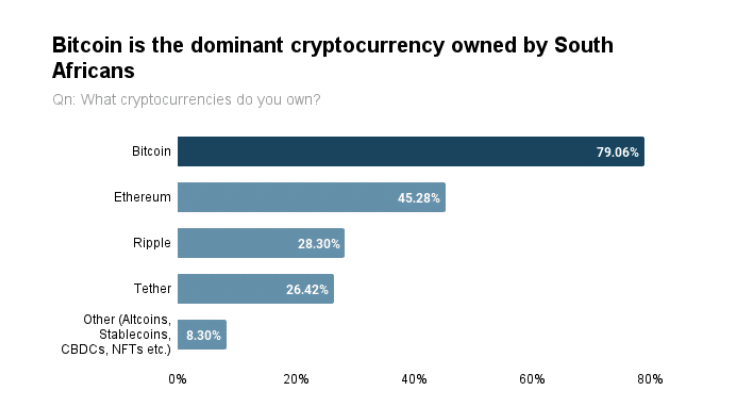
This comes on the heels of surging cryptocurrency adoption in South Africa, with an estimated 6 million people (9.44% of the population) owning digital assets.
In this, the most held asset is Bitcoin [BTC] (79%), followed by Ripple [XRP], Ethereum [ETH], and Tether (USDT).
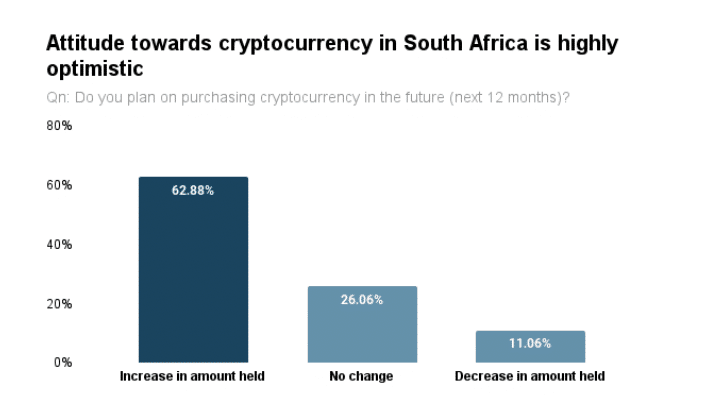
Looking ahead, 63% of present owners further intend to raise their crypto holdings.
Final Summary
- South Africa has issued new draft rules for cross-border activities.
- This draft is an addition to the draft Capital Flow Management Regulations, 2026, which was released in April.