Stricter crypto AML rules introduced in Turkey – What it means for your assets
How does Turkey’s approach differ from other powerhouses?


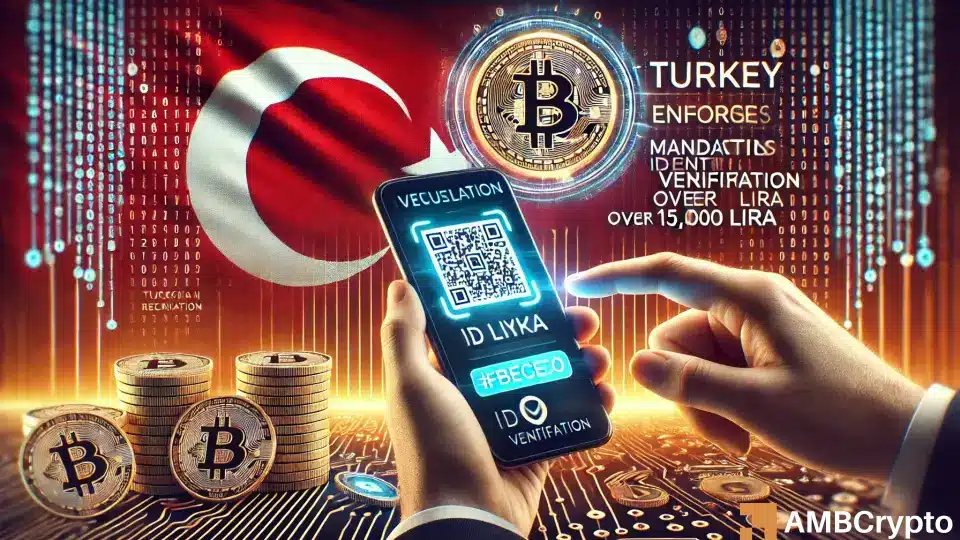
- Turkey has enforced stricter crypto regulations, mandating identity verification for transactions over 15,000 Liras.
- Global crypto regulation gains momentum, with Turkey aligning alongside U.S. and European initiatives.
In a surprising shift, Turkey has taken bold steps to strengthen its presence in the global cryptocurrency landscape.
Recently ranked as the 12th-largest crypto market by adoption, according to Chainalysis, the nation unveiled fresh cryptocurrency regulations during the final week of 2024.
Turkey’s new policies aim to build a strong, modern crypto ecosystem, taking inspiration from Europe’s regulations.
All about Turkey’s new cryptocurrency regulations
A document published on the 25th of December in the Official Gazette of the Republic of Turkey revealed that the country will enforce stricter oversight on cryptocurrency transactions under its new regulatory framework.
Starting February 2025, individuals conducting transactions exceeding 15,000 Turkish Liras (approximately $425) will be required to provide identifying information to crypto service providers.
These measures aim to enhance transparency and reduce risks associated with illicit activities, including money laundering and terrorism financing.
What led Turkey to make this move?
Interestingly, Turkey’s regulatory initiative arrives at a time when global interest in crypto regulation is on the rise.
This development precedes the implementation of Europe’s pioneering Markets in Crypto-Assets (MiCA) framework. This is set to take effect on the 30th of December.
As the first comprehensive crypto regulatory framework, MiCA aims to set a benchmark for balancing innovation and investor protection.
What does it mean for your crypto assets?
Notably, the country’s latest move empowers providers to classify transactions as “risky” and restrict them if adequate information is unavailable.
Furthermore, firms must secure licenses from the Capital Markets Board (CMB) to operate, with oversight shared between the Financial Crimes Investigation Board and TÜBİTAK, which will audit technological infrastructure.
While these steps aim to push consumer protection and counter financial crimes, experts caution that high compliance costs could hinder smaller startups, potentially giving larger international firms an edge in the Turkish market.
That being said, Turkey’s regulatory overhaul arrived when U.S. President Donald Trump unveiled plans for a Strategic Bitcoin Reserve and Russia enforced a sweeping crypto mining ban across ten regions starting January 2025.
This juxtaposition highlights the diverse approaches nations are adopting toward digital assets.