U.S. Treasury yield hits 2007 high – What it means for Bitcoin
Can Bitcoin sustain local rallies while U.S. demand remains absent?



The crypto market has struggled through much of the year amid limited capital inflows. Now, it could face tighter conditions capable of squeezing more liquidity from the space.
The outlook followed rising U.S. bond yields, which increased the appeal of lower-risk assets. This shift could leave crypto holdings such as Bitcoin [BTC] and altcoins off investors’ preferred list.
Bitcoin has already shed over $675 billion in market value since its January high.
Could rising bond yields hurt crypto?
The 30-year U.S. Treasury yield climbed to 5.234% during the early hours of the 30th of July. That move marked its highest level since July 2007. The yield eased to 5.185% on the 31st of July.
Higher bond yields typically make government debt more attractive relative to risk assets. This competition for capital rarely favors crypto, especially when market liquidity is already thin.
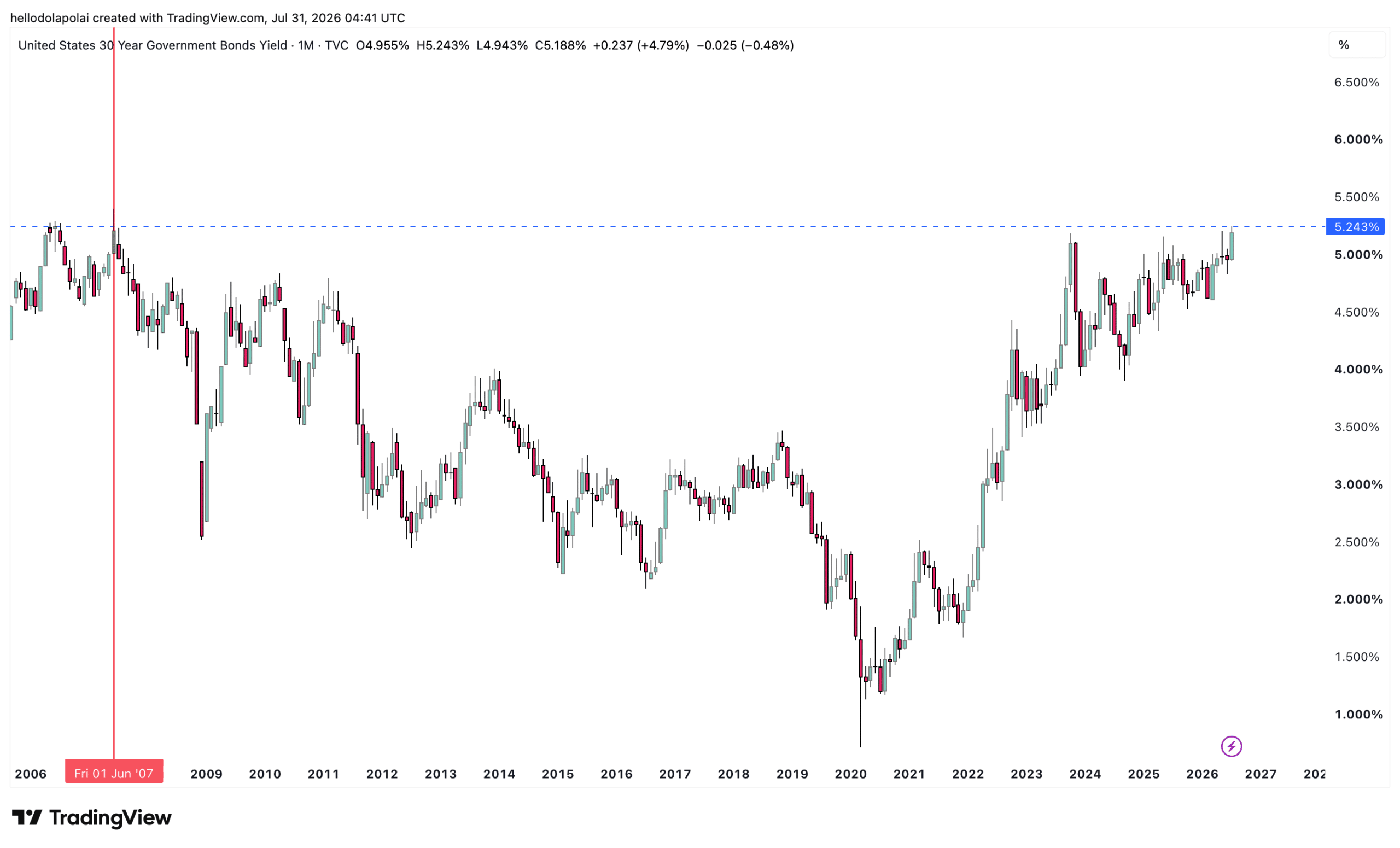
The climb followed the Federal Open Market Committee’s decision to hold interest rates between 3.5% and 3.75%. The committee described the economy as strong, supported by productivity and capital investment.
However, it flagged energy-driven inflation as a lingering concern.
Inflation remains elevated relative to the Committee’s 2 percent goal, in part reflecting supply shocks that have driven price increases in certain sectors, including energy.
The energy shock followed the closure of the Strait of Hormuz during the Middle East conflict involving the U.S. The committee stressed that its priority remained price stability.
Are U.S. investors turning cautious?
U.S. investors have already adjusted their positions as yields climbed and inflation remained above the 2% target.
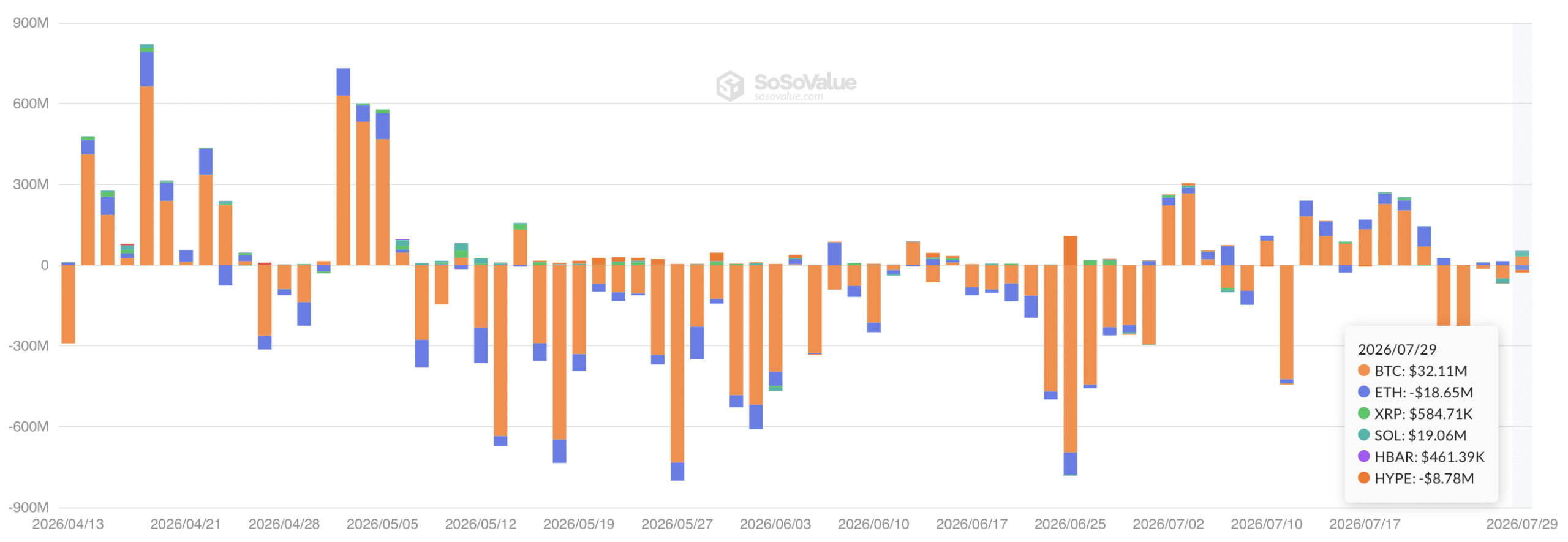
At the same time, Netflows across listed U.S. crypto products posted a sharp drop.
SoSoValue tracked a combined inflow of $24.7 million across six asset classes. These included Bitcoin [BTC], Ethereum [ETH], Hyperliquid [HYPE], and Solana [SOL].
The figure marked the lowest buy-side Netflow since the 8th of July. This suggested investors had grown broadly cautious with their trades.
Bitcoin’s Coinbase Premium Index also remained negative, pointing to softer demand from U.S.-based investors. Strong U.S. demand last appeared during a brief positive spike on the 18th of May.
Could weakness last until elections?
In a recent report, AMBCrypto noted that the bearish market could drag on further.
The report found that a bull run may remain unlikely until the period surrounding the U.S. midterm elections. This view was also based on Realized Profit and Loss data.
Historically, Bitcoin has attracted renewed inflows around midterm election periods. With the next vote due in November, the market could keep ranging or slide further until then. Bitcoin may still print local highs during this period. However, those moves could fall short of a broader bull run.
Final Summary
- The 30-year U.S. Treasury yield reached its highest level since 2007, increasing competition for crypto capital.
- U.S. crypto Netflows fell to $24.7 million, while the Coinbase Premium Index remained negative.