


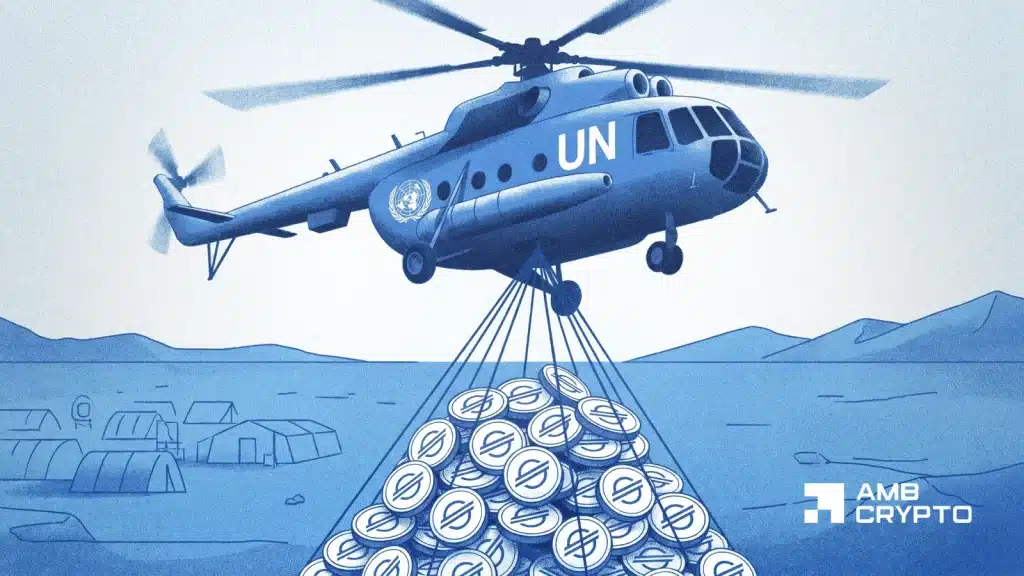
Stablecoins are increasingly becoming part of humanitarian aid delivery. The recent extension of the Stellar-UN partnership reflects broader experimentation with blockchain-based payment rails in humanitarian operations.
According to the United Nations Development Programme (UNDP), the initial test pilot with Stellar on digital payments and tracking will enter a new scaling phase.
In a statement, Robert Pasicko, UNDP Alternative Finance Lab, hailed digital payments as a crucial way of driving financial inclusion in some countries.
We have shown that digital payments can reach the people that conventional systems miss, and in some of the hardest places to operate.
The two organizations have been running a test pilot for the past 16 months across Haiti, Syria, Guatemala, Kenya, and other countries. Some of the tests included cash-for-work stipend transfers in areas with low cellular network connectivity.
Notably, the pilot test found that transfer costs reduced from 10% to 2% with blockchain rails compared to conventional methods. There was also a 100% success rate in transfers, even in areas with poor cellular network coverage.
For Stellar’s Legal Chief, Candace Kelly, the results prove the viability of blockchain rails in last-mile connectivity.
These pilots showed what open, public blockchain infrastructure can do when it is built around the realities of the last mile.
Crypto: Aid support vs. terrorism financing
In fact, crypto firms have increasingly been active in charity operations.
Binance, for example, sent $3M USDT to victims in the recent earthquake in Venezuela. The exchange has made similar efforts to the Philippine flood victims and the Ebola outbreak response in DRC and Uganda.
However, in some conflict areas like Sudan and Afghanistan during the Taliban takeover, the international and local banking systems failed.
Effectively, this locked out victims from aid support. For UNDP and Stellar, blockchain rails have helped solve this kind of last-mile friction.
What challenges still remain?
Besides, a report by Market Impact found that the U.S has cut its humanitarian aid support by 88%.
As such, donor organizations can’t afford to lose the little they have to high exchange rates and transfer costs. Per the report, stablecoins have helped reduce aid delivery costs by over 80% in some countries, reinforcing the Stellar-USDP tests.
Still, the above benefits have also attracted sanctioned entities seeking to bypass capital controls or enable terrorist financing. For example, the US froze over $1B of Iran’s crypto funds over alleged terrorist financing.
Overall, these developments show the growing influence of crypto in global humanitarian efforts and geopolitics.
Final Summary
- Stellar to extend UNDP partnership to scale crypto aid delivery and support last-mile connectivity.
- Pilot tests established that the aid delivery cost dropped from 10% to 2% using stablecoins compared to other payment methods.