US Treasury proposal could reshape which stablecoins exchanges can list
Treasury's proposal could restrict US access to stablecoins from unauthorized issuers and require exchanges to conduct additional checks.


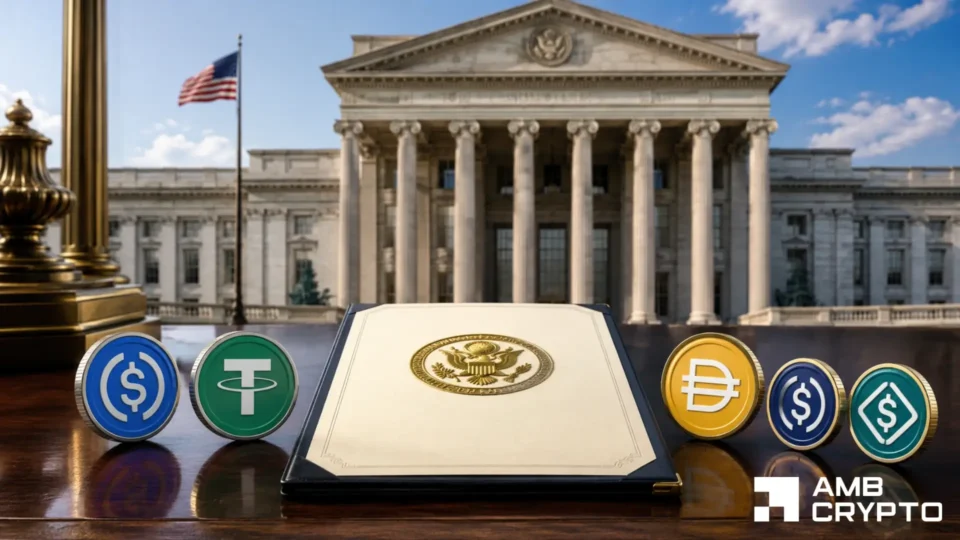
The US Treasury announced a proposal for new guidance that could reshape which stablecoins crypto exchanges may offer to American customers
The proposal implements parts of the GENIUS Act and extends beyond US stablecoin companies. Now, issuers from outside the US that desire entry into America can also be bound to new rules, and crypto exchanges are to check whether the stablecoins they want to list are from authorized issuers.
Foreign stablecoins face new conditions
One major requirement concerns how issuers from outside the US respond to US legal orders.
For it to be able to serve the American market, an issuer may need to show that it can freeze, seize or burn stablecoins, or stop them from moving when they are legally required to do so.
Instead of just relying on the words of the issuers about their capabilities, exchanges will also be required to carry out their own checks.
Foreign companies may also enter if the Treasury deems their regulatory regimes comparable to US standards and they register with the Office of the Comptroller of the Currency.
Treasury is taking a broad approach to what counts as issuing stablecoins in the US, as a transaction could fall within the rules simply when either the issuer or the recipient is in the US
Foreign issuers trying to stay outside the US market may therefore need controls that will block their stablecoins from reaching American users.
Exchanges could have to reconsider their listings
From July 18, 2028, service providers would not be allowed to offer US customers stablecoins not issued by an authorized company.
Simply listing a stablecoin would not automatically make an exchange its issuer, but exchanges and market makers could face problems if they help newly created, unauthorized stablecoins reach buyers.
The proposal also looks at advertising a stablecoin to Americans, responding to purchase requests or helping customers bypass location restrictions as offering it in the US.
Airdrops will count towards issuance too, even if the recipients do not purchase them!
However, direct transfers between individuals receive limited exemptions, as do some transactions made through self-custody software and hardware wallets, but none of these requirements are final.
The GENIUS Act is expected to enter into force on January 18, 2027, while the restrictions affecting service providers would follow 18 months later, and Treasury is giving the public 60 days to comment after the proposal is published in the Federal Register.
Final Summary
- Foreign stablecoin issuers could face new requirements for legal-order compliance and access to US customers.
- From 2028, exchanges may need to reconsider stablecoins whose issuers do not meet GENIUS Act requirements.