Vitalik Buterin shuns layer 2 investments for THIS reason
According to VanEck, layer 2s are “cannibalizing” Ethereum revenues.


- Ethereum co-founder Vitalik Buterin has said he will not invest in layer 2 projects in the foreseeable future.
- His statement comes amid an intense debate on the benefits that these protocols have on the main blockchain.
Ethereum [ETH] co-founder, Vitalik Buterin, has come out to state that he does not plan on investing in layer 2 networks. This comes days after he moved $1.3M worth of STRK, the native token of the Starknet layer 2 protocol.
In a post on X, Buterin noted that he would donate all proceeds from layer 2 tokens to charity or to support the broader Ethereum ecosystem.
He said,
“I also do not intend to invest into L2s or other token projects in the foreseeable future. My goal with giving projects money is to support things that I think are valuable, especially in cases where other parts of the ecosystem might undervalue them.”
His statement comes amid a raging debate on the value that layer 2s bring to the underlying layer 1 blockchain.
Layer 2 network debate intensifies
Layer 2 networks have recorded much growth over the past year, with the Total Value Locked (TVL) surging by nearly 200% per L2Beat data. However, the same growth has not been seen in layer 1 blockchains.
In its Crypto Monthly Recap for August 2024, asset manager VanEck said layer 2s were “cannibalizing” Ethereum revenues.
VanEck noted that at the beginning of the year, the Ethereum blockchain recorded $6M in revenues. In August, this sum had dropped to $1.2M, as transactions were pushed from the Ethereum mainnet.
VanEck stated,
“Ethereum’s solution to improve its scalability, pushing transactions to L2 blockchains, has thus far failed to drive value to ETH.”
A similar view was shared by the CEO of Bitwise Invest, Hunter Horsley. He noted that while layer 2s drive value back to Ethereum by using it as a settlement layer, they can have a net negative impact as they are closer to users.
Solana, Ethereum communities clash
The layer 2 debate has also caused a divide between the Solana and Ethereum communities.
Notably, the discourse started after Solana co-founder, Anatoly Yakovenko, stated that these networks are “parasitic.”
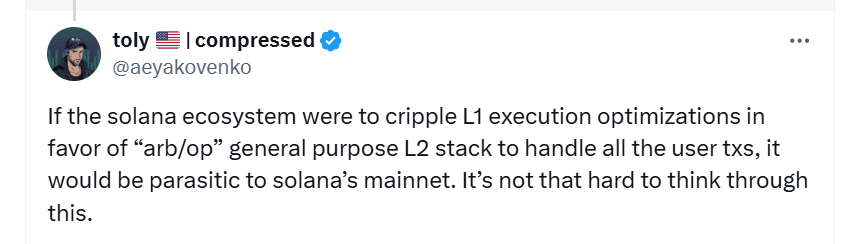
Later on, the Head of Communications at Solana Labs, Austin Federa, stated that “L2-ish things on Solana” are “Network Extensions” and not layer 2 networks.
Ethereum community member Ryan Berckmans responded, saying that the term Network Extensions was just semantics, as these protocols did the same thing as layer 2s.
The host of The Rollup podcast, AyyeAndy, said,
“Basically, network extensions are L2s but L2s are not network extensions. It’s a rectangle and a square, one definition fits the other.”
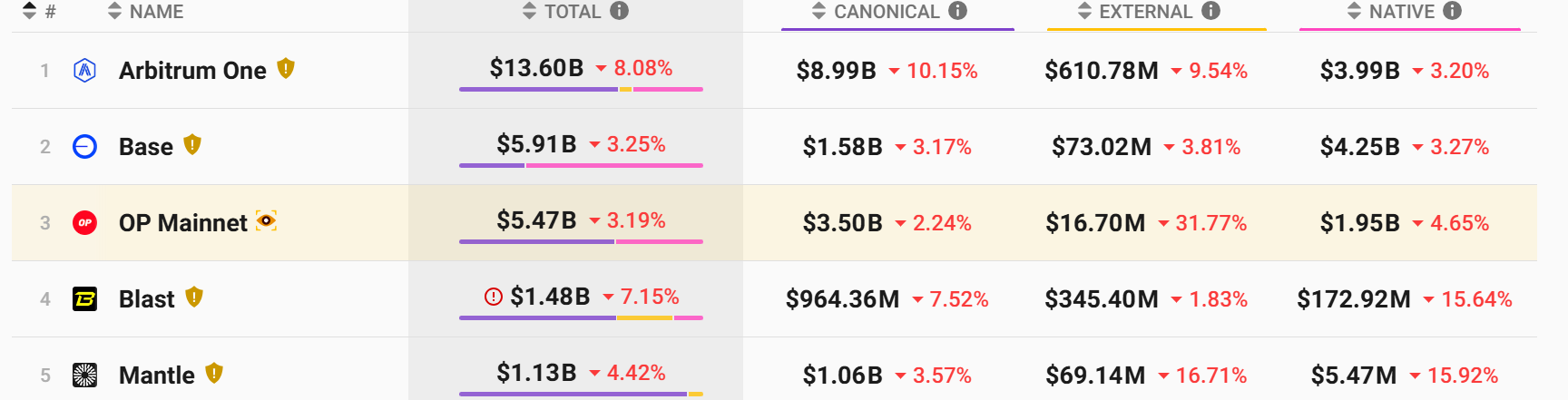
As the debate rages on, the layer 2 ecosystem appears to be witnessing a slowdown amid broader bearish market sentiments. In the last week, the TVL for the top five layer 2s by TVL has dropped.