


Humanity Protocol [H] suffered a major exploit after attackers gained access to private keys linked to a foundation member. The exploit led to roughly $32 million in losses, triggering aggressive H selling.
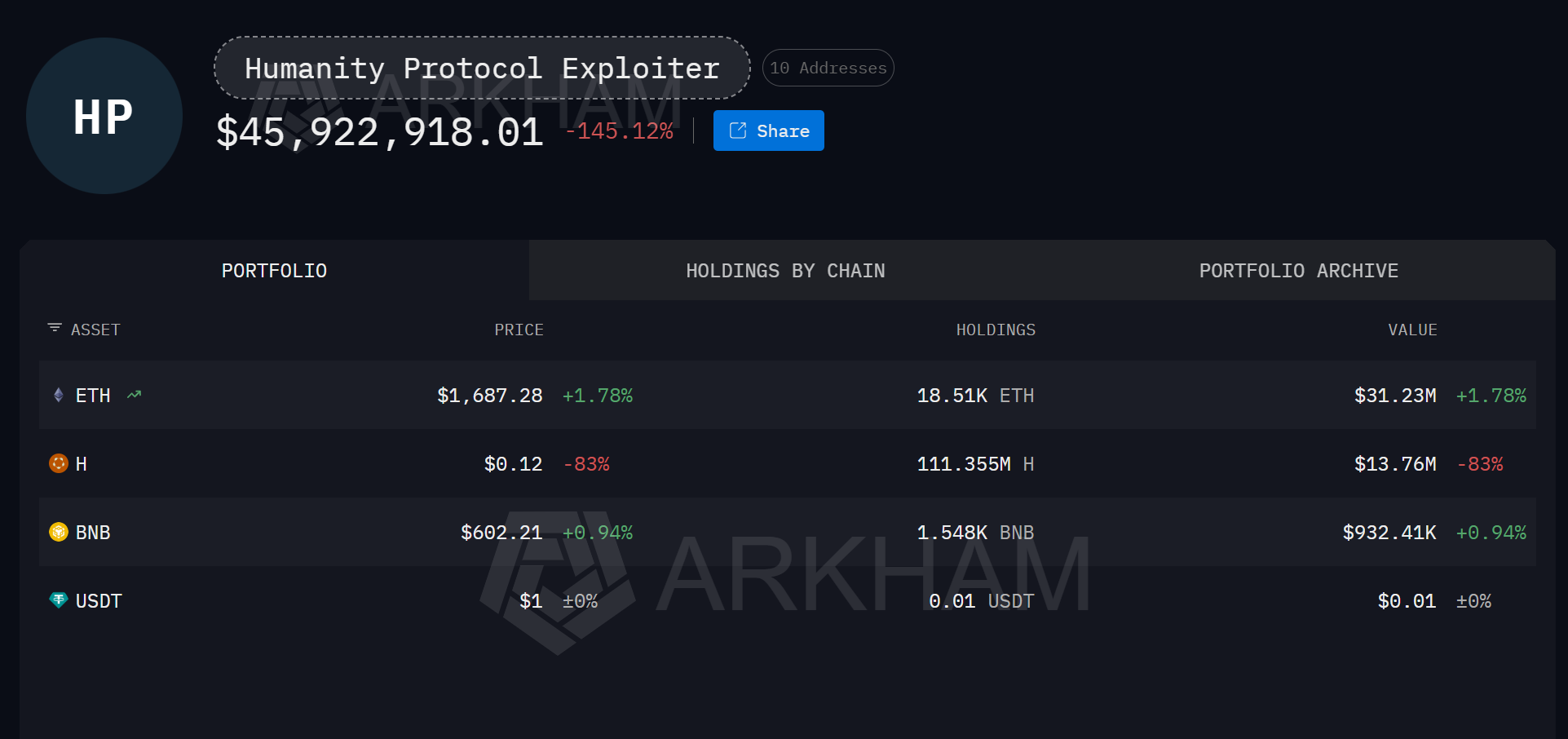
After converting the tokens into Ethereum [ETH] and Binance Coin [BNB], the exploiter’s portfolio stood at $45 million at the time of writing.
However, the exploit sparked skepticism across the community. ZachXBT, a crypto investigator, publicly challenged the project’s narrative, arguing that investors deserved greater transparency around market-making arrangements. In a statement, he said,
You choose to crime pump your token for weeks with zero fundamentals and think CT will blindly trust your story?
Trust often determines recovery after security incidents, which makes the reaction especially important. The exploit stemmed from compromised access rather than a smart contract flaw. However, governance and disclosure concerns remain, and they may continue shaping sentiment even after the stolen funds stop moving.
Exploit flows trigger a liquidity shock
Humanity Protocol’s exploit quickly evolved into a liquidity crisis after attackers compromised foundation-linked private keys. According to Arkham data, the exploiter repeatedly swapped about 2.99 million H per transaction.
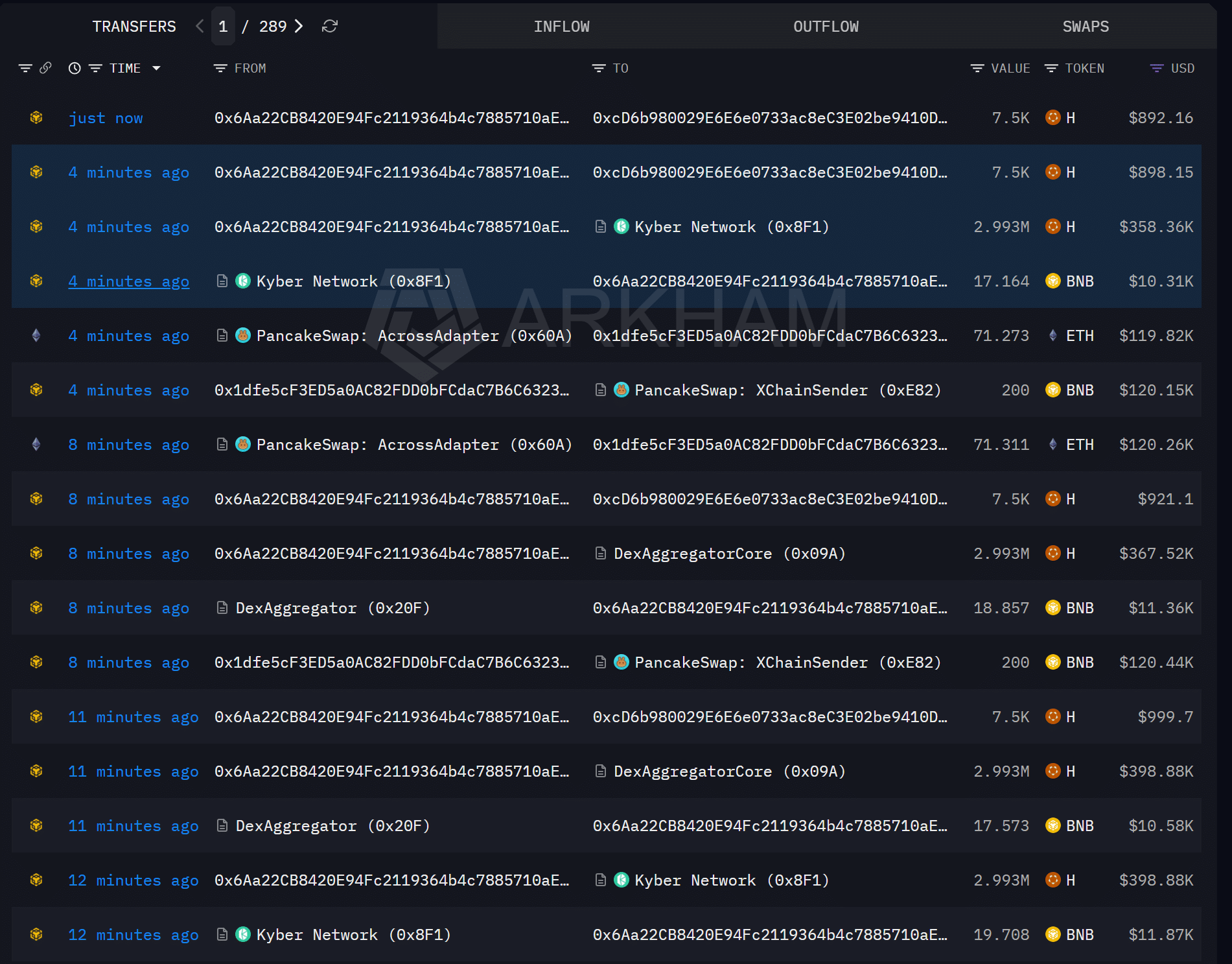
Each swap estimated a value between $358,000 and $399,000. The attacker routed those sales through Kyber Network and DexAggregator. As a result, sell pressure overwhelmed available liquidity and absorbed buy-side demand.
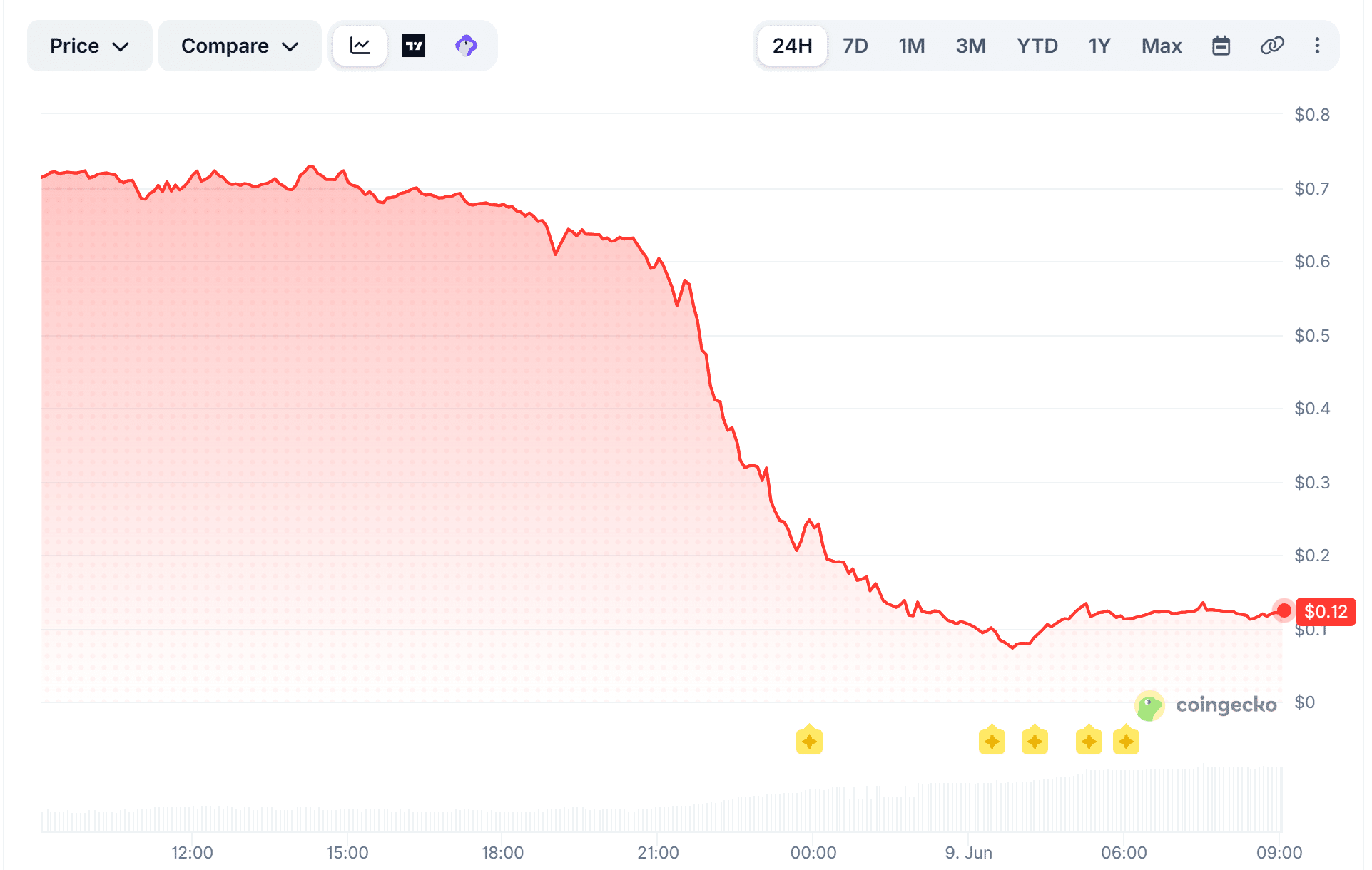
The market struggled to absorb the continuous token outflows. Consequently, H collapsed by over 80%, falling from above $0.70 to around $0.12. The episode shows how exploit-driven selling can rapidly damage liquidity, confidence, and overall market structure.
What’s next for Humanity?
Humanity Protocol has shifted from crisis response to damage containment following the exploit. After the breach, the team urged users to avoid the bridge and liquidity pools while security experts investigated affected systems.
That warning mattered because those services facilitate capital movement across the ecosystem. As activity slowed, the market entered a reassessment phase.
The immediate selloff may have passed. However, recovery now depends on restoring confidence, rebuilding liquidity, and convincing users that the protocol can operate securely after the breach.
Final Summary
- Humanity Protocol suffered a private-key compromise that enabled over $32 million in unauthorized asset movements.
- Exploit-driven H sales overwhelmed liquidity, triggering over 80% collapse and forcing emergency containment measures.