



Robinhood Chain’s memecoin boom is creating plenty of activity. Despite that boom, there are fewer winners than many investors expect. Beneath the trading frenzy, profits remain concentrated, while losses spread across most participants.
Of the 164,538 wallets tracked, 102,929 remain unprofitable, leaving 63% of traders at a loss. Meanwhile, just 61,542 wallets remain profitable, highlighting the market’s uneven reward structure. As a result, only 46 traders made more than $1 million, whereas five lost over $10 million.
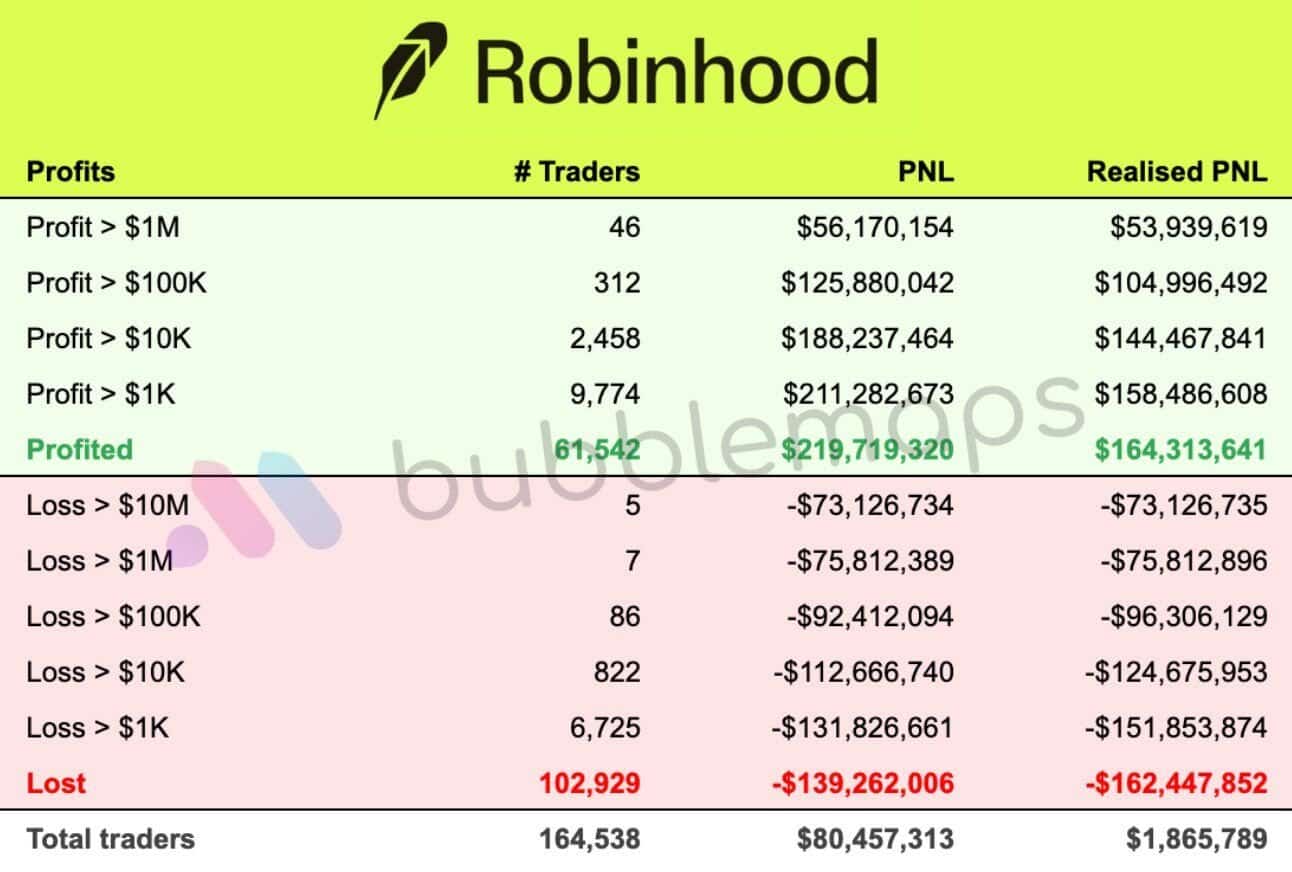
Consequently, profitable traders realized $164.3 million in gains, while losing traders realized $162.4 million in losses. That left only $1.87 million in net realized profit despite significant trading activity.
This imbalance suggests a small group continues capturing most returns as the majority provides exit liquidity.
Unless profitability spreads beyond a handful of traders, speculative enthusiasm could fade, weakening participation across Robinhood Chain’s memecoin market.
How narratives drive prices
That imbalance becomes even more apparent when external events suddenly reshape investor sentiment. The DADDY token demonstrated the fragility of narrative-driven tokens under headline risk conditions.
Reports linking Andrew Tate to renewed legal proceedings triggered immediate selling pressure after the token traded near $0.0145 and briefly tested $0.016. However, sentiment reversed sharply as DADDY declined by more than 20%, sliding toward $0.010.
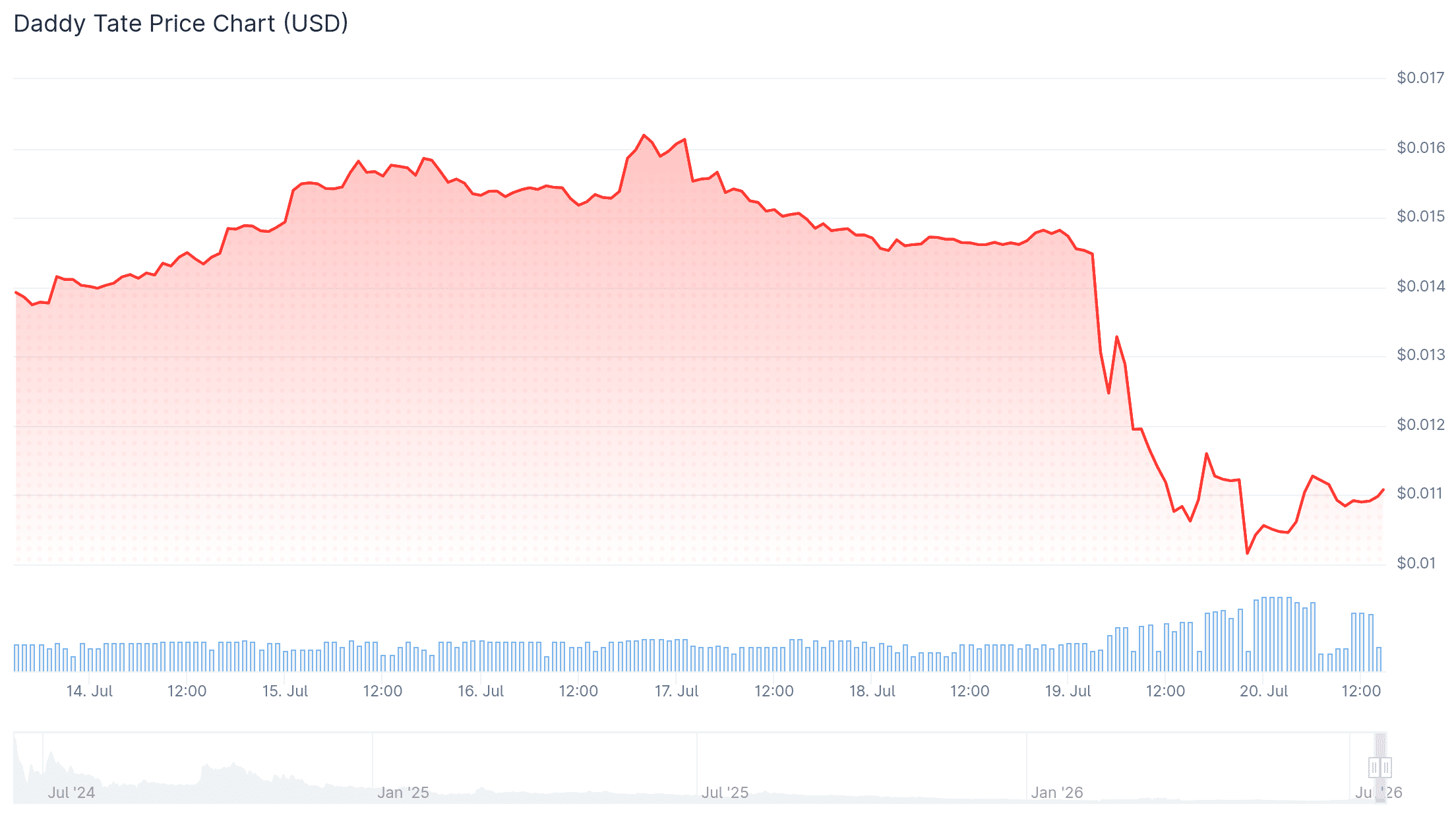
The sharp increase in selling volume as the price declined indicated a loss of liquidity. After the token stabilized slightly to trade for approximately $0.011, buyers were unable to regain control of the price.
More importantly, DADDY remains down more than 95% from its peak, indicating that confidence in the token will take longer to recover.
This reaction reinforces how memecoin valuations often depend more on narrative than fundamentals. Consequently, headlines continue to generate volatility and influence short-term price discovery and liquidity flow through the entire sector.
As attention shifts, resilient memecoins increasingly outperform short-lived rallies. For instance, Pepe [PEPE] demonstrates resilient holder retention, active addresses, and whale accumulation.
Similarly, Dogecoin [DOGE] is supported by a large base of users who provide significant levels of liquidity. Meanwhile, Shiba Inu [SHIB] leverages Shibarium activity and whale inflows to stabilize demand.
Together, these strengths suggest future memecoin cycles will reward utility, community loyalty, and liquidity depth over temporary viral narratives and hype.
Final Summary
- Robinhood Chain’s memecoin market remains concentrated, with most traders still unprofitable.
- PEPE, DOGE, and SHIB show resilience now outweighing hype in memecoin cycles.