



According to Santiment, XRP Ledger activity has fallen to unusually low levels lately. On the 9th and 10th of July, the network saw only 25,350 and 24,887 daily active addresses.
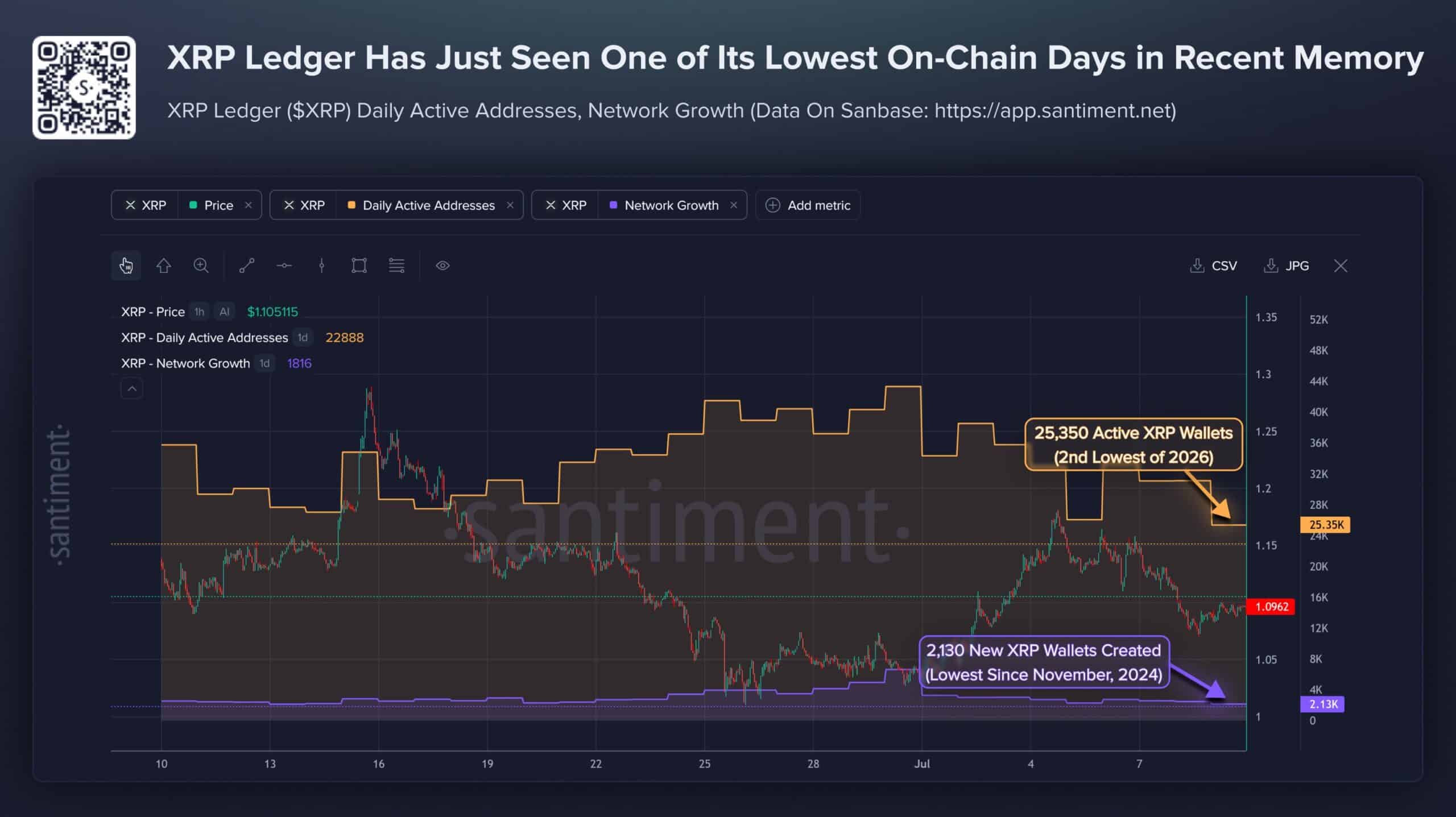
These figures were the second-lowest in 2026, Santiment wrote. Moreover, the daily network growth was also at a low figure of 2,130 – The lowest since November 2024.
Traders and investors seemed to be waiting on the wings to buy a real move instead of chasing a shallow price bounce, such as the ones that came in mid-June and early April.
The spot volume trends backed this idea up. The spot CVD for the past 90 days on CryptoQuant was in neutral territory. This metric tracks the aggressive, or taker, participation in the market.
The spot CVD trends have been in decline. Though it was not yet taker sell-dominant, it hinted at reduced buying since March. There was a brief flurry of taker buy activity in May, but it quickly evaporated. At the time, XRP’s price reacted by bouncing towards $1.55, before slumping to $1.10.
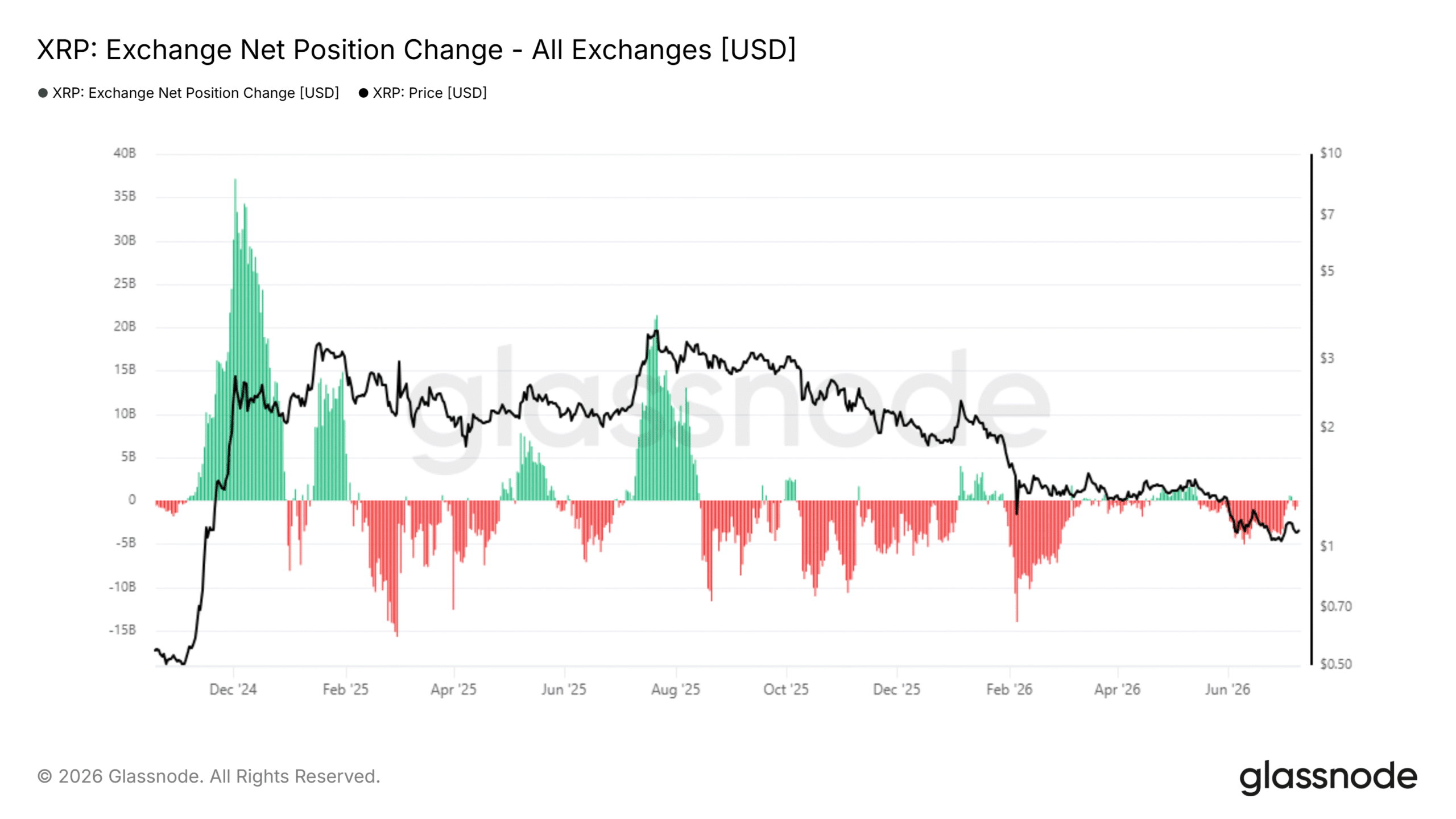
The exchange net position change has been negative in recent months. Negative values imply XRP tokens flowing out of exchanges, likely to cold storage and accumulation.
However, for context, it was not as heavy as the outflow bouts in 2025.
XRP funding rates stay at extreme lows
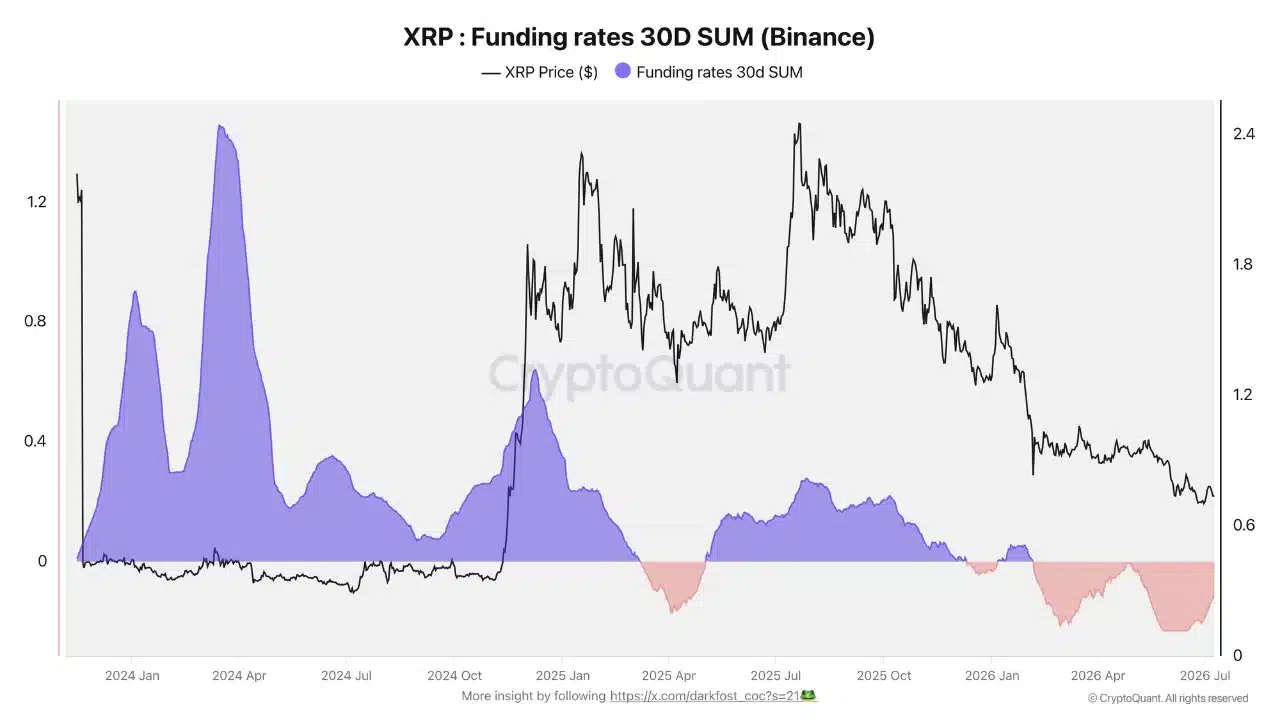
Against this backdrop of muted spot buying pressure on XRP, analyst Darkfost believes that the altcoin’s speculative bais might also be firmly bearish.
The 30-day aggregate of funding rates has been negative throughout 2026. Despite the over 70% correction since the coin hit $3.66 in July 2025, the bearish consensus can serve as a clue for a medium-term reversal.
In April 2025 too, sustained negative aggregate funding rates were seen. This correction was followed by a 126% rally, the analyst observed.
Only time will tell if a similar scenario will play out. Spot volume trends need to undergo a big shift to enable such a rally, that is for sure.
Final Summary
- XRP’s spot demand has been falling and the price was moving sideways about the $1.10 support.
- Strong bearish consensus even after a deep price correction might be a medium-term bullish reversal sign.