XRP slides below $1.30 support: Traders turn bearish in the short-term
XRP was unable to breach the $1.50 supply zone and moreover has dropped below the $1.30 support.



On Tuesday, the 15th of September, Ripple [XRP] registered a 1-day loss of 9.82%, falling from $1.42 to $1.28. This price slide was surprising because the altcoin had been repeatedly testing the $1.45 local resistance zone since late August.
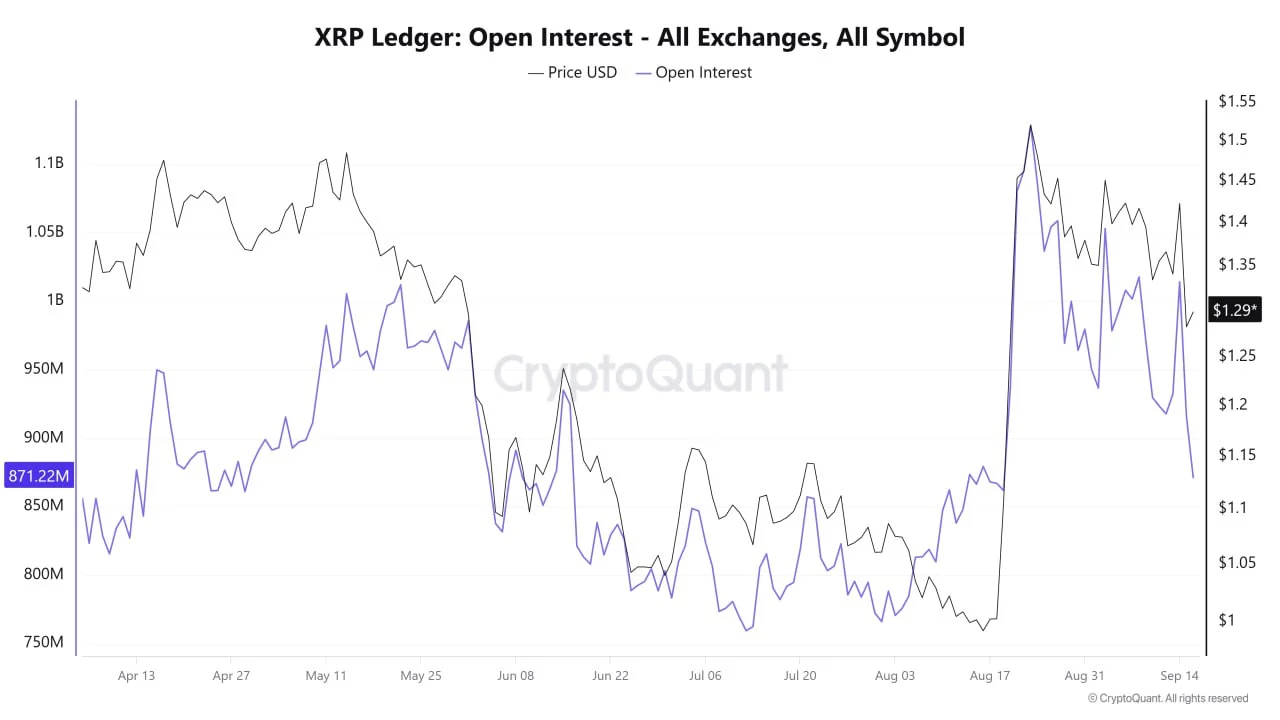
XRP’s Open Interest has fallen from $1.128 billion in late August to $871 million at the time of writing. This was a 23% decline, or $257 million, in just under a month.
The OI decline coincided with XRP’s rejection from the $1.50 higher timeframe supply zone. It indicated derivatives positions were either closed or liquidated in large numbers.
A decrease in speculative interest, alongside a price slide below the $1.30 support, was not an encouraging sign.
Reasons for XRP’s dip
Throughout September, XRP spot ETF flows have been positive. Growing ETF funds also acquired more XRP, reducing the available supply.
Despite institutional demand, the price action was lagging, AMBCrypto reported earlier this month. This was partly due to the decline in Bitcoin [BTC] prices, as the market priced in the increasing odds of a rate hike.
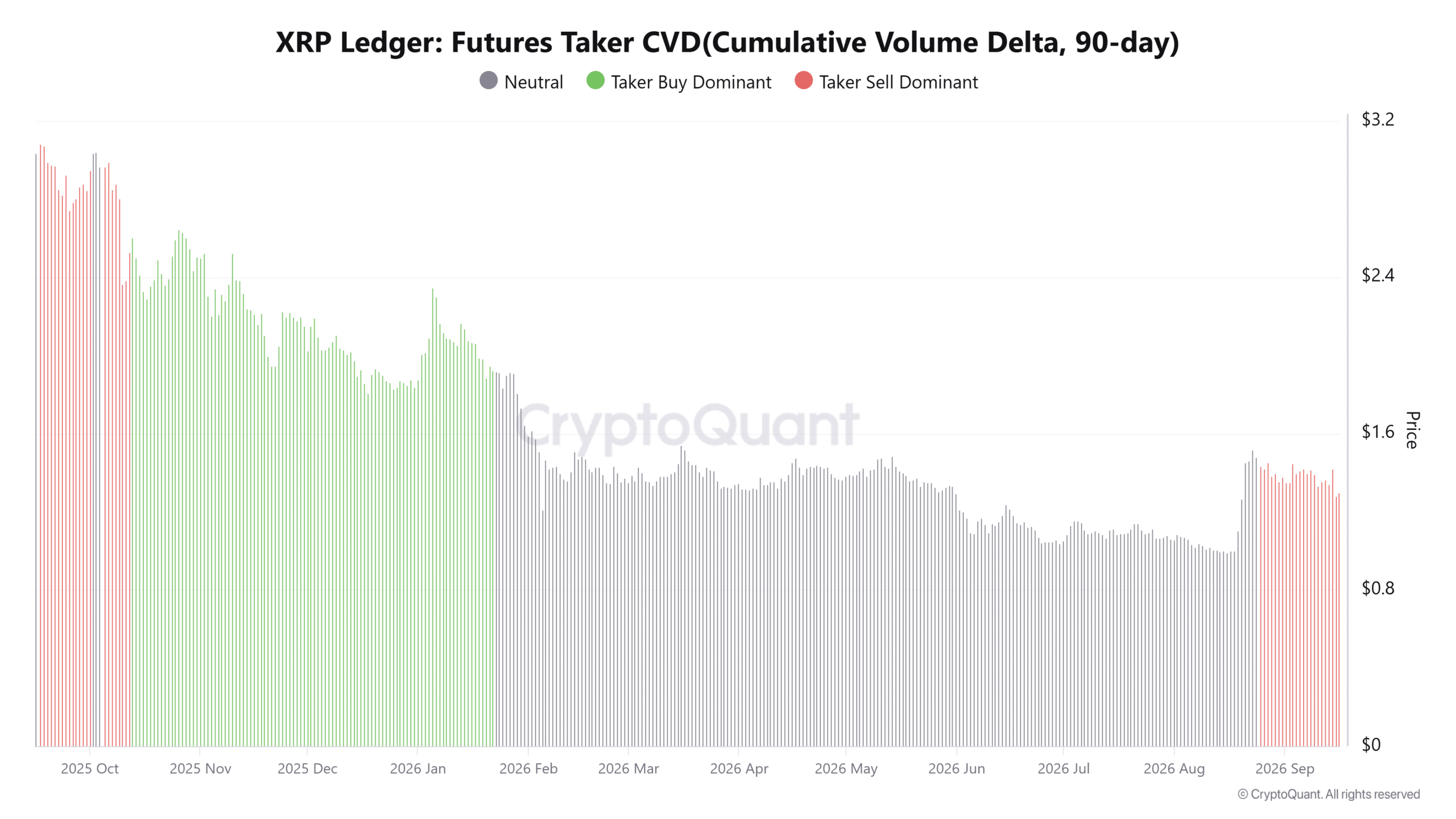
The $1.30 support level was highlighted as a key short-term support, one that XRP has failed to hold due to the increased sell pressure in recent days.
There was aggressive selling in the futures markets, accompanied by the Open Interest decline.
What next for XRP?
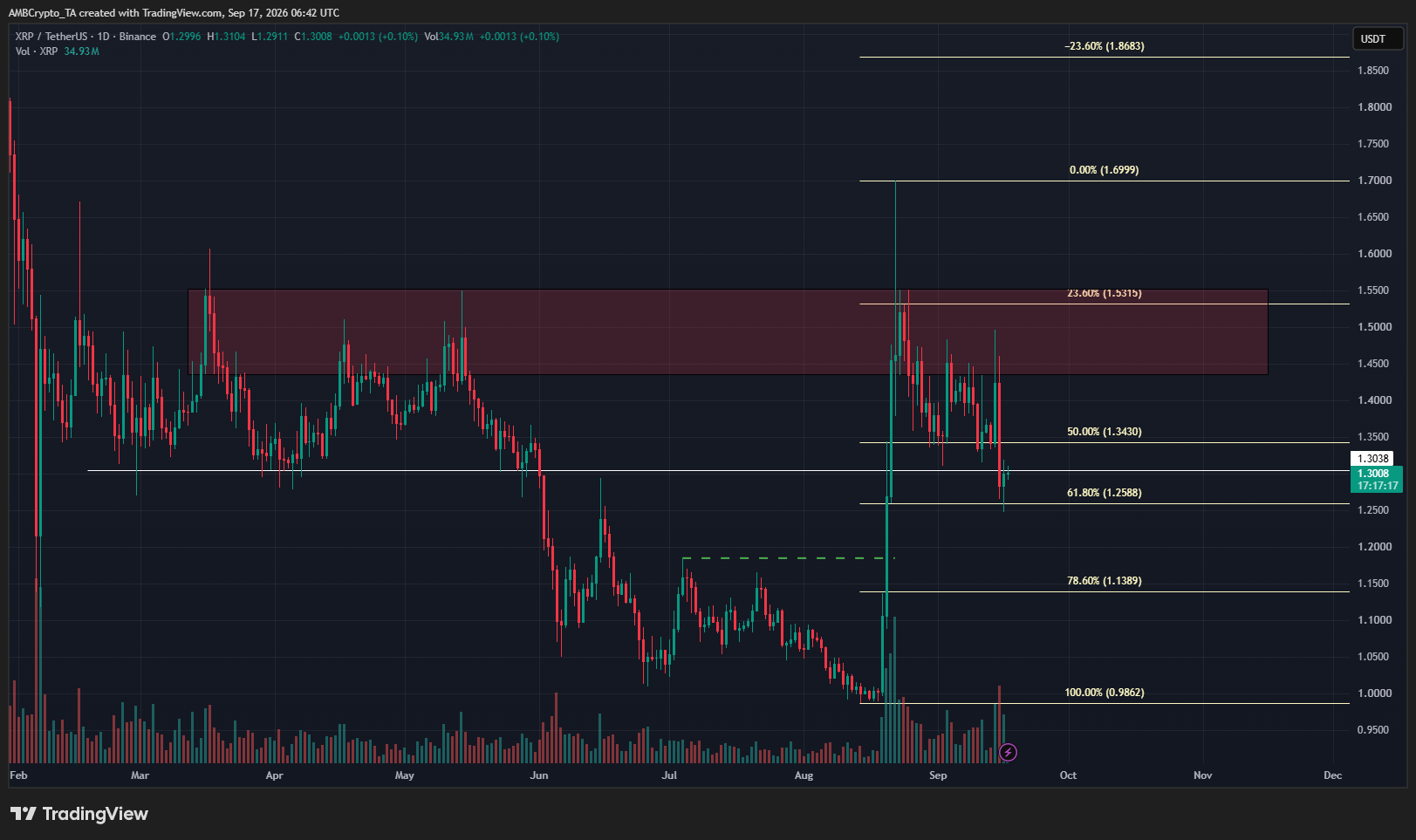
The XRP swing structure on the daily timeframe was bullish. The downtrend earlier this year set a lower high at $1.184 (dotted green) that was breached by the August rally, flipping the structure around.
The 61.8% Fibonacci retracement level has been tested, and at the time of writing, the $1.30 former support was being tested as resistance.
Without an influx of strong demand in both Spot and Futures markets, XRP could continue its retracement and fall toward $1.14 next.
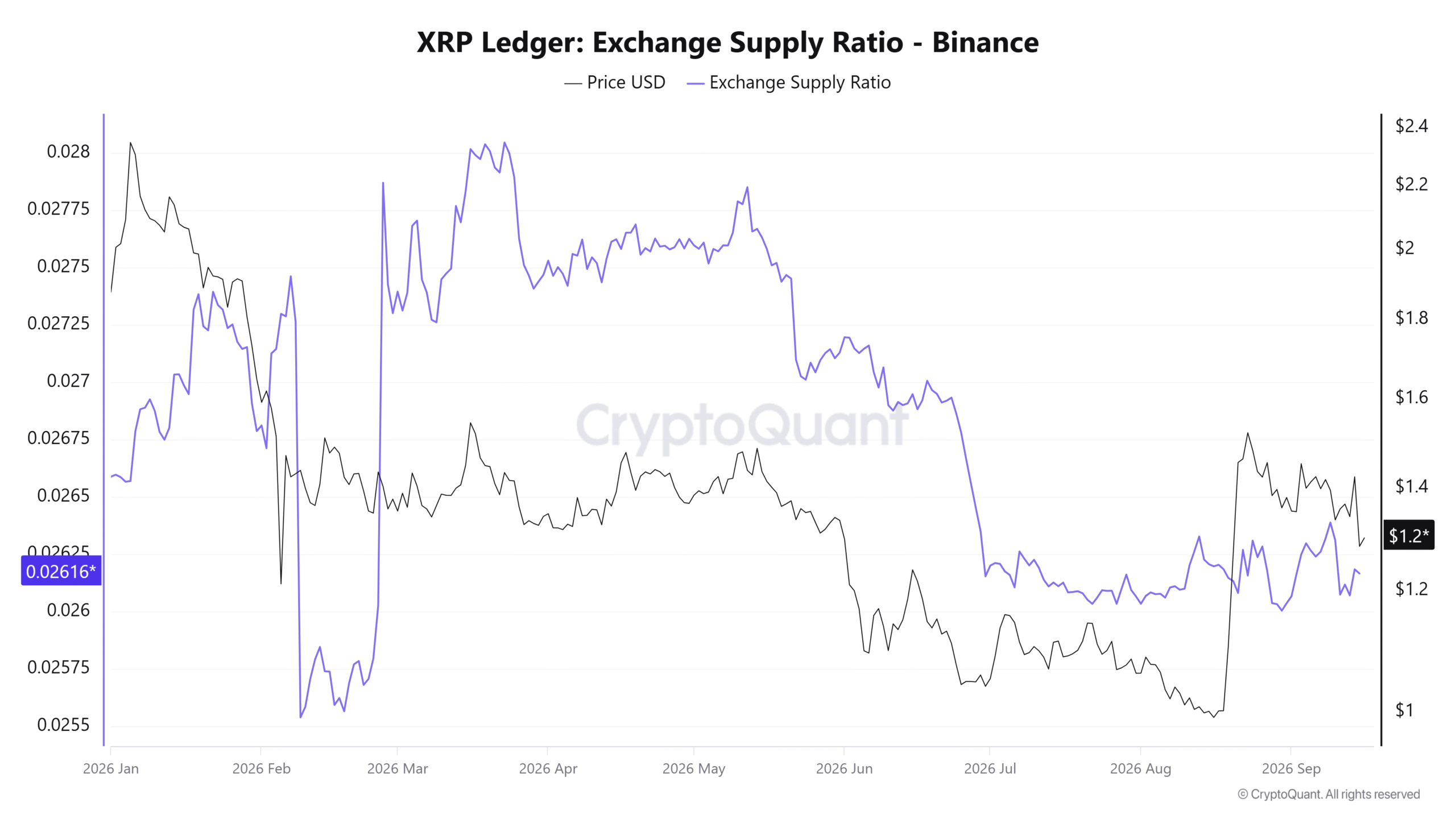
The exchange supply ratio measures the proportion of XRP’s circulating supply that is on centralized exchange wallets. The ratio had been falling from April to July. Since then, it has stabilized at around 2.6%.
If the ratio continues its previous decline, investors can take it as a sign of accumulation and coin flow into cold storage.
On the other hand, a further price decline with an increase in the supply ratio would shake the bullish bias of XRP. This bias has already suffered from the rejection at the key $1.50 supply zone.
Final Summary
- XRP was unable to breach the $1.50 supply zone and has dropped below the $1.30 support.
- The derivatives data showed increased sell pressure and declining speculative interest, hinting at short-term bearish sentiment.