$600K stolen from Trezor and Exodus wallets – How did it happen?
If the owner denied approving the transfers, how did they carry the wallet’s signing authority?


Onchain Lens reported over $600,000 lost from one user’s Trezor and Exodus wallets on the 23rd of November. The Trezor wallet theft report raised a harder question: how did transfers use the victim’s signing authority without their claimed approval?
The blockchain investigator listed approximately $580,000 in Tether [USDT] losses on TRON and $23,400 in USD Coin [USDC] on Solana. Another $9,500 reportedly disappeared from an Exodus wallet on the same iPhone 17 Pro Max.
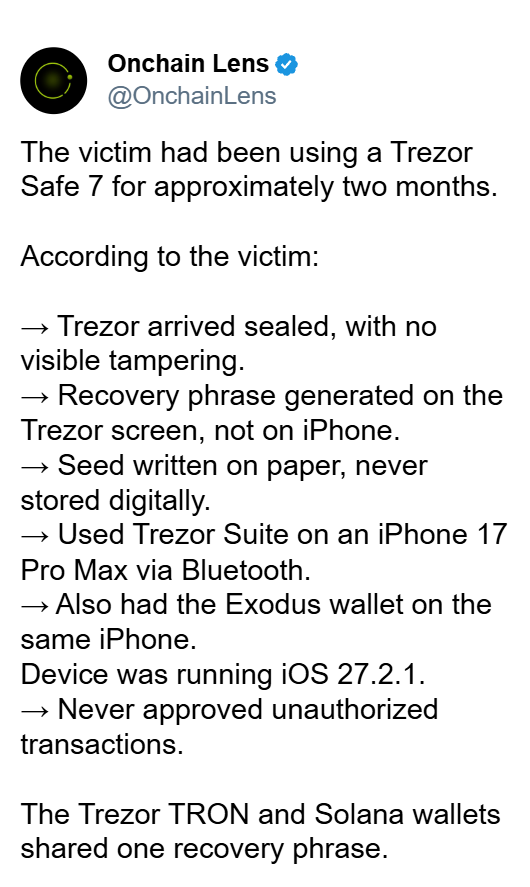
Reportedly, the victim generated the recovery phrase on Trezor and kept it on paper and refused to allow anyone physical access to the device.
What did the signatures reveal?
A 49,999 USDT transfer on the 21st of November used the TRON account’s default owner permission. It was a direct transfer, with no transfer from operation drawing on an existing token allowance.
On Solana [SOL], the examined instruction identified the victim’s wallet as the transfer authority, signer, and fee payer. Notably, no separate delegate appeared.
These transfers used the wallet’s signing authority. However, it is unclear how someone gained that access.
A valid signature authorizes a transaction on the network. So, it cannot establish whether the owner knowingly approved it. The Trezor accounts on both chains shared one recovery phrase, making that backup a possible link between the losses.
How did Trezor respond?
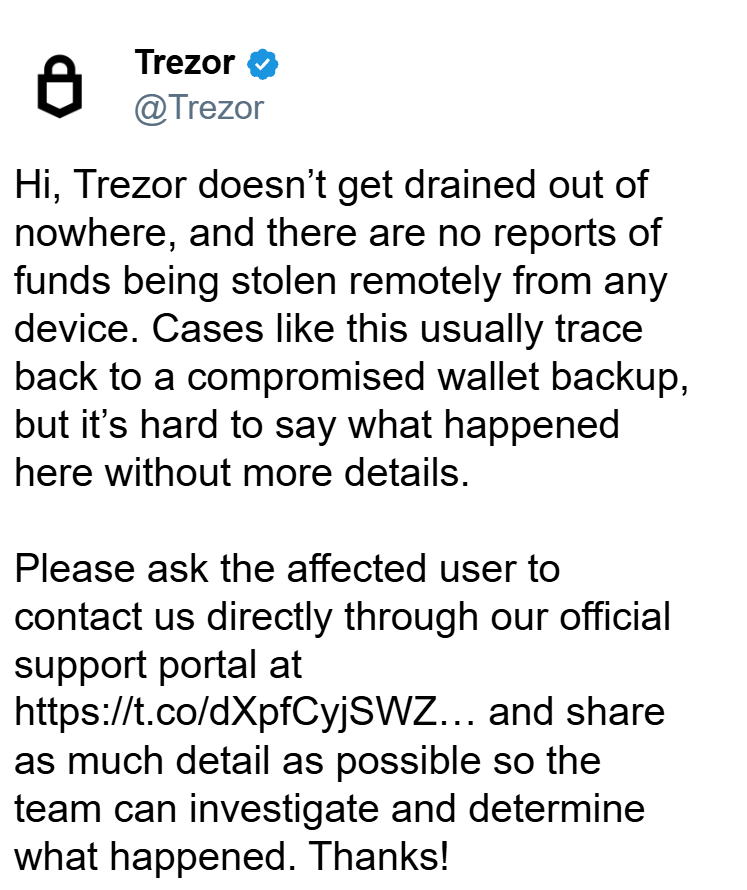
In an X reply, Trezor said similar cases usually involved “a compromised wallet backup.”
It also acknowledged,
It’s hard to say what happened here without more details.
The company asked the affected user to contact official support. Its reply offered a possible explanation, without establishing this incident’s cause.
Trezor says its Bluetooth chip cannot access private keys. On the other hand, Exodus says its Trezor integration also leaves those keys inside the hardware. Whether the user enabled that integration remains unclear.
Apple’s 9th of November update patched Bluetooth issues, but Onchain Lens found no evidence linking those vulnerabilities to these transfers.
Do earlier attacks explain this case?
Earlier incidents show why identifying the route matters.
As AMBCrypto reported, Trezor confirmed implants in three CryptoBilis-sold Safe 5 devices on the 12th of November. Those implants captured recovery words from device screens.
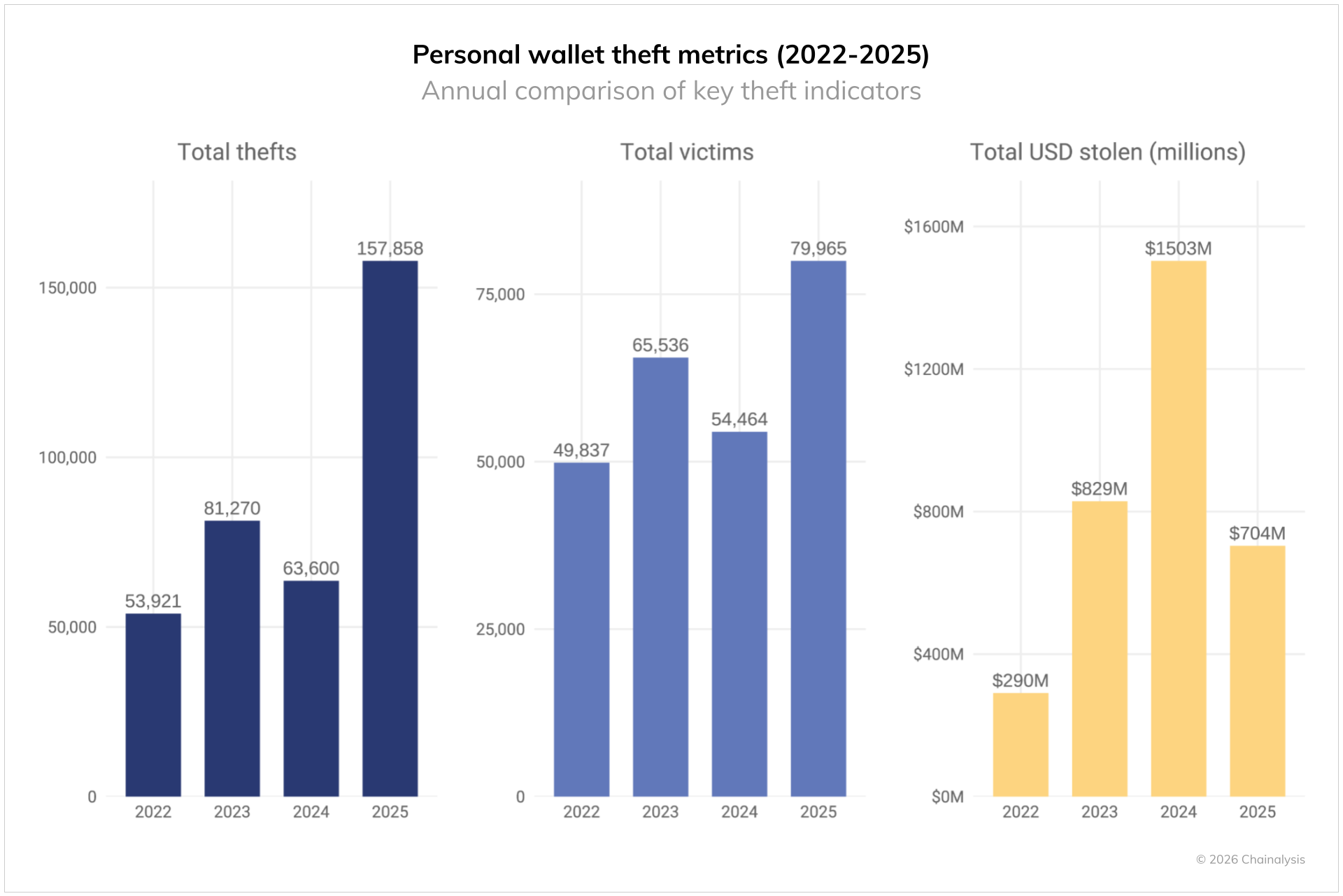
Separately, Confiant’s MoldyRoost research documented another route; malicious ads delivering exploits to vulnerable iPhones. Furthermore, Chainalysis counted roughly 158,000 personal-wallet compromise incidents affecting 80,000 victims in 2025.
For this user, the unanswered question is specific: how did someone obtain signing access across the affected wallets?
Final Summary
- A victim lost over $600,000 across Trezor and Exodus multi-chain wallet accounts.
- Valid signatures authorized the transfers, but the breach vector remains fully unconfirmed.