Can the CLARITY Act secure a Senate vote before the August break?
The CLARITY Act draft brings clearer crypto oversight as lawmakers work toward a unified U.S. regulatory framework.


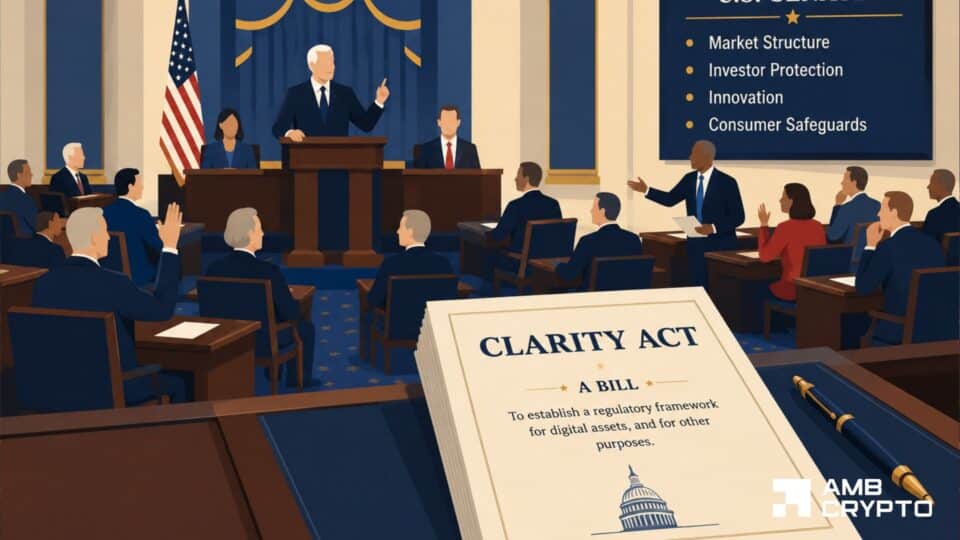
The Senate’s packed legislative calendar is narrowing the window for the CLARITY Act, even as the bill moves closer to a decisive procedural stage.
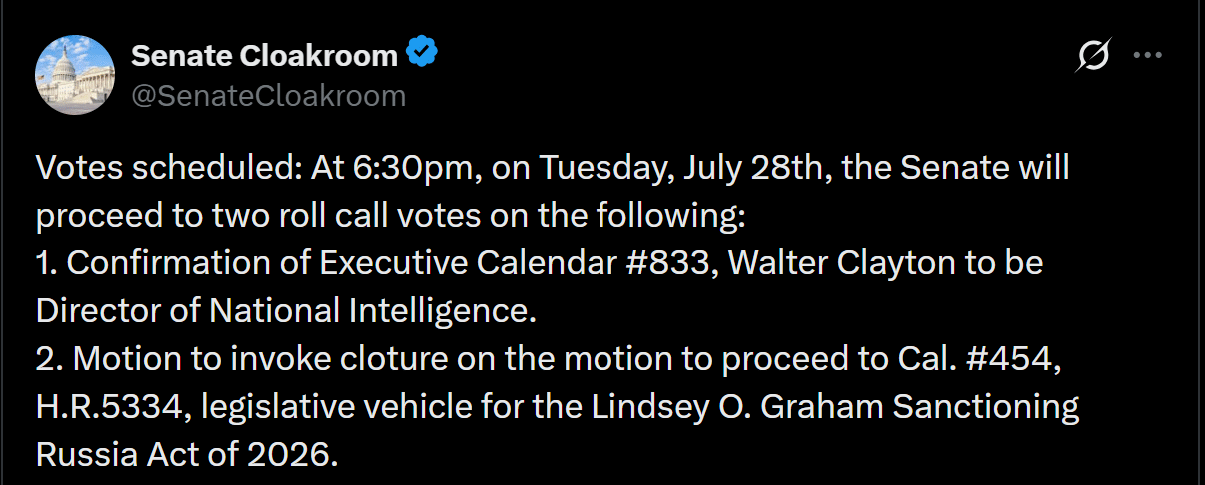
On the 28th of July, lawmakers will focus on Jay Clayton’s confirmation and the cloture process for H.R. 5334, the legislative vehicle for the Lindsey O. Graham Sanctioning Russia Act of 2026.
Senate Majority Leader John Thune is expected to prioritize those measures first, leaving the crypto market structure bill awaiting floor time.
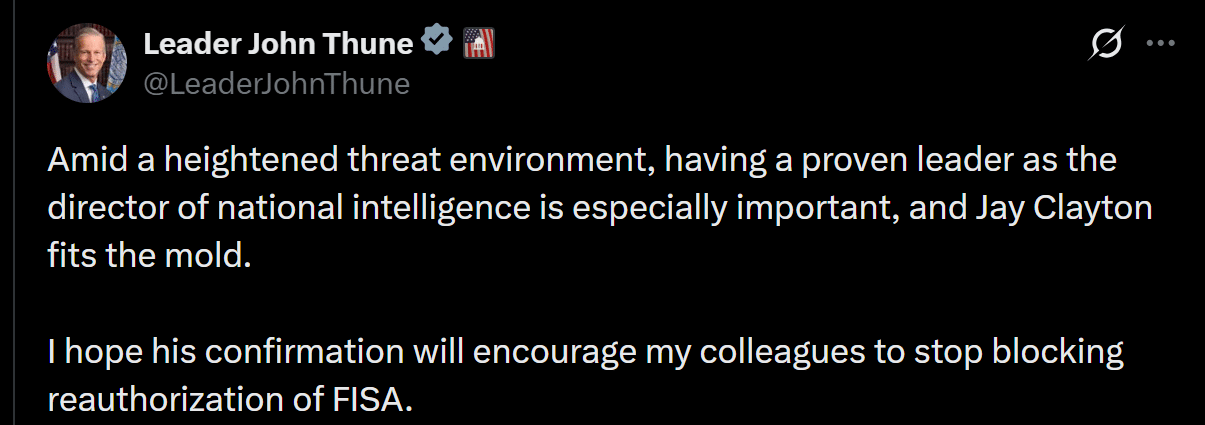
Since the Senate generally advances one contested measure at a time, those priorities reduce the time available before the August recess for digital asset legislation. That does not weaken the bill’s momentum.
This comes as it has already cleared the House and Senate Banking Committee and remains on track for a possible floor vote during the week of the 3rd of August.
However, any procedural delay would postpone the proposed 180-day implementation period, extending regulatory uncertainty for exchanges, issuers, and institutional investors awaiting a clearer U.S. digital asset framework.
The rules take shape
The latest CLARITY Act draft expands the Senate’s push for digital asset legislation by consolidating competing proposals into a single framework. This signals that negotiations have entered a more substantive phase.
By merging competing proposals into a single text, lawmakers have narrowed policy differences while introducing new ethics provisions to strengthen bipartisan backing.
Beyond introducing new ethics provisions to strengthen bipartisan support, the draft provides a clearer blueprint for how the U.S. intends to regulate digital assets.
It separates SEC and CFTC responsibilities, establishes disclosure and certification standards for token issuers, and creates a streamlined fundraising exemption for qualifying projects.
Rather than focusing solely on oversight, the revised framework attempts to balance innovation with investor protection. In doing so, this gives exchanges, issuers, and institutional participants better understanding on how future digital asset markets may operate under federal laws.
The CLARITY Act faces a new test
Although the CLARITY Act offers a clearer regulatory framework, the debate has now shifted toward how that framework should be implemented without weakening existing safeguards. As supporters seek to get the Senate to act quickly on the bill, opponents are cautioning against diminishing state enforcement capabilities.
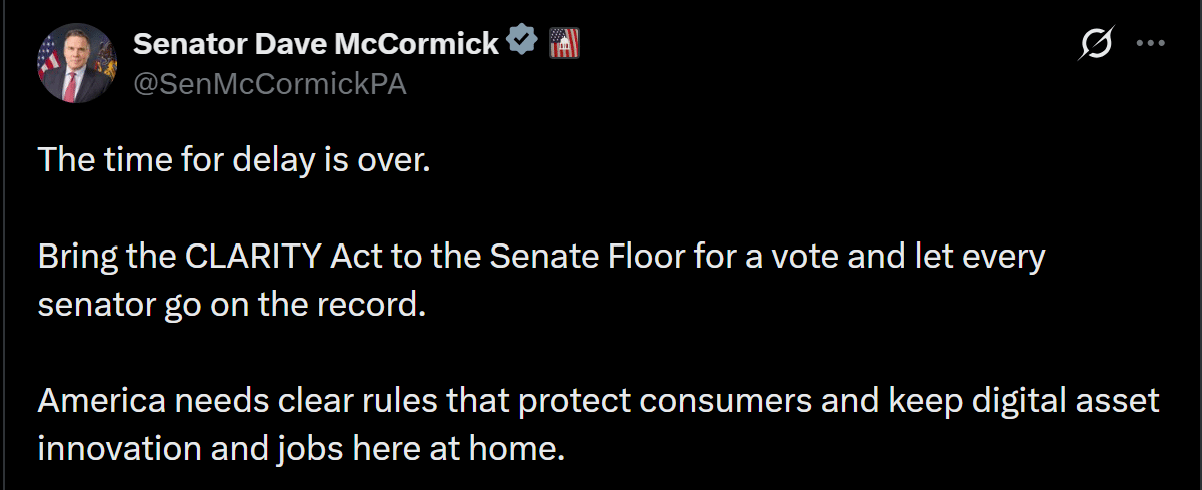
Senator Dave McCormick is urging Senate leadership to move forward with a floor vote on the bill. He argued,
Lawmakers should formally decide its future rather than prolong the process.
Meanwhile, New York Attorney General Letitia James cautioned against it. He warned that if states lose enforcement authority, consumers will suffer because of loss of years of building consumer protections through enforcement.
Therefore, the ultimate decision will define clarity around regulations and determine how responsibility for protecting digital asset investors is shared.
Final Summary
- The CLARITY Act moves closer to a unified crypto framework, though Senate timing remains the key hurdle.
- The CLARITY Act draft strengthens regulatory clarity while balancing innovation, investor protection, and market oversight.