Stablecoin card spending hits record $789M in September – Report
USDC is winning the stablecoin card war but USDT still rules overall.



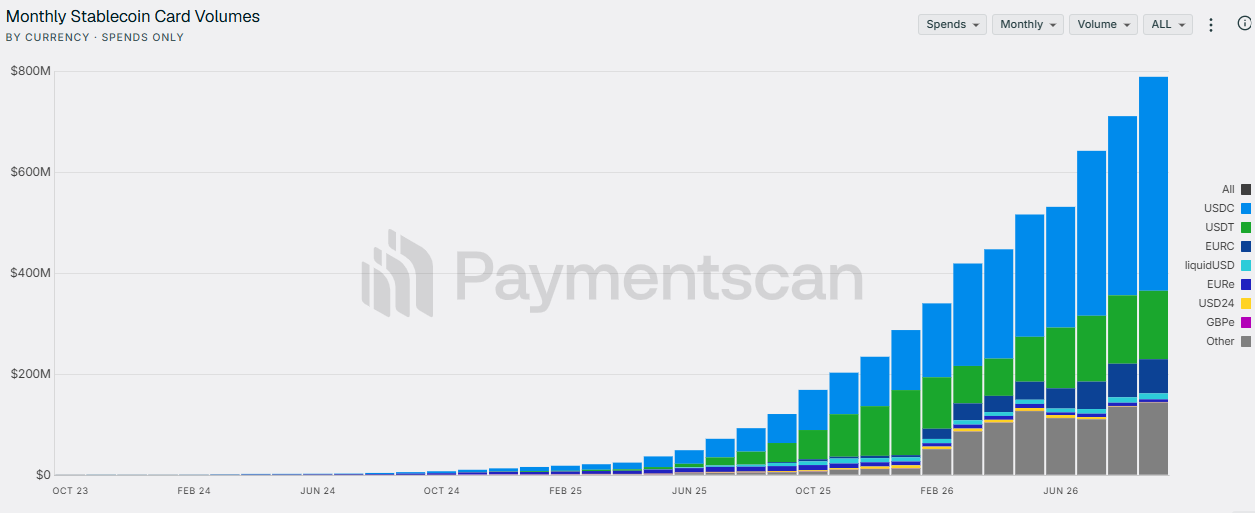
Monthly spending on stablecoin cards hit a record high of $788.9 million in September. In the past two years, stablecoin card activity has been printing new record levels every month.
Since early 2025, the stablecoin card volumes have increased by nearly 49x from $16 million to $789 million. Reacting to the same, Frank Chaparro, an exec at market maker GSR, said,
Stablecoins are increasingly moving beyond trading and settlement into everyday payments. Wow.
Stablecoin wars: USDC vs. USDT
According to venture firm a16z, cards have become one of the best ways to spend stablecoins and crypto. And Circle’s USDC seems to be aggressively gaining ground against Tether’s USDT in the stablecoin cards segment.
Notably, USDC stablecoin card volumes were at $423 million in September. This was 3x compared to USDT’s $135M and a 57% market share dominance over the same period.
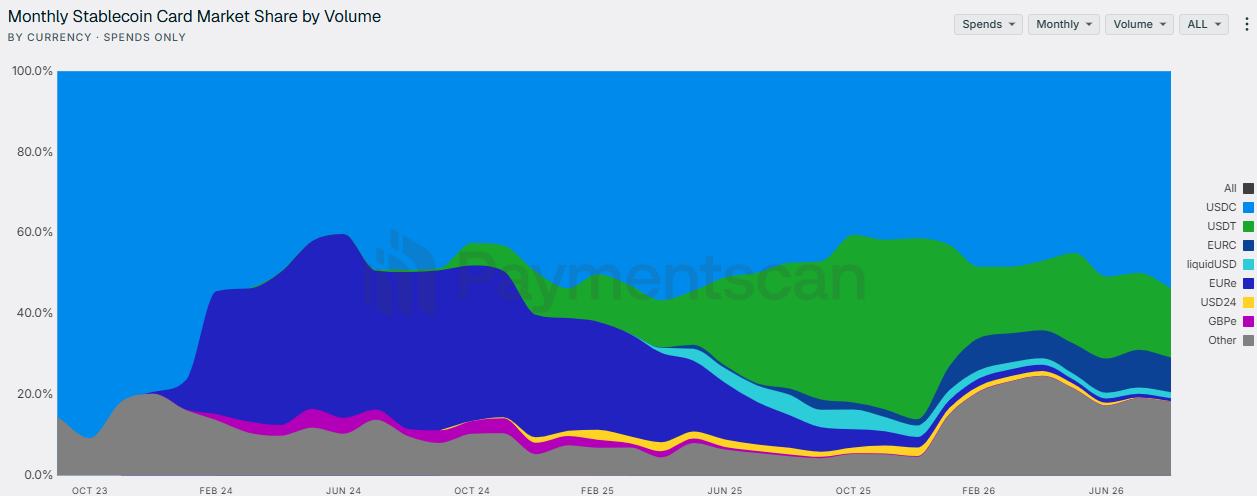
In the past two years, USDT has seen its market share grow from nearly zero to 49% as of January 2026. But it has trended downward for the rest of 2026 to 17%.
Worth noting that the MiCA transition window ended this year, with more platforms such as Revolut delisting USDT for non-compliance. It’s not clear whether this is the reason behind the shrinking stablecoin card market share.
Still, the above charts show that USDC has gained a moat in regulated fintech and consumer rails.
Even so, USDT dominates the overall stablecoin activity in September. According to Visa, USDT had $182 billion in transfer volume, or 84% market dominance. In contrast, USDC activity was at $32.6 billion, or 15% market share.
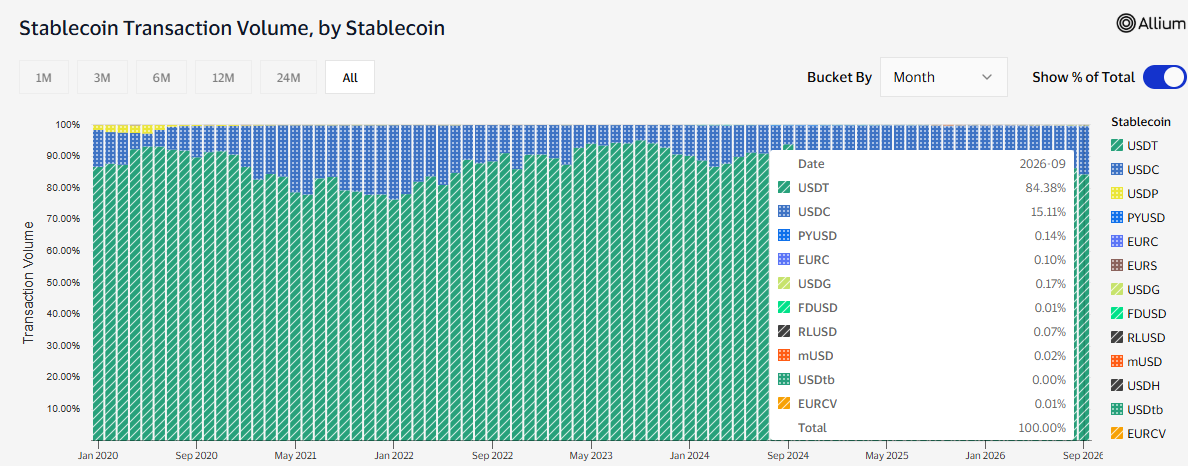
In other words, USDT still reigned in global market share, given its entrenchment in emerging markets as a savings, inflation-hedging tool and for cross-border transfers.
This reinforces a bifurcated market for stablecoins, where one serves regulated rails while the other becomes a utility and hedging tool for emerging markets.
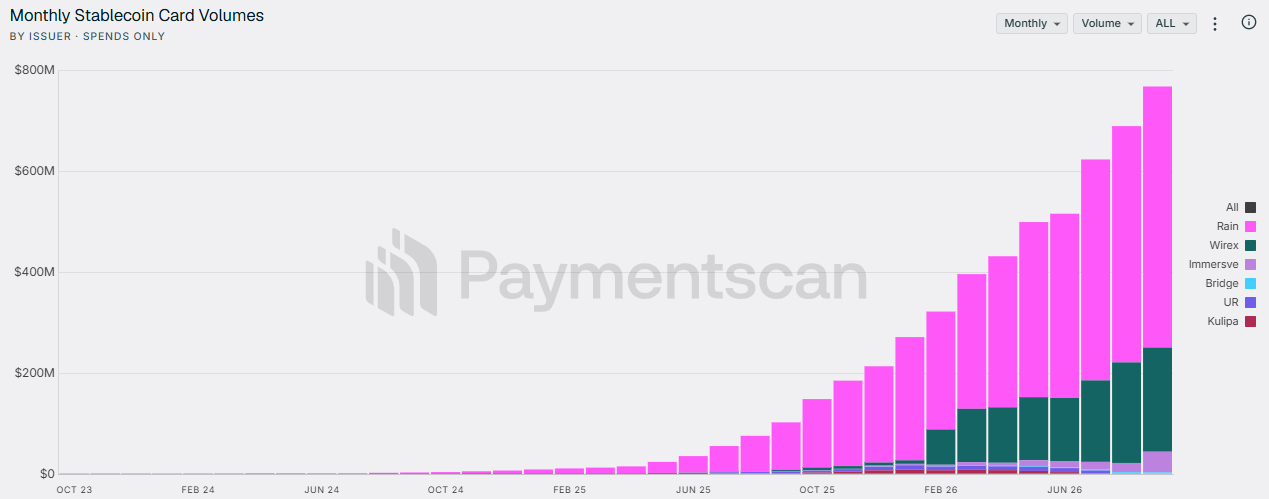
That said, the growing use of stablecoin cards for spending may also come with risks. As of September, Rain is single-handedly the largest infrastructure player powering the stablecoin cards.
In other words, users and neobanks depending on stablecoin cards can lose funds and get stuck if a mishap, bug, or hack hits Rain. Think of it as a contagion risk for the stablecoin card segment. In fact, this risk was highlighted by the recent Rain-powered Avici neobank $500K exploit.
Final Summary
- Monthly stablecoin card spending hit a new record of $789 million, up 49x from 2024.
- USDC dominated stablecoin cards with a 54% market share, but lagged USDT in global activity.