‘No bundled risk’- Why Ether.Fi has removed all restaking exposure to weETH
Here's why Aave's risk approach could be affecting liquid restaking market!


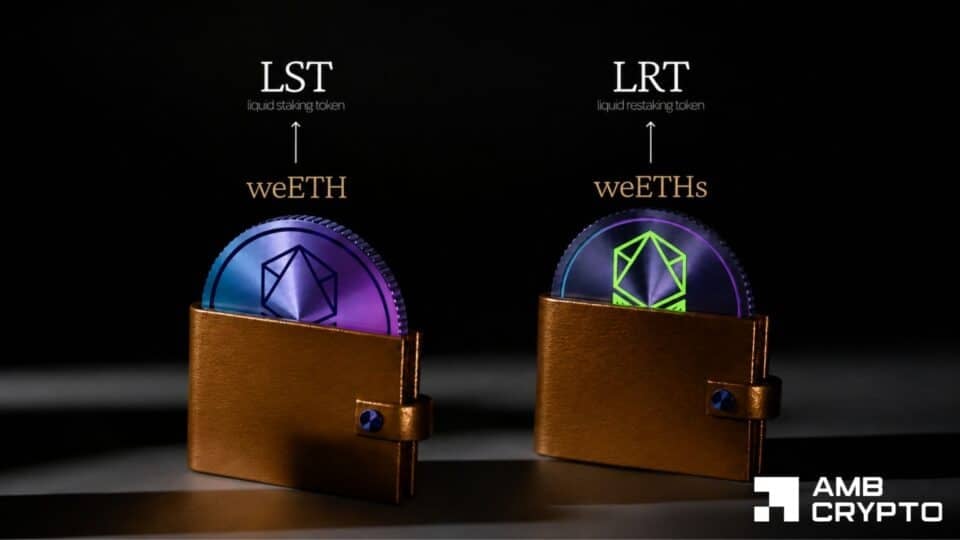
One of the leading liquid restaking platforms, Ether.fi, has announced major structural changes to its top-issued token, weETH.
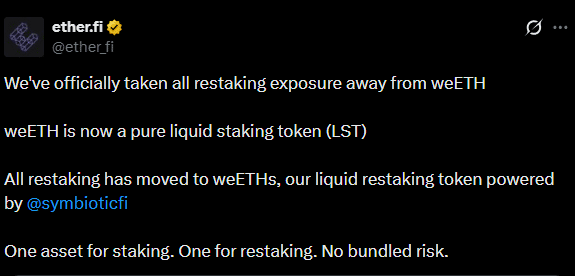
On the 7th of August, the project said that it has ripped off all the restaking exposure to weETH, effectively making it a “pure liquid staking token (LST).”
The project has now moved its restaking activities to weETHs on Symbiotic and exited the Eigen Layer. According to the team, the move is aimed at ensuring there is “no bundled risk.”
For the unfamiliar, liquid staking tokens (LST) allow one to earn rewards for their staked ETH and still have a token to unlock liquidity around DeFi.
On the other hand, liquid restaking tokens (LRT) allow you to earn even more interest on top of the base staking rewards by redeploying the staked ETH in other yield generation strategies.
EtherFi: DeFi risks and shifting restaking landscape
But these looping strategies involved in restaking activities to hunt for more yields are risky. In fact, they have become targets for DeFi exploits like the KelpDAO $292M hack.
To mitigate some of the attack vectors of this nature, Aave has adopted an aggressive risk framework that has scrapped over $98M worth of risky assets with low adoption.
Besides the DeFi risks, the overall liquid restaking market has contracted despite record demand for regular ETH staking. The overall market has eased from $29B to $22B since last October.
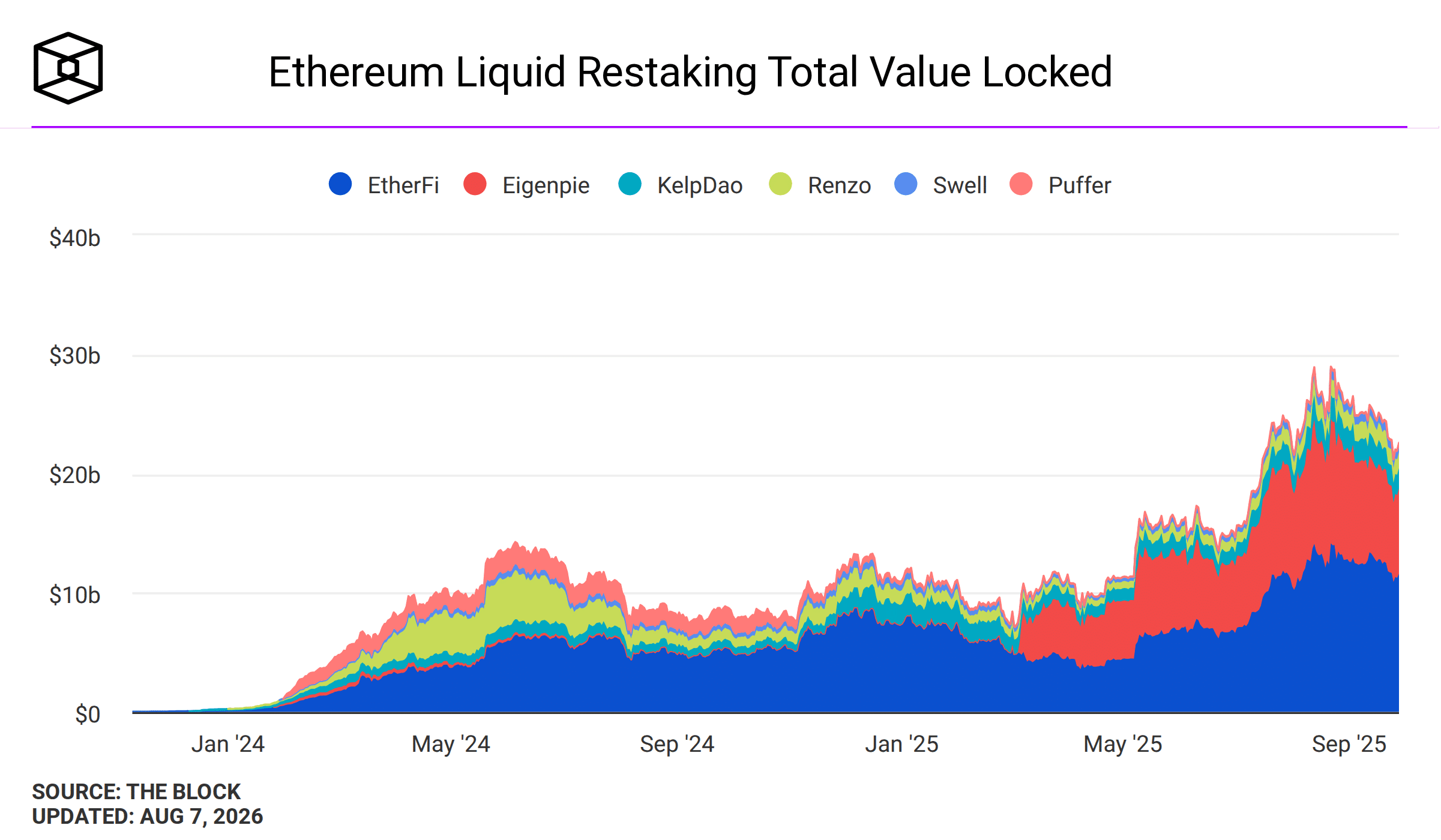
But EtherFi still controls about half of the market with $11.4B in total locked value (TVL).
However, some viewed the rollback on EtherFi’s restaking as a way to readjust to the shrinking market. Even the EtherFi CEO, Mike Silagadze, echoed a similar sentiment, noting that,
End of an era. Sad. I still think restaking will come back in one form or another; I think it was just a bit too early.
For his part, Tom Wan of Entropy Advisors highlighted that EtherFi and Eigen are the pioneers of the ETH looping strategies on Aave.
EtherFi & Eigen kickstarted the first wave of ETH looping on Aave and the Pendle PT trade, offering 50-100 bps on top of the native staking rate
During the Aave clean-up mentioned earlier, even the Pendle PT trade looping was deprecated by the lending giant. In other words, EtherFi and Eigen were indirectly impacted.
AMBCrypto had earlier projected the Aave risk framework could have a potential ripple effect across DeFi and chains. This may just be the beginning of the impact of the expected readjustment in the DeFi ecosystem.
Final Summary
- EtherFi has sized down its liquid restaking plans by turning its weETH into a pure LST.
- Analysts see this as an ‘end of an era’ amid broader readjustment to DeFi security risks