Analyzing XRP’s $1.55 test – Can bulls overcome rising exchange supply?
XRP’s rebound is testing whether buyers can turn the recovery into a sustained breakout above $1.55.



XRP has pushed back toward $1.55 after turning the 20th of September dip near $1.39 into a strong rebound. Once XRP reclaimed the $1.40 level, the price continued to rise to $1.55, where sellers stopped the advance.
However, the retracement cooled near $1.52, enabling the bulls to recover most of the decline before pushing the token back to $1.5439. Importantly, this matters because the slight retracement still keeps the structure in place, hence giving the bulls another shot at clearing $1.55.
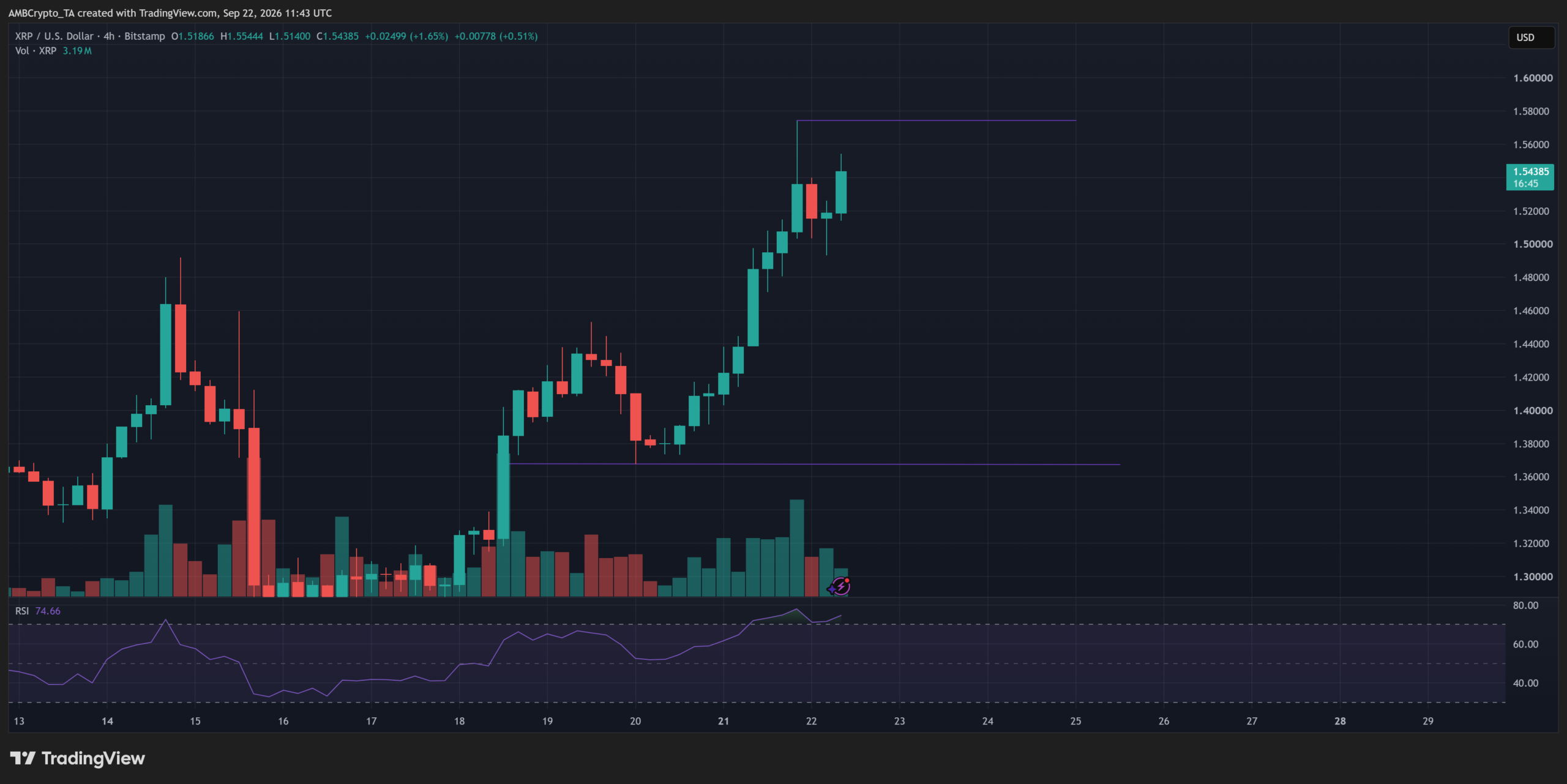
If buyers decisively clear $1.55, maintaining this higher low structure will likely help remove immediate overhead sell pressure and accelerate upside momentum.
XRP’s rally meets rising exchange supply
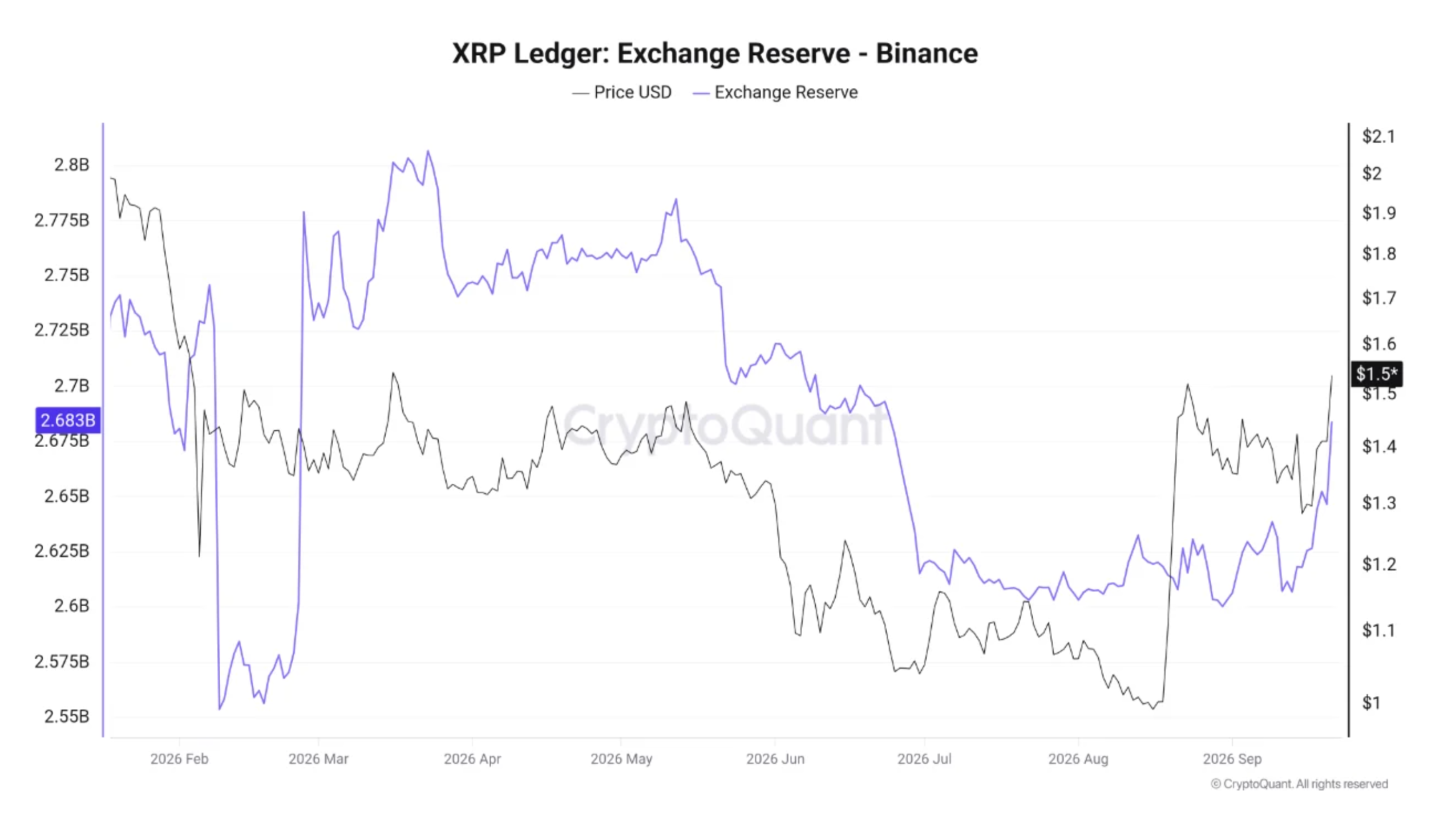
As XRP’s price trends towards $1.50, Binance reserves are increasing rapidly. This increase indicates that rising trading activity is drawing additional liquidity onto exchange order books.
Binance reserves have increased to approximately 2.68 billion XRP, up from nearly 2.55 billion during the summer decline.
Furthermore, as XRP began its recovery above $1.00, it brought exchange-held XRP closer to the amount seen in June. Therefore, this expansion indicates that higher trading activity is drawing additional liquidity back onto central exchanges.
Meanwhile, XRP’s rebound is occurring at the same time Binance’s turnover has been rapidly increasing. Yet, there is no evidence from the flow data that this represents buying pressure.
Moreover, average daily XRP deposits have reached about 663% above the quarterly baseline during active trading sessions. Yet rising withdrawals quickly offset the inflows, leaving Binance reserves only 0.22% above baseline.
This high turnover points to active repositioning rather than clear accumulation or heavy selling.
Furthermore, recently, net flows have become negative, indicating that traders are merely switching positions instead of adding large quantities of XRP to exchanges.
Together, these dynamics indicate that traders are simply exchanging positions rather than accumulating large amounts of XRP into exchanges.