Are Bitcoin’s 7% July gains masking an extremely skeptical market?
Falling spot volume and extreme bearish online engagement highlighted the severity of Bitcoin market sentiment.



Bitcoin [BTC] closed the trading day at $62.8K, marking the month’s close. It recorded gains of 7.2% in July, but the higher-timeframe price structure remained bearish.
The $64K-$65K area was established as a support zone in March and April. However, it now seems to have been flipped to resistance.
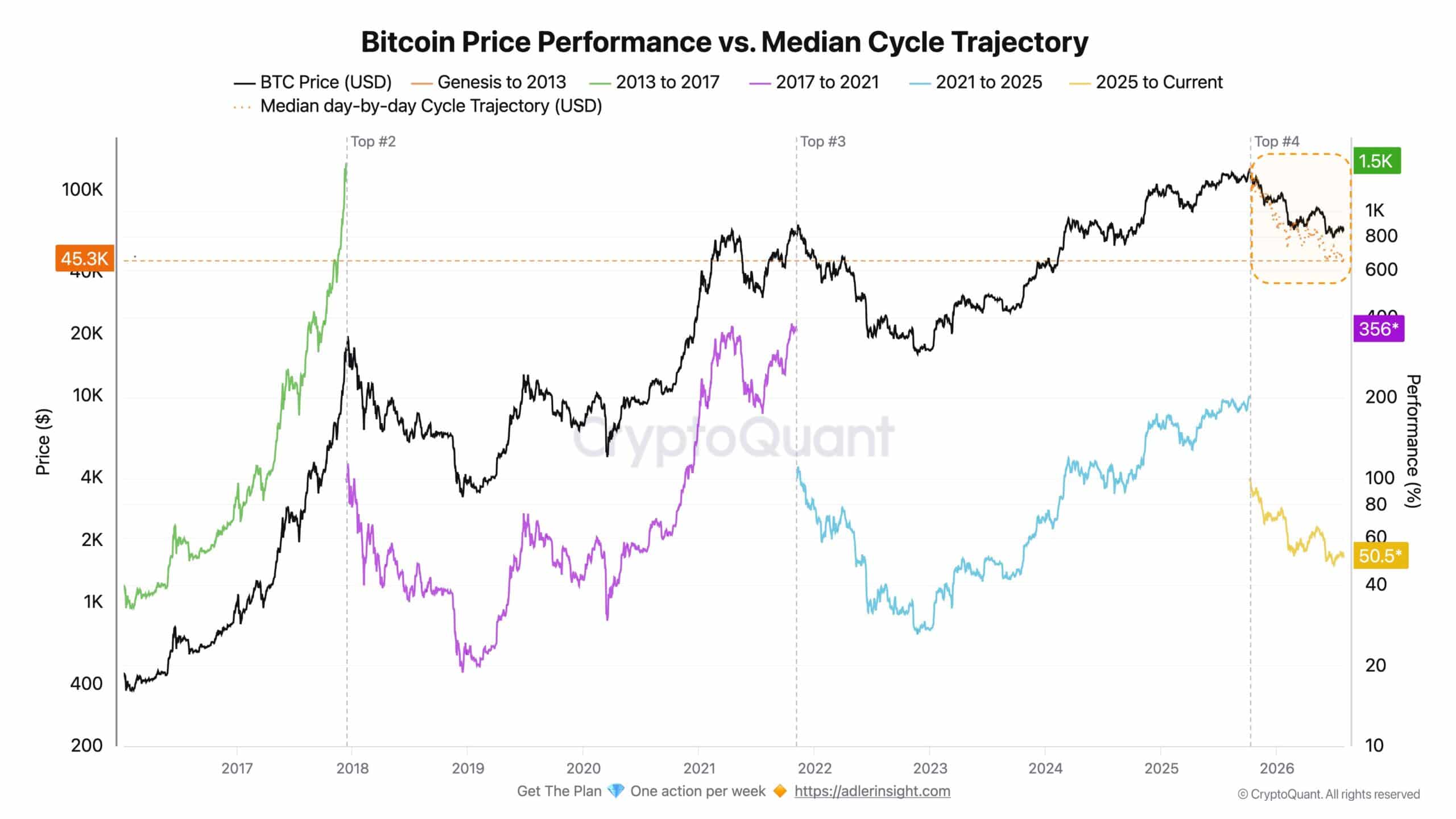
On the other hand, it can also be argued that BTC is holding up relatively well. In a post on X, crypto analyst Axel Adler Jr. wrote that the current price is still close to 39% above the historical median trajectory.
Measured from the cycle’s peak, and comparing with the median trajectory of the previous three cycles, the analyst observed that $45,347 is the expected market price now.
That is not to say the price will fall to this level though, nor does it confirm that a bullish turnaround will commence. It only underlines the relatively milder nature of the bear market thus far.
The bearish challenges ahead for Bitcoin
Here, it’s worth pointing out that another sell-off might be imminent too. According to analyst Ali Martinez, Bitcoin has made negative returns in August since 2022, averaging a 10% decline on the charts.
That’s not all either as the TD Sequential printed a sell signal ahead of this month that has seen a market setback in recent years.
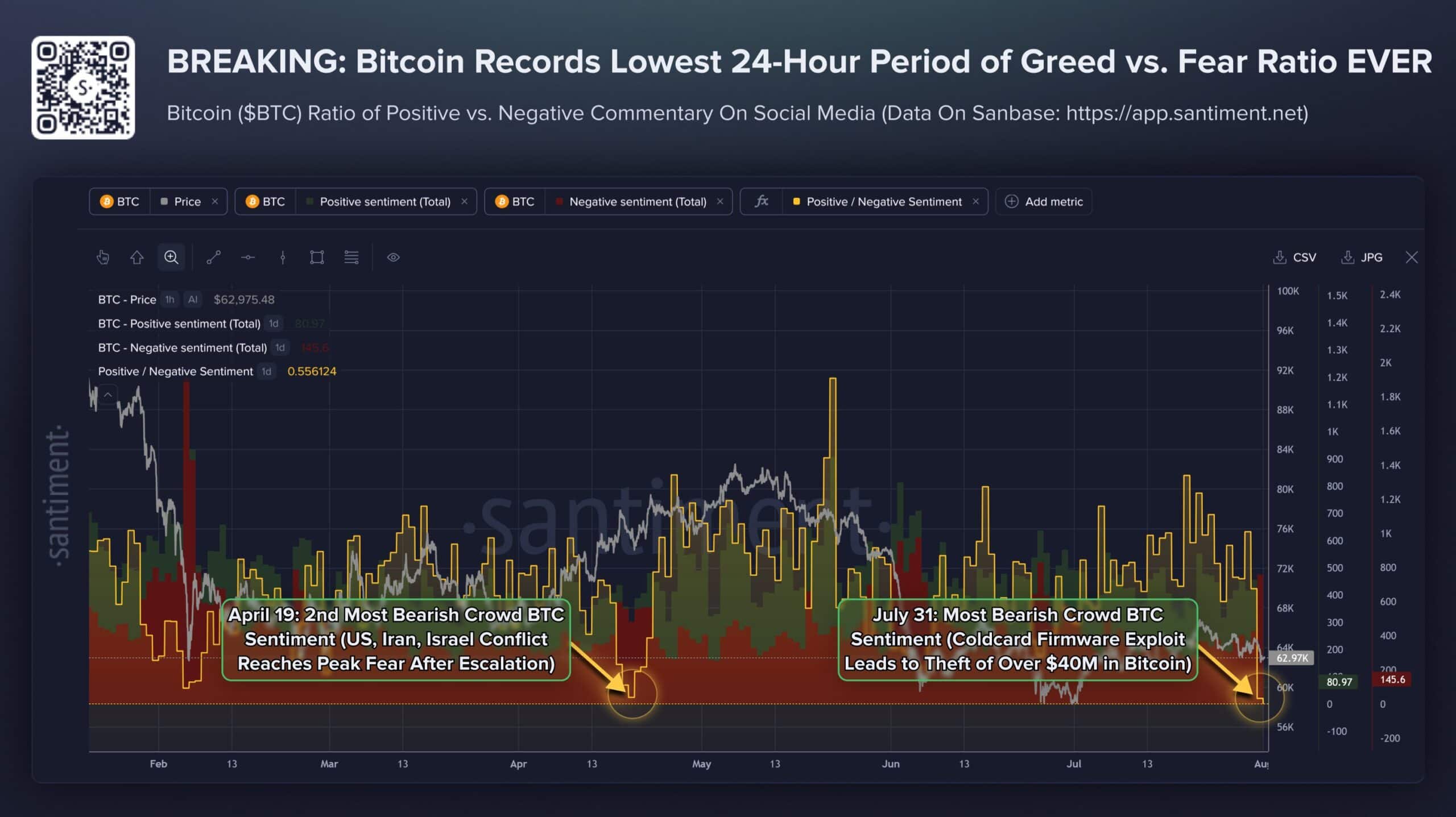
Crypto-intelligence platform Santiment also observed that Bitcoin recorded the lowest positive-to-negative commentary ratio across social media platforms since Santiment began keeping records.
A big reason for the sentiment decline was the Coldcard seed flaw. The panic was even worse than the war fears earlier this year, with only 0.58 positive comments for every bearish one.
Not even the FTX implosion or COVID-19 Black Thursday, which were bigger disasters for crypto, generated such pessimistic engagement online.
Is this the time to pivot to altcoins?
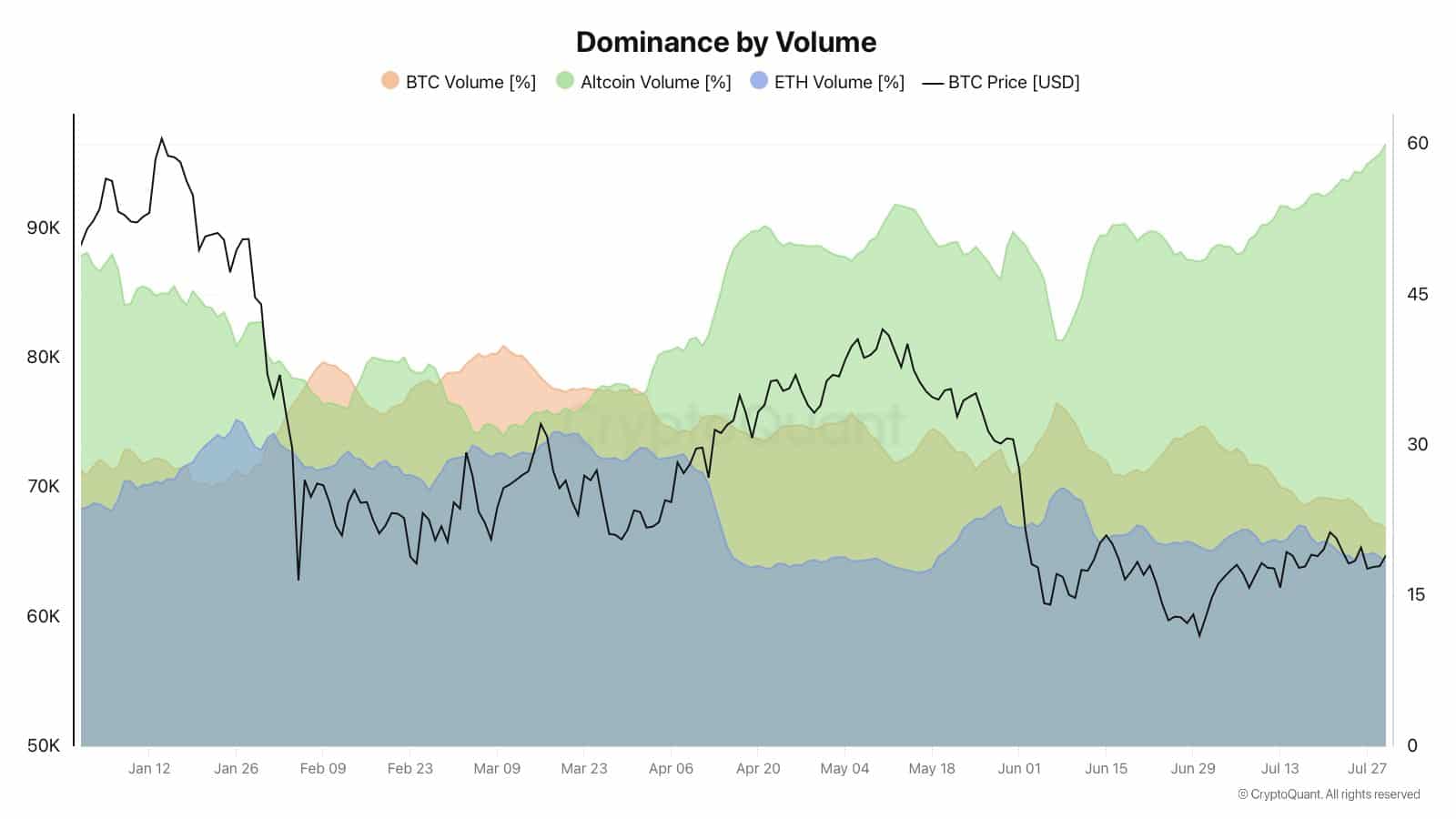
At press time, Bitcoin’s spot trade volumes on Binance were just 22% of the exchange’s total volume. Ethereum had an 18% share, with the altcoin market having 60% of the volume.
Analyst Darkfost used this signal to further highlight the lack of interest in BTC right now. Investor boredom, combined with greater drawdown for alts, might make the latter seem a more attractive buying opportunity.
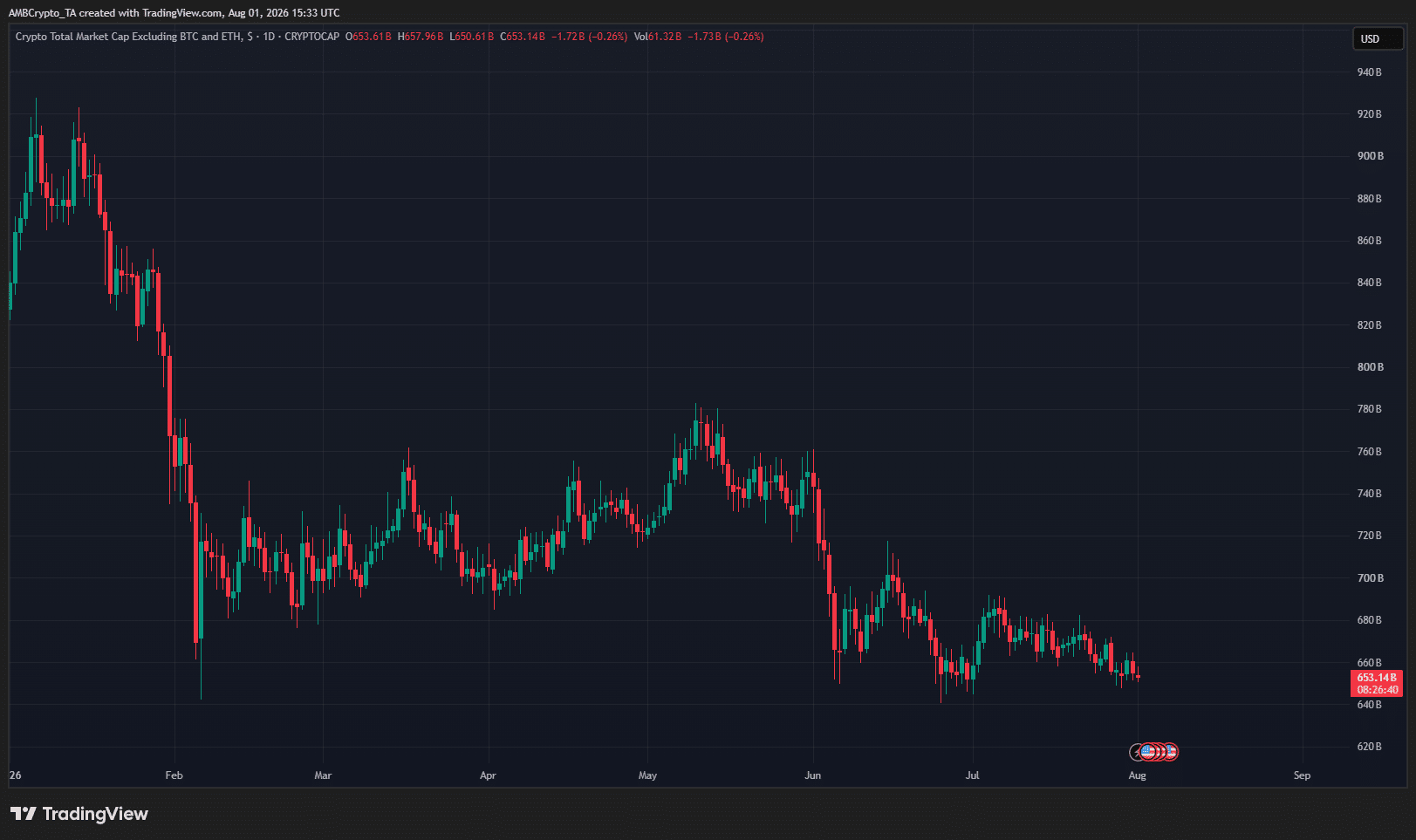
This could be a risky assumption. In the event of a bearish August, most individual altcoins would likely suffer more than Bitcoin. As things stand, the altcoin market cap (excluding ETH) has been in a bearish trajectory all year.
The brief bounce in June was replaced by steady losses in July.
Traders and investors need to persevere and ride out the tough times with smart risk management and storage solutions. The sentiment hit was a big setback for the market, and only time will tell if participants will bounce back from it.
Final Summary
- Social media engagement for Bitcoin saw the highest bearish-to-bullish commentary ratio, even worse than the war fears earlier this year.
- Binance’s spot trading volume has been dominated by altcoins due to waning investor interest in BTC.