Bitcoin wallet privacy at risk? Researcher claims $0.35 attack could expose users’ IP addresses
Can the proposed Bitcoin Core updates prevent this privacy vulnerability?



A potential privacy vulnerability in Bitcoin [BTC] could allow an attacker to link a Bitcoin wallet address to the IP address of the computer monitoring it. This, using a payment worth less than $0.35. For context, each planted transaction costs just $0.18 to $0.34, depending on the address format.
This vulnerability was identified by Bitcoin Core contributor Abubakar Sadiq Ismail in a post on the Delving Bitcoin developer forum. As it stands, although Bitcoin transactions are publicly recorded, wallet addresses are pseudonymous, meaning users can view transaction details without knowing who controls them.
Similarly, Bitcoin’s P2P network makes it difficult to link a wallet to a specific computer.
This is the reason why this revelation has raised an important question about Bitcoin’s privacy — Can someone identify the IP address associated with a Bitcoin wallet, even if the wallet owner never publicly reveals their identity?
Bitcoin wallet weakness comes to light
Well, according to researcher Sadeeq, the answer may be yes because of a weakness in how Bitcoin Core handles transaction rebroadcasting.
To understand the vulnerability, it is important to know how Bitcoin Core works. So, many users operate their own nodes, which maintain blockchain copies, validate transactions, and communicate with other nodes. These nodes can also run wallets that track Bitcoin addresses.
Each node has an IP address that can reveal its internet provider and approximate location. However, a wallet address does not normally expose the IP address of the computer tracking it. Hence, the vulnerability arises because Bitcoin Core may rebroadcast transactions that remain unconfirmed for approximately 12 to 36 hours.
A loophole for attackers
According to the researcher, an attacker can exploit this by sending a small, low-fee payment to a targeted address. For this, the payment must meet Bitcoin’s minimum dust threshold while carrying a low enough fee to remain unconfirmed. Going forward, the attacker could then wait for the wallet to rebroadcast the planted transaction while monitoring different Bitcoin nodes.
When one node announces the transaction again, the attacker can identify it as the node whose wallet tracks the targeted address. This, in turn, would theoretically link the Bitcoin address to the node’s IP address, exposing information about its internet connection.
On the question of simulation involving five target wallets across six trials, Sadeeq successfully identified the correct wallet-tracking node in all 30 attempts. However, this does not necessarily reveal who owns the Bitcoin.
Therefore, even watch-only wallets, which monitor addresses without holding their private keys, can be affected. This also means that avoiding address reuse alone may not be enough to protect wallet privacy.
A potential solution?
Hence, as a potential workaround, users can disable automatic wallet broadcasting through the -walletbroadcast=0 setting. However, this might lead to another problem, and that is that it stops automatic broadcasting of their own transactions. Therefore, proposed Bitcoin Core changes aim to address the issue, but they remain unreleased.
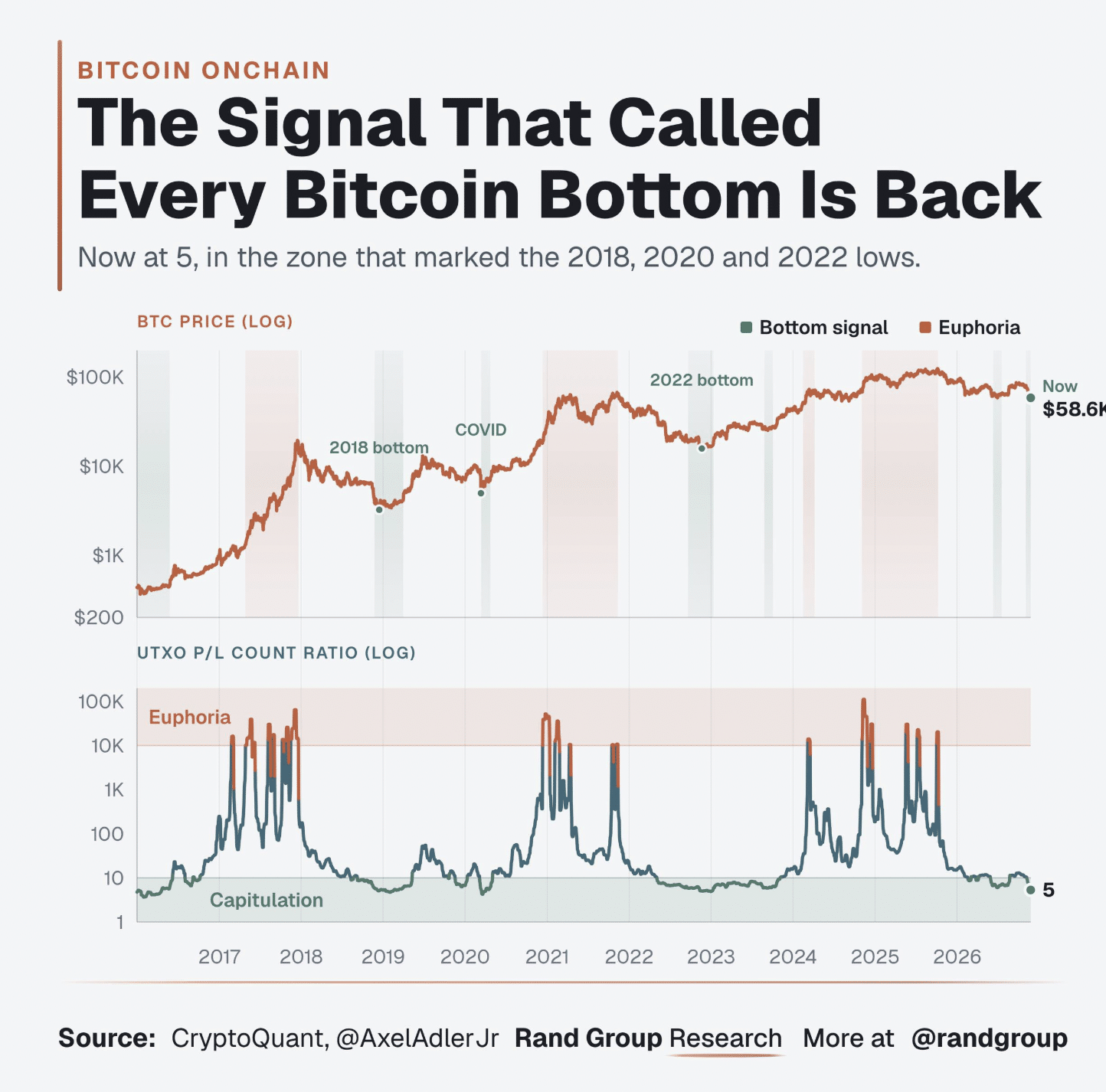
Here, it’s worth noting that these revelations coincided with the percentage of Bitcoin wallets currently at a loss entering a capitulation zone — historically associated with major market reversals. This could also mean that while retail investors panic, larger investors may be preparing to accumulate.
Final Summary
- Vulnerability arises because Bitcoin Core may rebroadcast transactions that remain unconfirmed for approximately 12 to 36 hours.
- Users can disable automatic wallet broadcasting through the -walletbroadcast=0 setting.