Jito [JTO] drops 14% as TVL shrinks $193M: Can THIS offer relief?
JTO kept leaving exchanges as its price fell. Were holders settling in for a longer wait?


![Jito [JTO] drops 14% as TVL shrinks $193M: Can THIS offer relief?](https://ambcrypto.com/wp-content/themes/ambcrypto/assets/images/placeholder.png)
Jito [JTO] continued its decline, dropping roughly 14% over the past day and 17% over the past seven days.
The slide coincided with falling Total Value Locked (TVL), lower Fees, and net outflows from the perpetual market. Together, these signals suggested weakening participation, although Spot Exchange Outflows offered a possible counterpoint.
Why did Jito’s TVL fall $193 million?
On-chain activity showed signs of weakness, with Jito’s TVL shrinking notably.
TVL measures the value of assets deposited in a protocol. However, changes can reflect both withdrawals and movements in deposited assets’ prices.
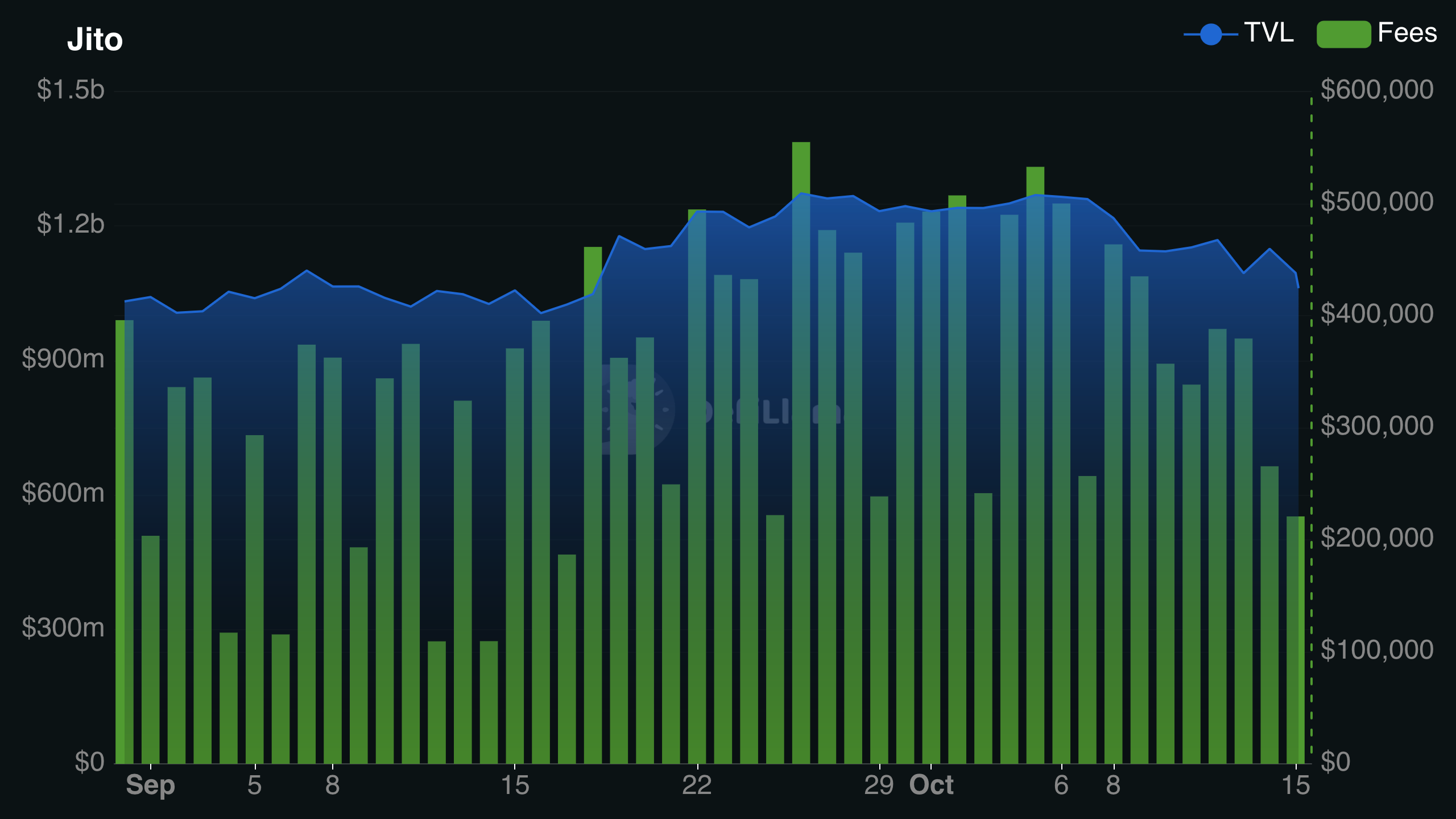
Jito’s TVL fell by over $193 million between the 5th of October and press time, reaching $1.076 billion. That decline suggested a smaller capital base, although TVL alone could not establish whether users had withdrawn funds.
Fees weakened too. According to DeFiLlama, Fees fell from $532,600 to roughly $220,729 across the period, a 58.56% decline.
Lower Fees were consistent with reduced revenue-generating activity, adding to the pressure surrounding Jito’s performance.
What are JTO’s derivatives traders signaling?
The weakness extended into the perpetual market, where Netflows remained negative.
Over the past 24 hours, JTO recorded roughly $3.8 million in net outflows. Gross outflows reached about $30.59 million. These figures pointed to capital leaving the market, although they did not independently establish which positions traders closed.
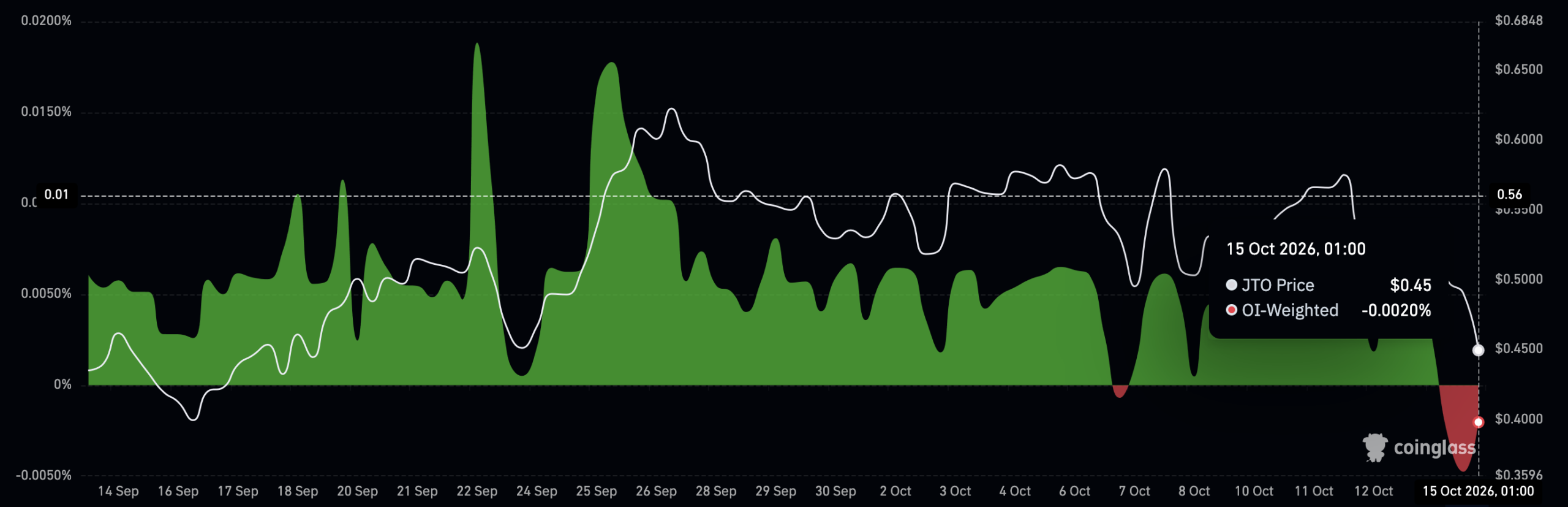
Meanwhile, the Funding Rate fell to -0.0020%, signaling bearish pressure in perpetual pricing. A negative Funding Rate generally means shorts pay longs. It does not establish how total capital is divided between them.
JTO’s reported $46.93 million in Open Interest therefore represented outstanding contracts, rather than evidence of more capital allocated to shorts.
Could JTO withdrawals offer some relief?
Spot Exchange Netflows offered a different signal, reaching roughly -$635,000 over the past 24 hours.
Negative Exchange Netflows meant more JTO left tracked exchanges than entered them. Those withdrawals could reflect accumulation or transfers into custody.
Traders sometimes withdraw tokens when preparing to hold them longer. Still, exchange withdrawals alone could not confirm fresh buying.
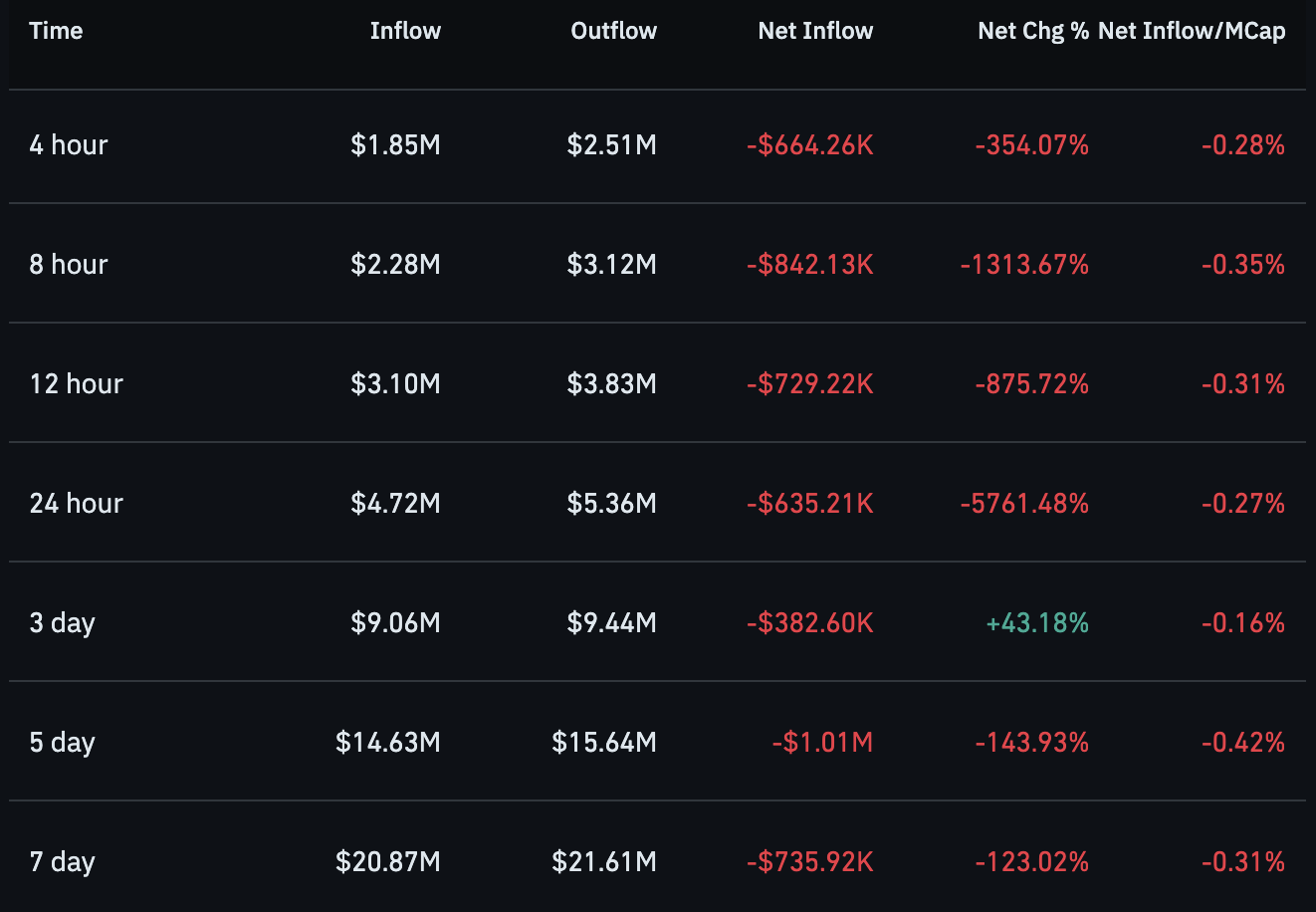
Cumulative Netflows also remained negative across the 3-day, 5-day, and 7-day periods, showing that withdrawals persisted. That offered a possible bullish counterpoint. Whether those withdrawals translate into price support remains an open question.
Final Summary
- Jito’s TVL fell over $193 million, while Fees dropped 58.56%, signaling weaker protocol activity.
- JTO’s persistent Spot Exchange Outflows suggested possible accumulation, although fresh buying remained unconfirmed.