Ripple spent $150M fighting the SEC lawsuit – Now it wants clear crypto rules
Ripple’s support highlights growing pressure on the SEC to establish predictable rules for token issuers and crypto fundraising.


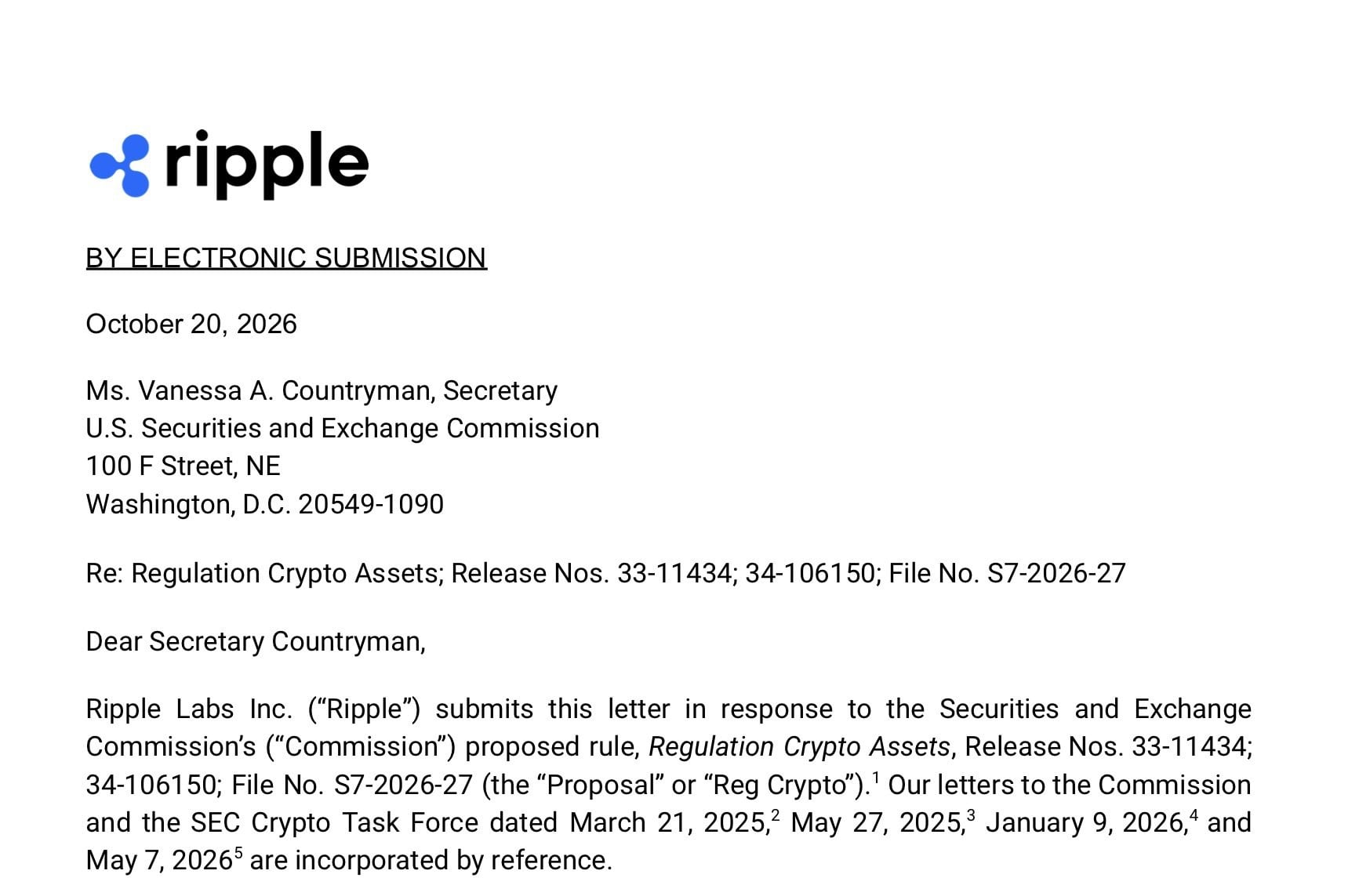
Ripple is pushing for a clearer path for crypto assets, arguing that regulatory uncertainty has already cost the industry millions. Ripple [XRP] submitted its SEC comment letter on October 20, 2026, supporting clearer rules for crypto assets.
According to Ripple, the SEC should now complete its draft of proposed regulations for crypto assets. Still, even though current federal securities law already provides a basis for regulating crypto assets, it does not specifically state what qualifies an asset as a security.
Under the proposal, investment contracts, rather than crypto assets themselves, would qualify as securities. This distinction could result in less uncertainty for assets issued after the time frame established by the contract expires.
Ripple argued that inconsistent enforcement had pushed innovation offshore, citing more than $150 million spent clarifying legal questions.
The final version of the SEC’s rules will ultimately decide if any changes to the current regulatory environment will create long-term regulatory certainty.
SEC’s crypto fundraising rules
The proposed framework from the SEC could help make it easier for cryptocurrency startups to fundraise in the U.S. The SEC’s proposed framework offers two fundraising tiers for crypto projects that need more than the $5 million startup exemption allows.
Tier 1 allows raises of up to $20 million per year, whereas Tier 2 extends that amount to $75 million.
Issuers seeking to use either tier of exemptions must first get approval from the SEC and issue certain disclosures regarding such things as token economics, governance, and development risk.
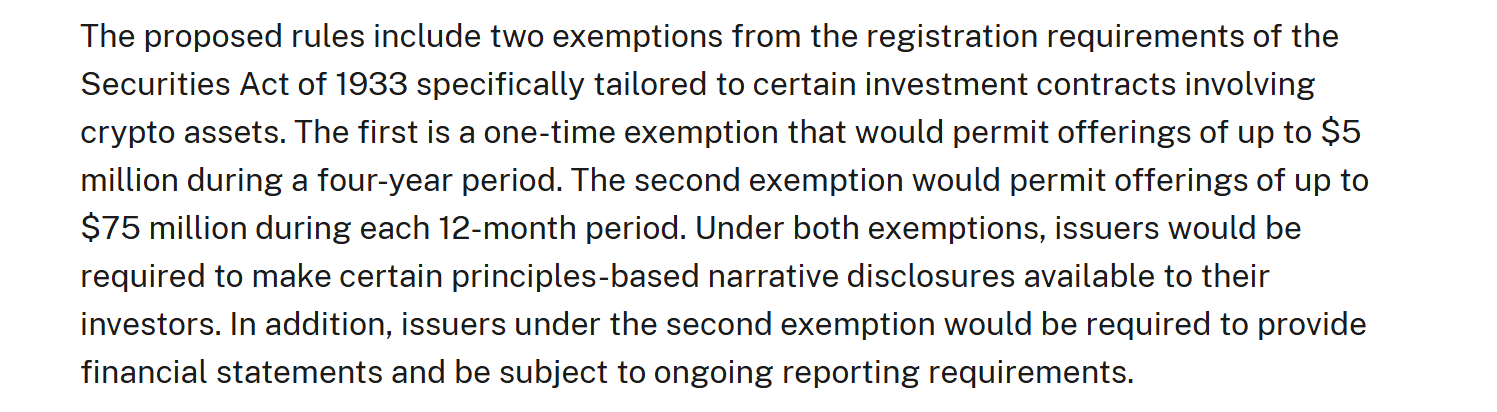
Additionally, Tier 2 issuers are required to submit audited financials and therefore incur higher compliance costs. Furthermore, because U.S.-based eligibility is strict, non-U.S. entities may be excluded from using this exemption.
Hence, it appears likely that even though raising money in foreign jurisdictions could be avoided by converting to a U.S. entity. Still, some smaller projects may still face difficulty meeting all of the above requirements.
Can clearer rules reduce enforcement uncertainty?
Ripple’s push for regulatory clarity raises a broader question about whether clearer rules can restore confidence in U.S. crypto markets. The proposed framework could reduce legal uncertainty, which has made long-term planning costly for issuers.
As reported previously, Ripple has spent at least $150 million in fees related to determining how regulatory bodies view their products and services. However, having clearer rules does not necessarily mean that companies will stop operating in other countries.
U.S.-based crypto venture capital funding was overwhelmingly dominated by domestic-based entities during Q2 2026.
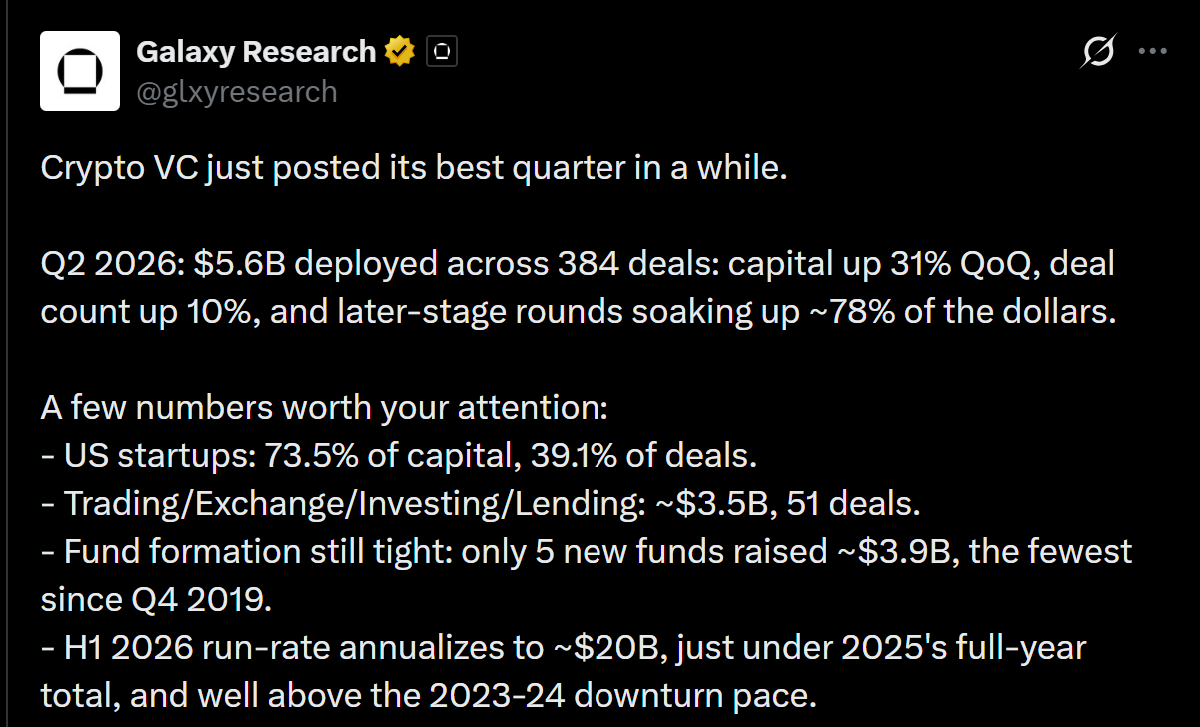
During Q2 2026, venture capital funding for cryptocurrency-related startups totaled approximately $5.6 billion across 384 deals. Domestically based entities received 73.5% of total capital invested during that same period.
Rising U.S. startup formation and domestic token issuance would signal progress, while continued offshore expansion could expose the framework’s limits.
Final Summary
-
Ripple [XRP] backs the SEC’s proposed framework, which would clarify when crypto assets fall under securities laws.
-
The SEC’s proposed fundraising exemption could attract crypto investment to the U.S., but strict compliance rules may limit adoption.