RLUSD’s TrustLinq expansion reaches over 190 countries – What does XRP gain?
RLUSD’s growing institutional role could expand XRPL adoption, but XRP still needs stronger market demand.


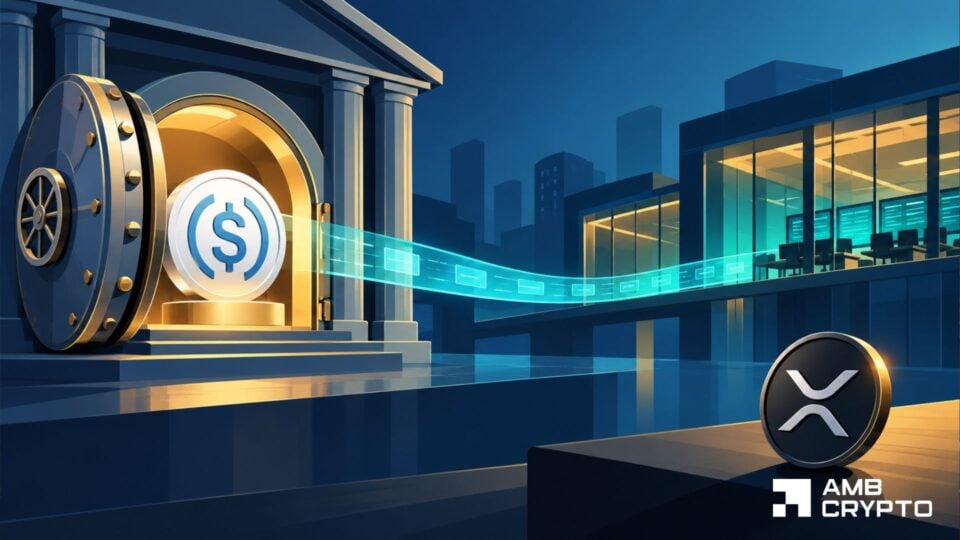
Ripple’s institutional adoption continues gaining ground. Alongside that growth, its stablecoin Ripple USD [RLUSD] is moving beyond crypto markets and into global payments.
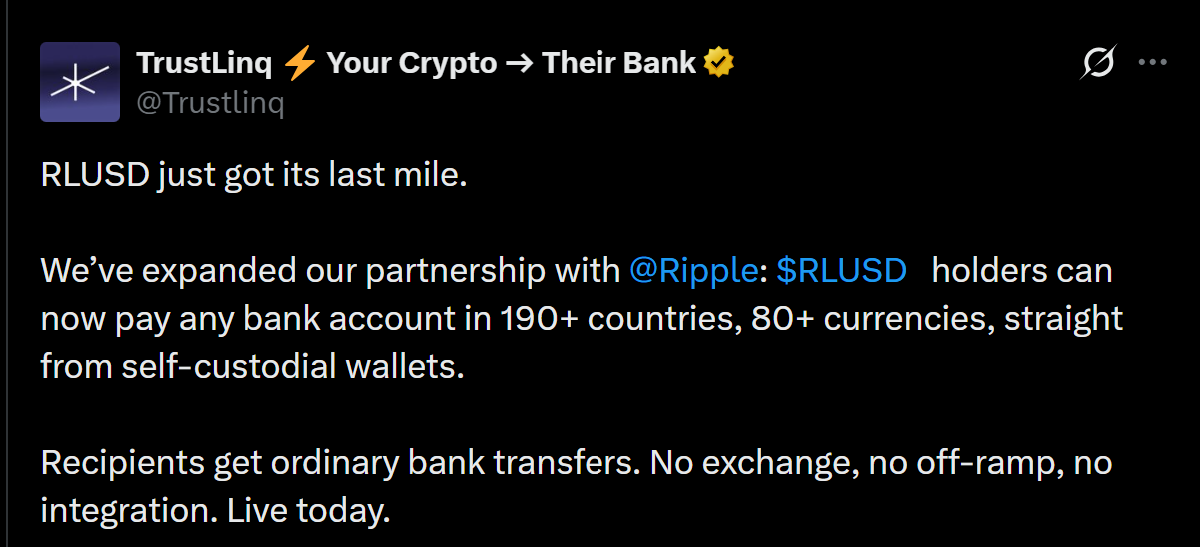
TrustLinq, a Swiss-regulated financial intermediary, becomes the latest addition to the fold. The platform is expanding RLUSD’s payment reach across more than 190 countries and 80 currencies, opening pathways beyond crypto trading.
As a result, this could position the stablecoin for broader cross-border payments through existing banking channels.
Yet despite that growth, geographic coverage alone does not confirm meaningful adoption. Instead, actual usage depends on supported payment corridors, available banking methods, transaction costs, and successful settlements.
Therefore, completed transfers and payment frequency will provide stronger evidence of demand. If transaction volumes grow consistently, TrustLinq could strengthen RLUSD’s practical utility and expand activity across Ripple’s ecosystem.
Still, XRP’s benefits from the partnership will depend on whether this growth generates measurable demand for the token itself.
RLUSD’s institutional network expands
With institutional financing increasing for RLUSD, there are concerns if Ripple’s growing stature will impact the broader crypto market.
Social discussion around the stablecoin has intensified following Standard Chartered’s custody launch, while Ripple’s participation in OKX’s funding round adds another institutional connection.
OKX’s $25 billion pre-money valuation highlights the scale of this partnership network.
RLUSD’s current market capitalization is over $2.5 billion as it continues to expand with increased circulating supply rather than a price increase. Yet XRP hasn’t simply grown based on that expansion.
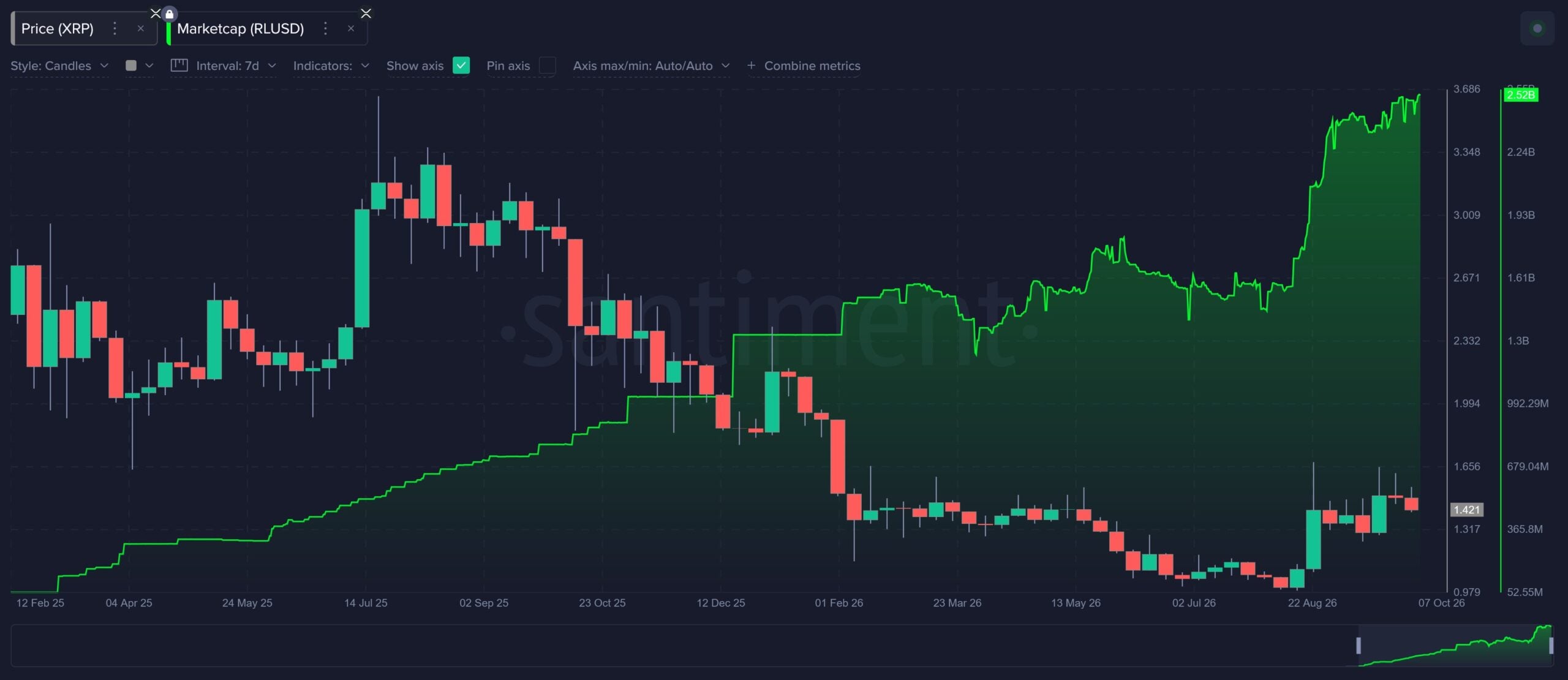
In other words, XRP is not guaranteed to benefit from an expanded stablecoin. Instead, the long-term success of XRP will depend on continued use on the XRPL, the degree of liquidity, and ultimately whether institutions continue to utilize it.
XRP demand lags RLUSD growth
RLUSD’s expansion also raises a practical question about how much value reaches XRP itself. Each XRP Ledger transaction burns a small amount of XRP, but fees remain too low to create significant buying pressure.
Notably, despite the institutional adoption growth, the token itself has little to show for in terms of price action. Since the mid-to-late September surge, the token retraced back to range-bound trading before later on plummeting below it.
As of writing, XRP was trading at $1.38, a 16% decline from the September high.
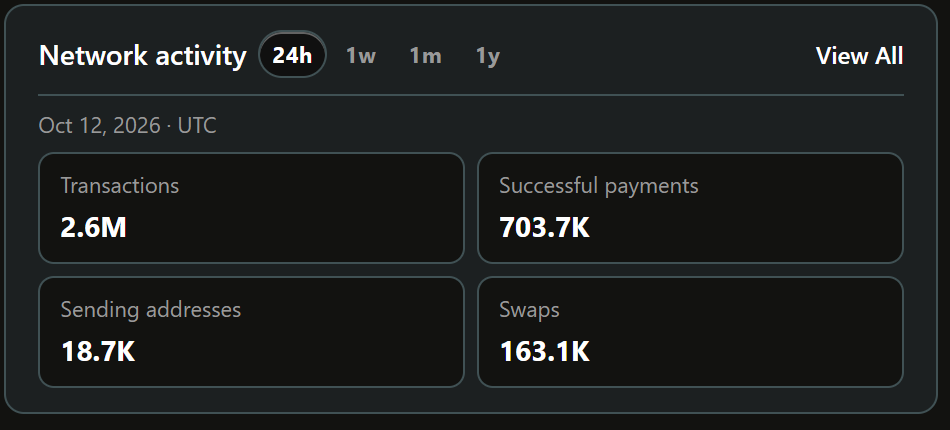
Meanwhile, XRPL handles roughly 2.6 million daily transactions, yet this throughput does not require institutions to hold large XRP balances.
Exchange data offer another signal. According to CryptoQuant data, Binance reserves have decreased to approximately $2.6 billion over recent weeks. As such, these contrasting trends make it difficult to assess future demand.
Ultimately, rising RLUSD usage will matter more for XRP if it coincides with stronger spot buying, tighter exchange supply, and deeper market liquidity.
Final Summary
-
Ripple USD [RLUSD] gains institutional access through Standard Chartered custody.
-
XRP needs stronger demand to benefit from RLUSD adoption.