Solana faces its ‘worst’ year since launch as November losses hit 22%
Solana longs are piling up, but is strong DEX activity enough to beat the bearish trend?

More traders are betting on Solana’s price going up.
But in a bear market, the bigger question is: what are these traders actually betting on? Technically, SOL continues to slide, with its November losses now reaching 22%.
The key takeaway? SOL dropped as low as $64 this month, wiping out the gains from its Q2 rally, when it hit a local high of $125.
Yet, on-chain figures differ however.
DEX volumes fell to $406 billion in Q4 from $667bn in Q3, according to DeFiLlama. Nonetheless, Solana continues to account for close to 23% of DEX volumes, highlighting that it still has moderately good trading volumes, despite the poor performance of its native token SOL.
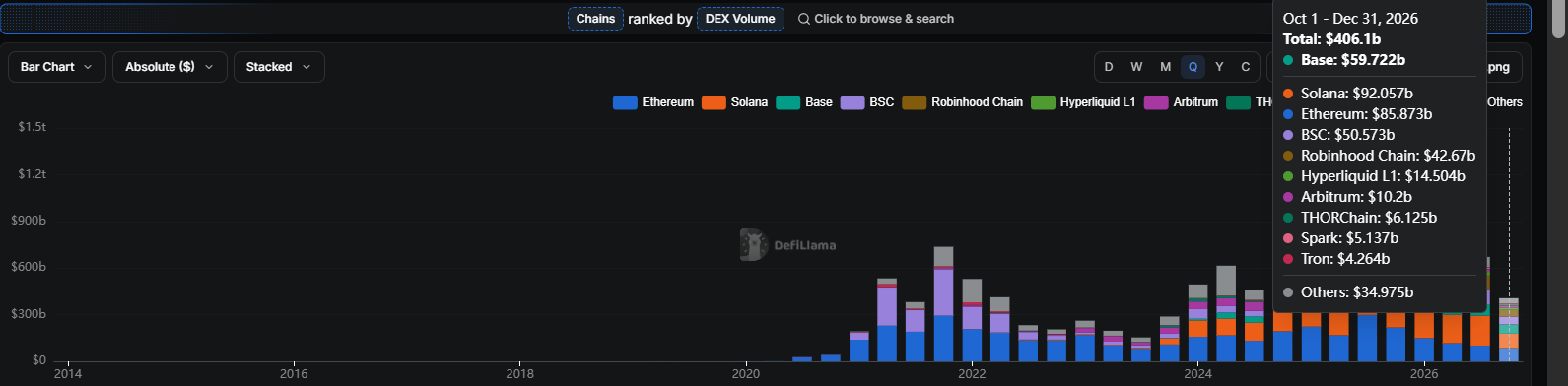
Against this backdrop, the rise in Solana [SOL] long positions starts to make strategic sense.
High DEX trading volumes can drive significant transaction and space costs, which in turn can add further value to SOL. It can also increase revenue and offer market liquidity. T
raders may be betting that this sustained activity will eventually translate into stronger demand for SOL and support a price recovery.
Meanwhile, the SOL/BTC pair is also re-testing Q2 support, while BTC.D is nearing 60% resistance. Should it fail here, BTC.D may fall and funds may shift out of Bitcoin and into altcoins.
In doing so, Solana’s strong DEX data may prove fundamental. That said, the stakes couldn’t be higher.
Solana’s bullish longs face a reality check as monthly losses mount
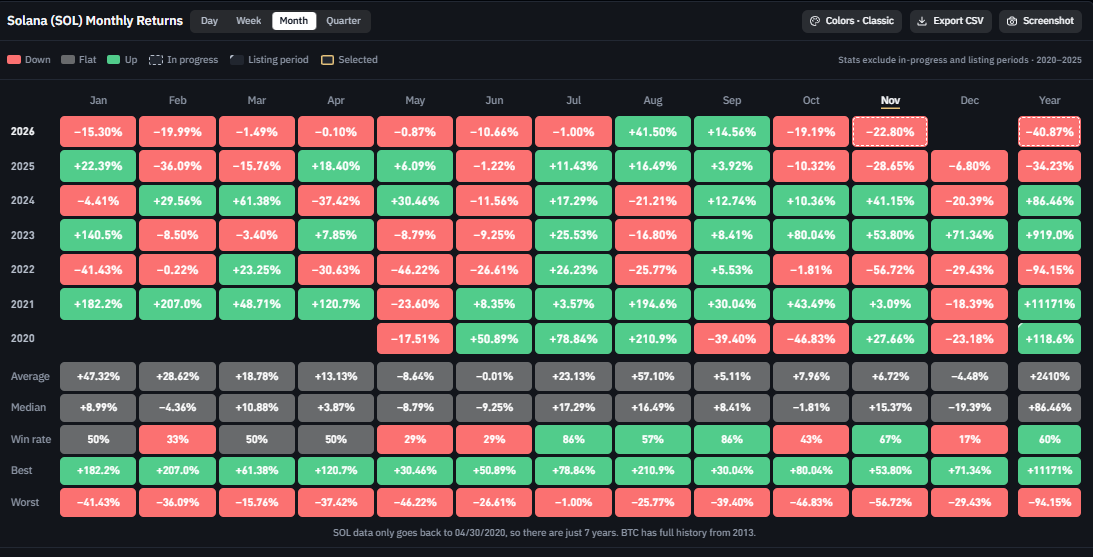
Solana is heading for its worst year since inception.
Following a 20%+ correction in November, data from CoinGlass suggests that SOL looks set to end the month in negative territory. This would result in 9 out of 12 months being down for SOL in 2026. There were also 9 negative months for SOL in 2022. So, should December not reverse this trend, 2026 could even exceed this and prove to be Solana’s weakest year yet in terms of monthly performance.
The key takeaway?
Despite consistent month-on-month weakness, SOL’s annual ROI stands at -40%, slightly better than Ethereum’s -41%. It therefore appears that the issues facing Solana are not only those affecting the broader market but also relate specifically to the project.
Put simply, repeated monthly losses show how difficult it is for SOL bulls to hold support, leaving SOL susceptible to further downside.
According to AMBCrypto, this divergence could work against Solana.
The logic is simple: Strong DEX activity has yet to translate into buying pressure, while repeated monthly losses show that buyers are struggling to regain control. If this weakness continues, traders betting on a recovery could get caught on the wrong side. Leveraged liquidations could then add to selling pressure.
Thus, what looks like a recovery bet could quickly turn into a major bull trap.
Final Summary
-
Solana’s DEX activity remains strong, but its price continues to fall.
-
Rising long positions despite repeated monthly losses increase the risk of a bull trap and further liquidations.