Solana ‘hasn’t nearly hit its scalability ceiling’ and that means…
Are Solana's recent transaction issues affecting its user activity?


- Solana’s price surge v. failed transactions highlighted scalability challenges
- Anza’s fixes on the testnet addressed Solana’s congestion, but concerns linger
With Bitcoin’s [BTC] halving now done and dusted, the market seems to be on the edge of recovery. At the time of writing, Bitcoin, along with other altcoins, were predominantly in green, with Solana [SOL] notably surging by 6% in just 24 hours.
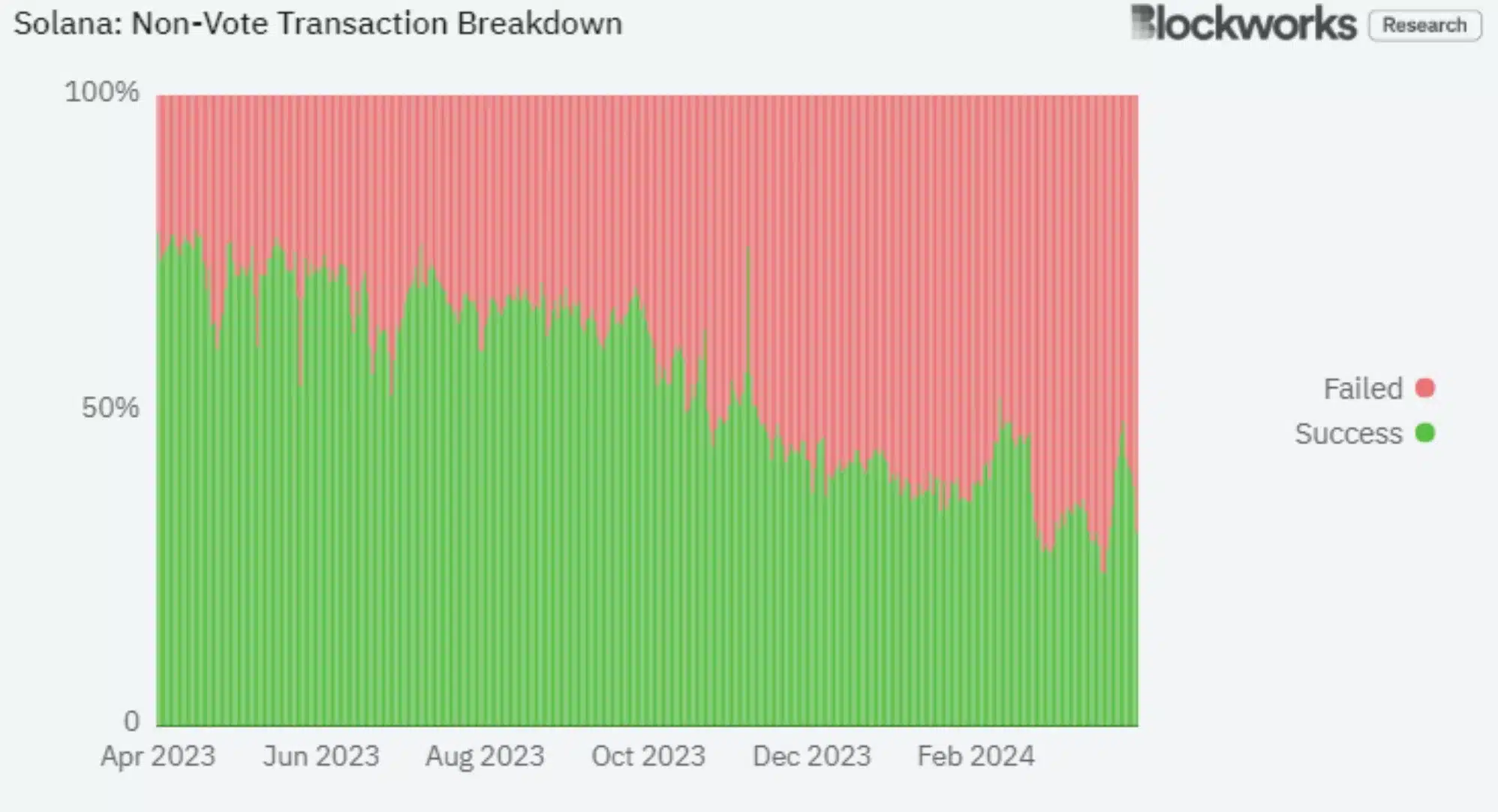
Contrary to SOL’s bullish price trajectory, however, of late there has been a disproportionate amount of failed transactions on the Solana network.
Network issues galore
Shedding light on how spammers inflated the number of failed transactions on the blockchain network, Dan Smith, a research analyst, took to X (Formerly Twitter) and claimed,
“The average “real user” sends under 50 txs. per day with a failure rate of 8%, so around 1 in every 10 txs fails. 97% of addresses fall in this group, and they are collective responsible for 0.6% of total failed txs.”
Additionally, talking about a small number of addresses, likely bots, that generated a majority of the failed transactions, he added,
“Any addresses that sends over 5,000 txs per day is clearly a bot. Yesterday there were 879 addresses that hit this mark, and they created 95% of the total failed transactions with a failure rate of 79%.”
Well, this isn’t the first time Solana’s congestion issues have come into the spotlight. On 4 April, Solana faced significant congestion issues with over 75% of transactions failures.
In its aftermath, Anza, a pivotal Solana player, pinpointed QUIC and Agave validator client issues. They fixed it on the testnet before the mainnet rollout. Alas, it was all in vain, according to analysts.
What is the data indicating?
Mocking the chart presented by Blockworks, Smith said,
“This chart does not capture dropped transactions, which are [1] terrible UX for “real users” and [2] a real problem for Solana atm.”
In defense Matt Sorg, Solana’s Tech and Product Lead in his blog post shared,
“Solana is a highly efficient protocol that hasn’t nearly hit its scaling ceiling.”
Is this reducing SOL’s user activity?
Here, it’s worth noting that Smith believes that while failed transactions may not be relevant for assessing real user activity, they are still significant from a technical perspective in understanding the network’s capacity and performance.
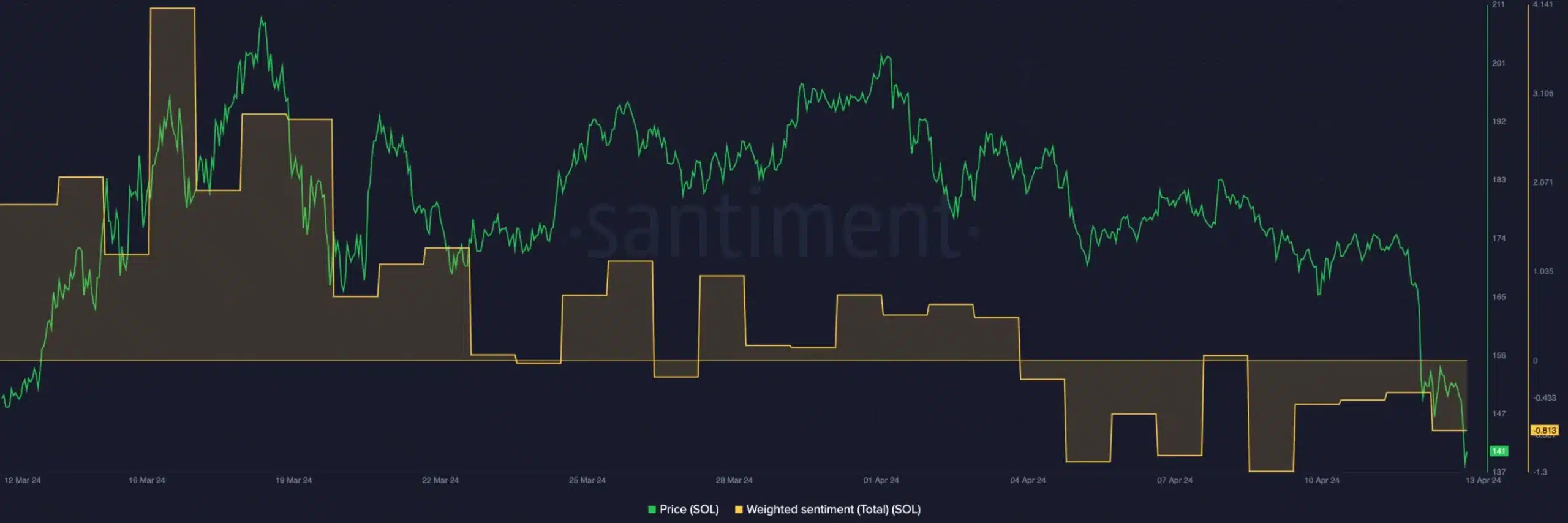
That being said, data indicates that the number of negative comments about Solana on social media outweighs the positive ones. Simply put, all these issues may be having a social effect on the network after all.