Solana mulls 50% priority fee burn cut: Here’s what it means
Solana's proposal to remove 50% burn on priority fees and reward validators 100% fees sparks debate.


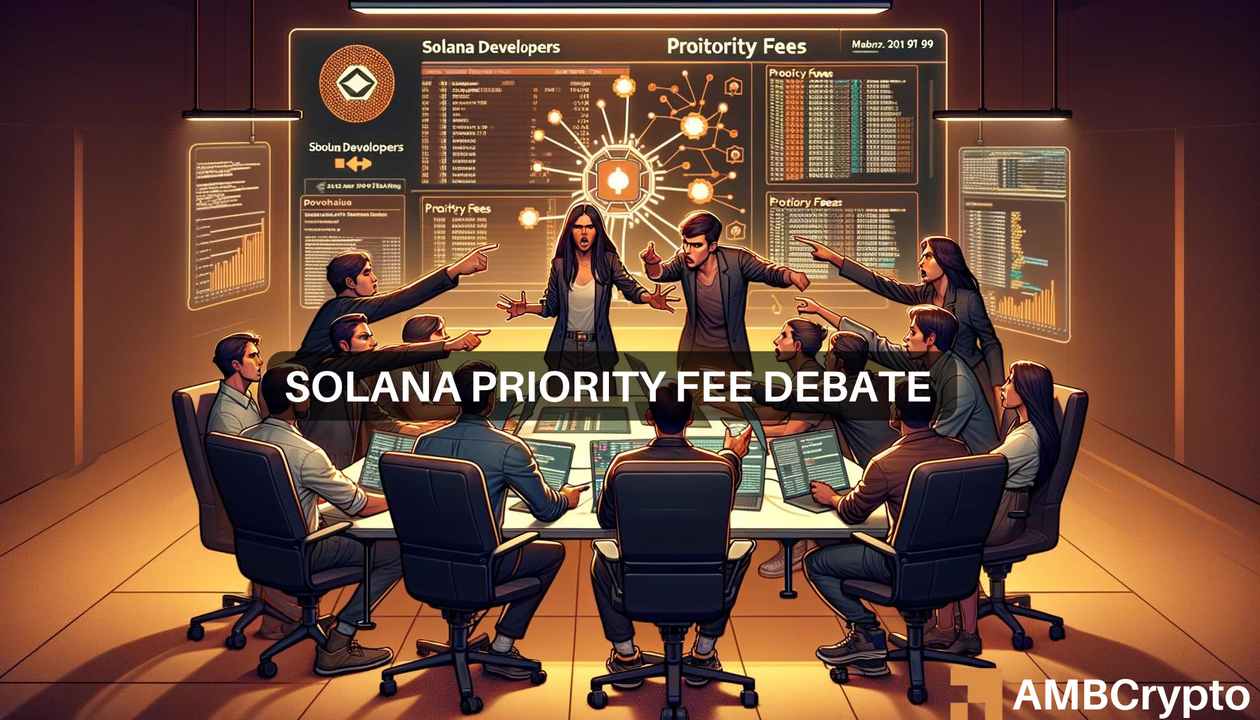
- Solana proposes to reward validators full priority fees by scrapping 50% burn.
- Community divided over the proposal as priority fee-induced inflation and validator rewards interests compete.
Solana [SOL] community remains divided on the proposal to remove the 50% priority fee burn and fully reward validators.
The proposal, SIMD-0096, aims to incentivize validators by paying them 100% priority fees, as opposed to the current 50% reward and 50% burn.
For the unfamiliar, Solana’s priority fees are paid by users with urgent transactions who wish to avoid network congestion. In return, validators can prioritize and fast-track their transactions, a critical way Solana mitigates network congestion.
The problem with Solana’s 50% priority fee burn removal
Notably, the current method of 50% reward and 50% burn on SOL earned as priority fees is deemed deflationary.
If the proposal passes, validators will receive 100% priority fees and none burnt, which will mean more SOL issuance and inflationary pressures. One opponent to the proposal noted,
‘Solana’s inflation is about to increase as validators vote to pay themselves more. More traffic on SOL network? More tokens from thin air go to validators that will dump on you.’
One of the leading Solana validators, Stakewiz, recently registered reservations about the proposal, citing its potential to surge SOL’s issuance by 4.6% and drive inflation. Instead, the validator proposed a new fee distribution mechanism.
‘I would strongly support holding off on the activation of SIMD-0096 until a block fee distribution mechanism is available.’
However, Solana co-founder Anatoly Yakavenko noted that such a mechanism would take ‘6 months to 1 year’ to become operational.
So why the proposal, and why now? You might ask.
Apparently, the current 50-50 arrangement allows other validators to engage in opaque and ‘off-chain side deals.’
This, per Solana core dev Anza, could sometimes be costly to users as some cough higher fees than the required 50%. The proposal could solve this problem, per Anza.
The sentiment was echoed by another user, an engineer at Firedancer, an upcoming Solana client software, who supported the proposal but maintained it won’t necessarily ‘cure side deals.’
However, Stakewiz maintained its opposition to the proposal for lack of data-driven insights on the same.
“I’m generally for a removal of priority fee burn, but I’m against this proposal for its lack of data-driven reasoning and failure to address the concern of priority fee inflation.’
The move is seen as more beneficial to validators than SOL users. It remains to be seen how SOL’s price will be affected after the proposal outcome.