Stablecoin reserves fall to $64B – Binance captures 68.5% of exchange liquidity
Stablecoin liquidity is concentrating on Binance, even as much of the market’s available capital shifts away from centralized exchanges.



Stablecoin reserves have fallen from roughly $80 billion to $64 billion. This decline has reduced the immediately available exchange liquidity by 20%.
As a result, that decline leaves centralized venues with less dry powder for Spot buying than they held near the late-2025 peak.
In contrast, Binance increased its share of the total reserve from nearly 60% to 68.5%. This gives Binance significantly more control as to which stablecoin liquidity pool remains deployable to the market.
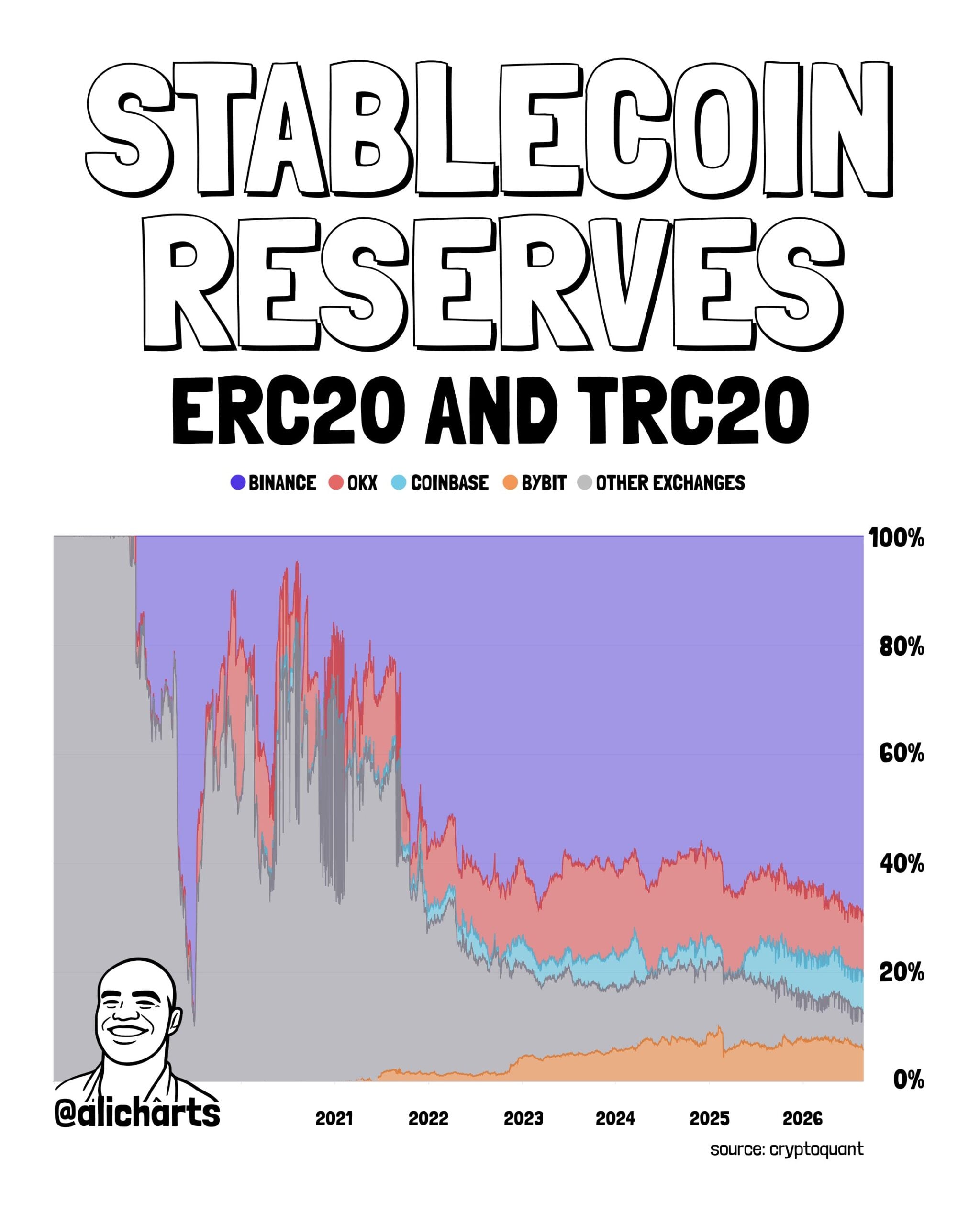
Therefore, they possess significantly lower levels of liquidity as compared to Binance. Since there are uneven changes in the amount of liquidity each central venue possesses.
Hence, traders should pay closer attention to Binance stablecoin flow indicators to identify potential locations for future central venue liquidity deployment.
Stablecoin liquidity shifts away from exchanges
In addition to the decrease in exchange liquidity, the overall supply of stablecoins clearly shows where this capital is being redirected to. Stablecoin supplies are at a record high with an average of approximately $310 billion, according to DeFiLlama.
This is way above the $64 billion currently sitting on centralized exchanges. Specifically, two large stablecoins make up about 83% of the stablecoin market.
Tether [USDT] alone accounts for approximately $183 billion. Trailing closely is USD Coin [USDC], which represents around $73 to $74 billion.
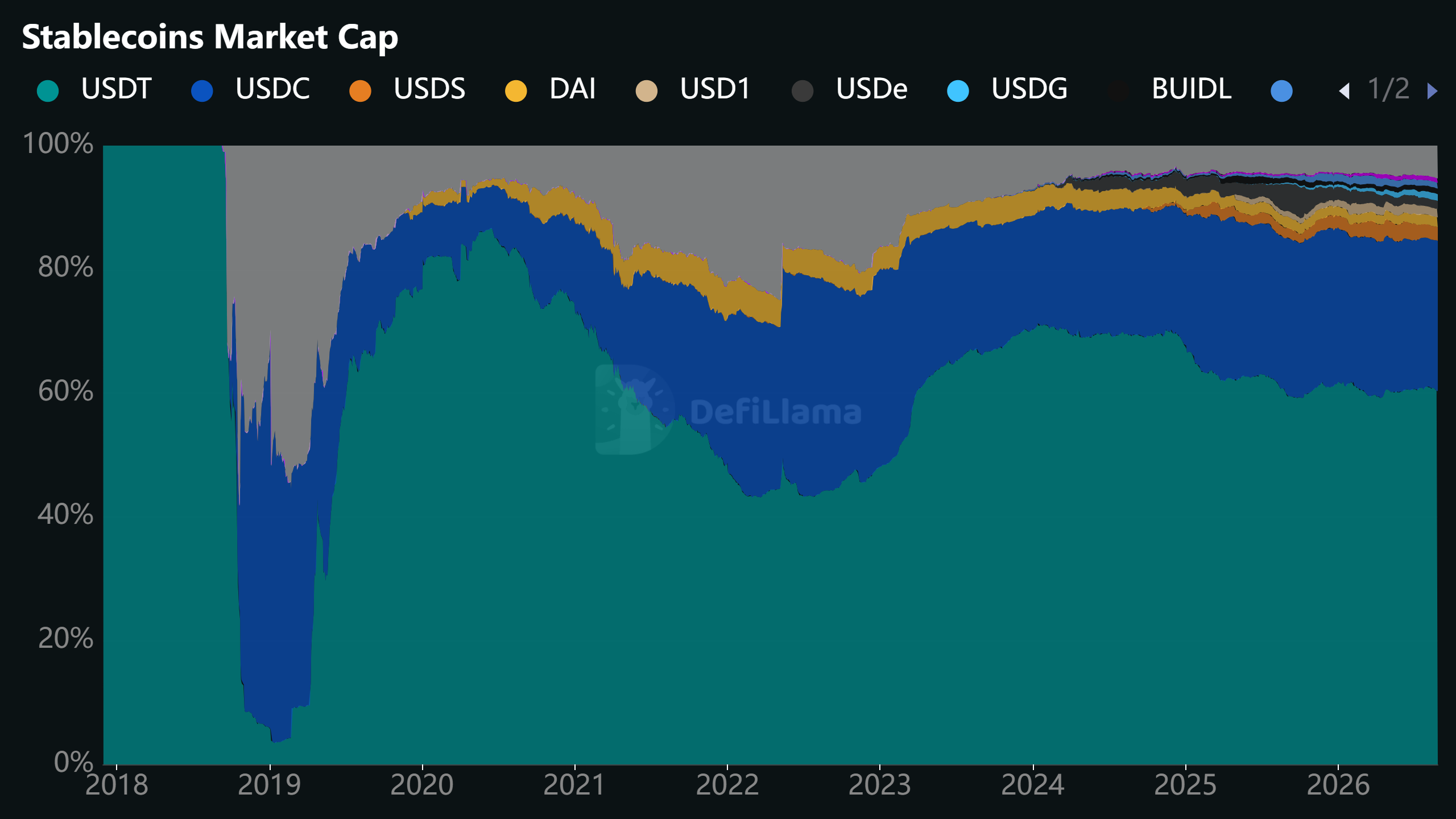
However, much of this capital now supports self-custody, DeFi, payments, and other on-chain activity instead of exchange order books. Therefore, it creates an important distinction between ecosystem liquidity and immediate tradable liquidity.
This distinction separates broader ecosystem liquidity from funds positioned for immediate market deployment. Going forward, exchange netflows become the stronger signal.
Rising stablecoin deposits would move capital closer to Spot purchases, while continued outflows would keep that liquidity positioned outside centralized markets.
Binance liquidity shifts beneath flat reserves
Within that broader liquidity shift, Binance shows capital changing form without materially increasing its available buying power. The average reserve value was approximately $42.92 billion per month.
As such, it only increased slightly by 0.44 percent each month, so stablecoin flows did not provide substantial new liquidity.
Meanwhile, daily USDC inflow rose to $125.4 million. However, these increases in USDC were largely a result of changes in the composition of Binance’s reserves.
Similarly, $929 million of USDT entered through TRON [TRX], while $765 million left Ethereum [ETH], showing capital migrated between chains.
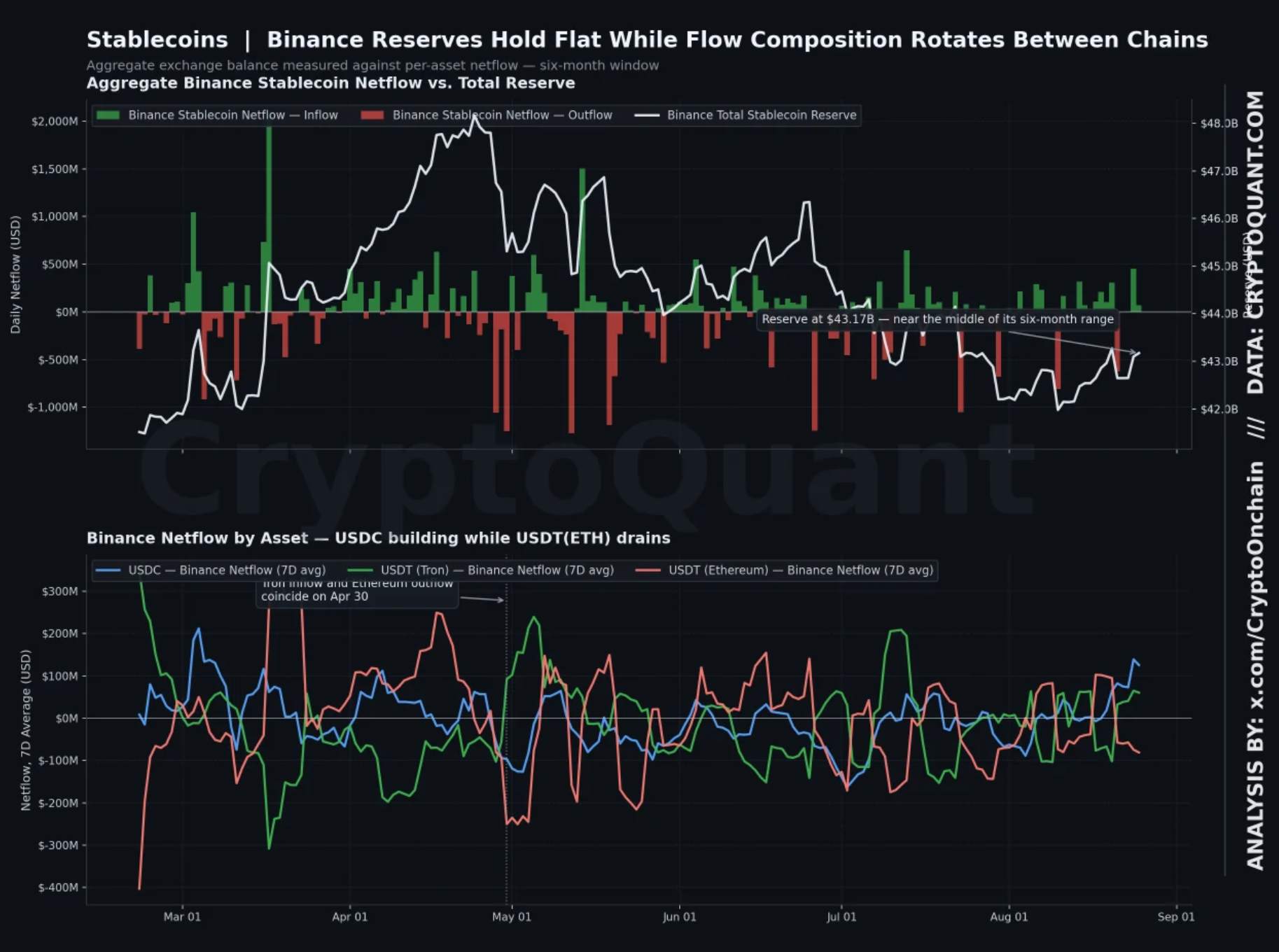
USDC’s supply ratio recovered to 0.0986 but remained below its 0.1128 six-month average. Therefore, this lack of growth in overall reserve size means it will be difficult for Binance to expand its current spot-buying capability.
In order for conditions to change at Binance, reserves need to grow to $48.17 billion while the USDC ratio rises above its longer-term average.
Final Summary
- Stablecoin reserves fell 20% to $64 billion as Binance’s share climbed to 68.5%.
- Yet Binance held $42.92 billion, showing liquidity rotated rather than expanded.