USDC faces stricter EU oversight – What changes for Circle under MiCA?
USDC gains regulatory weight as euro stablecoins struggle to attract broader adoption.


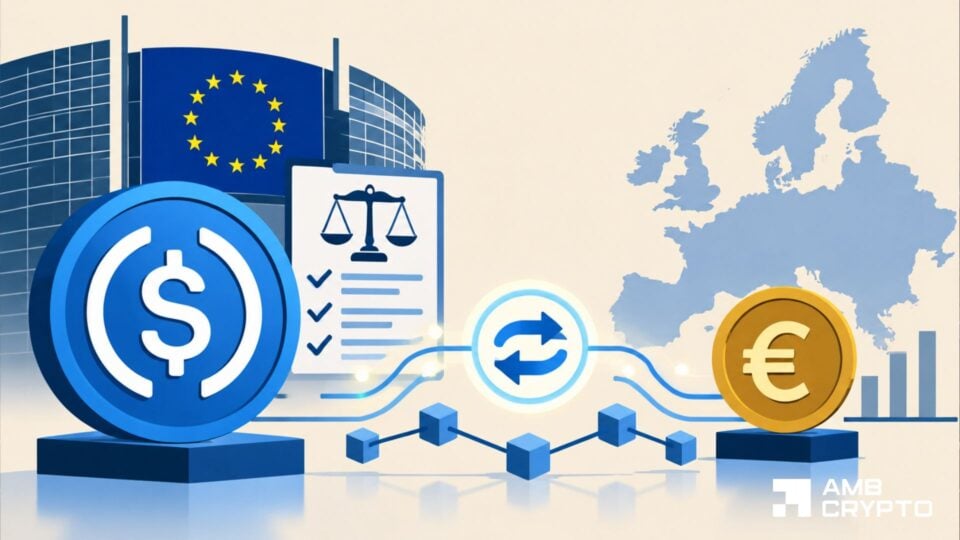
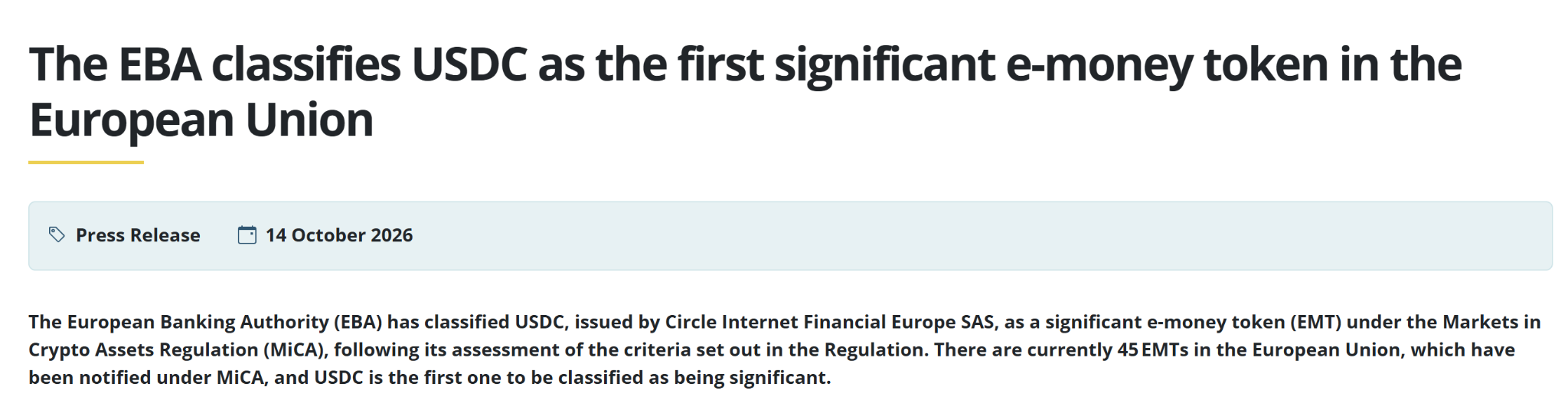
The European Banking Authority (EBA) recently named USD coin [USDC] as the first major e-money token in the European Union under MiCA.
According to the EBA, the decision has introduced tighter regulations on Circle’s stablecoin. This includes the introduction of new supervisory rules from the 12th of November 2026. Thereafter, EBA will be monitoring Circle’s capital, reserves, liquidity, and redemption guarantees.
On the other hand, Circle’s governance and operational activities will still fall within France’s ACPR.
The EBA stated that Circle must meet several key elements. This includes holding at least 60% of USDC reserves in segregated bank accounts.
Previously, non-significant issuers had to keep only 30% or more of their stablecoin reserves in segregated bank accounts. These additional requirements have significantly increased Circle’s compliance obligations.
Additionally, the close relationship that the EBA has developed with New York State Regulators supports the regulation of Circle’s operations.
Ultimately, the designation could reinforce USDC’s role in regulated European payments. This is if Circle meets the stricter requirements without disrupting liquidity or redemption access.
Circle CCTP expands beyond USDC
The Circle’s regulatory reach is mirrored by Circle’s efforts to increase the uses for which it can provide service via its cross-blockchain network. Its Cross Chain Transfer Protocol (CCTP) has now moved over $100 million in non-USDC assets using CirBTC, EURC, and WETH.
This represents Circle’s ability to take the same transfer system used on one blockchain network and expand it to other networks as well.
This expansion of the number of supported assets was initiated by EURC being added in September and then adding CirBTC in late September, which accelerated the process.
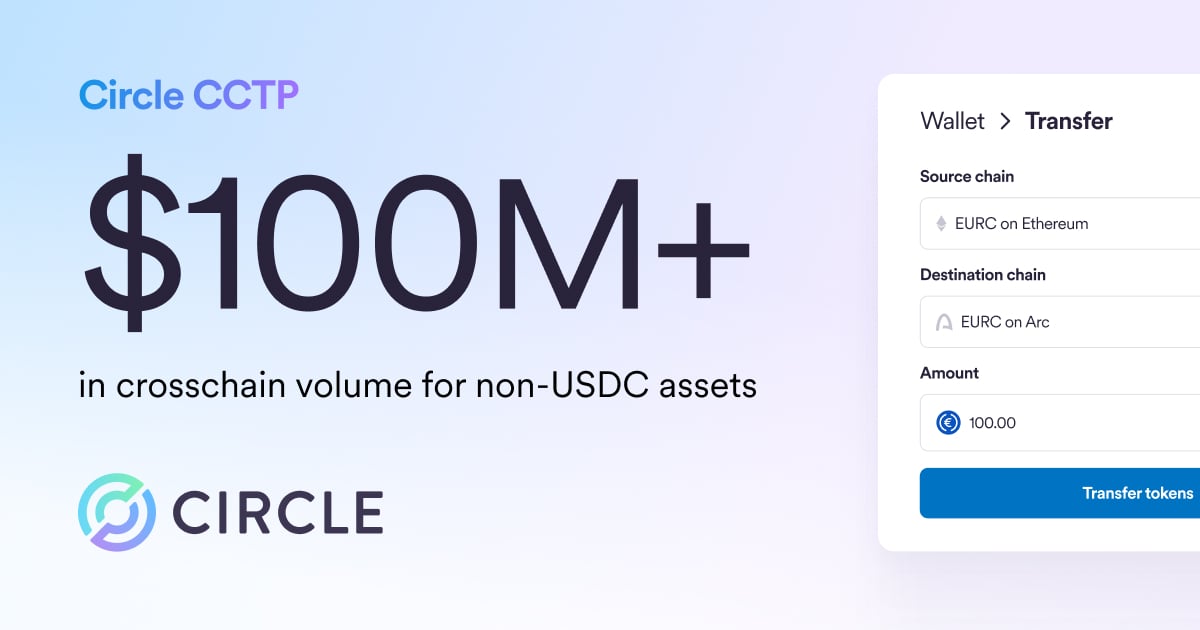
Continued growth in terms of sustained monthly increases in use and acceptance of the CCTP across destination blockchains.
Euro stablecoins struggle for market share
Despite numerous attempts to increase the utilization of Euro-Pegged Stablecoins, they remain a relatively small percentage of the digital asset market.
Notably, their share reached just 0.25% of combined euro and dollar stablecoin supply by October 2026, fluctuating between 0.15% and 0.27% since January 2024.
This limited growth highlights the challenge of attracting demand beyond established dollar-based markets. Currently, Euro stablecoins stand at $768 million. This shadows the $306.5 billion figure for dollar-pegged tokens. 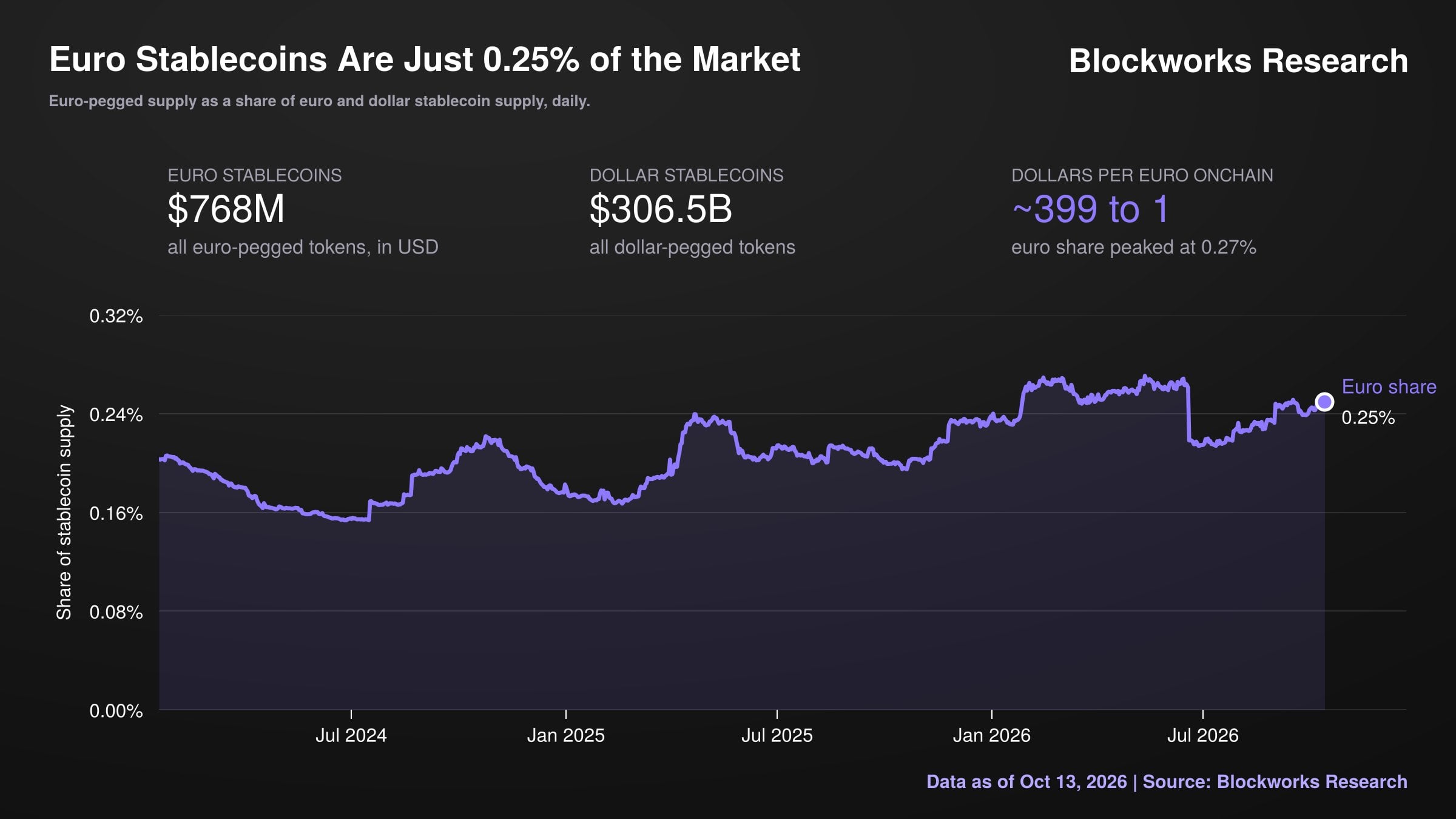
Source: Blockworks
However, Qivalis, a consortium of 37 European banks, was granted an e-money license to issue a Euro stablecoin. Their distribution networks could help attract users and businesses.
The ultimate test for Euro Stablecoins will come down to user and business adoption across various platforms, including on-chain trading, lending, and payments.
Final Summary
- USD Coin faces stricter EU oversight due to Circle’s expanding regulated stablecoin footprint.
- USDC expands its utility as a cross-chain system, while Euro Stablecoins face challenges competing against dollar dominance.