Velvet gains 25% as staking loses $160K – Rally holds IF…
A 548% rally creates conviction. It also creates a larger pool of holders with profits to protect.


Velvet [VELVET] surged 25%, extending its 90-day gain to 548%.
Retail traders appeared to drive much of the move. The whale-retail delta remained negative, indicating retail activity stayed dominant.
However, a slight uptick suggested whales may have contributed to the rally. The key question is whether VELVET’s momentum can withstand rising downside risk.
Could VELVET fall after its rally?
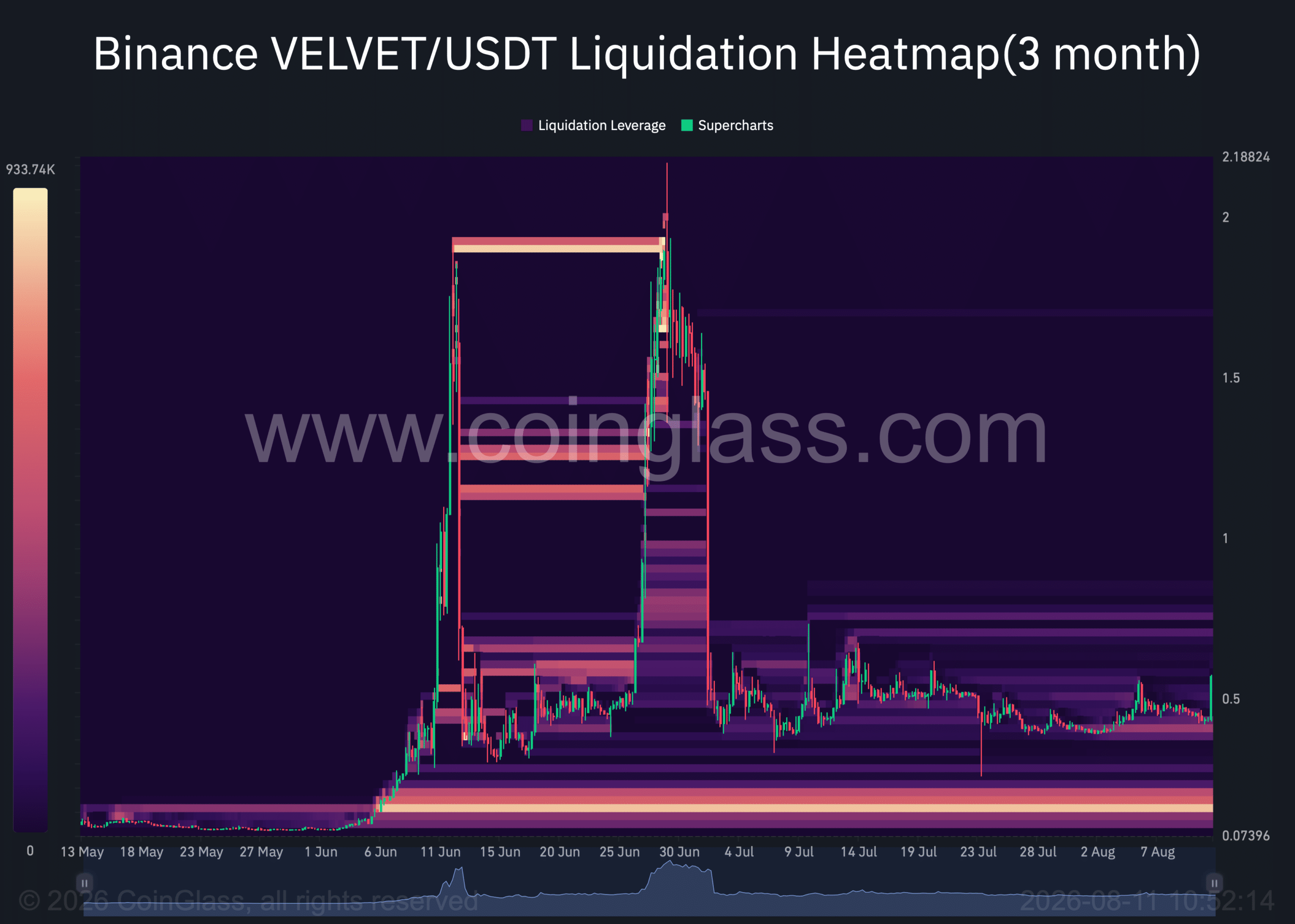
The Liquidation Heatmap showed a strong concentration of liquidity below VELVET.
Liquidation clusters mark levels where leveraged positions could be forced to close. These areas may attract price, but do not guarantee a move.
The one-month chart showed a few clusters above VELVET’s price. That left limited nearby upside liquidity.
By contrast, a large downside cluster formed between $0.19 and $0.14. The area carried deeper unfilled liquidity. This kept the zone in focus despite VELVET’s rally. A reversal could expose those lower levels.
The chart showed liquidation concentrations of $15,960 for longs and $53,870 for shorts.
Both readings suggested limited nearby leverage buildup. Even so, VELVET could still face a pullback after its sharp rally.
Are VELVET stakers taking profits?
Staking activity also weakened as users pulled capital from VELVET’s protocol over the past day.
VELVET staking supports governance participation and offers yield to token holders. However, lower staking may suggest that some holders stopped pursuing yield after recent gains.
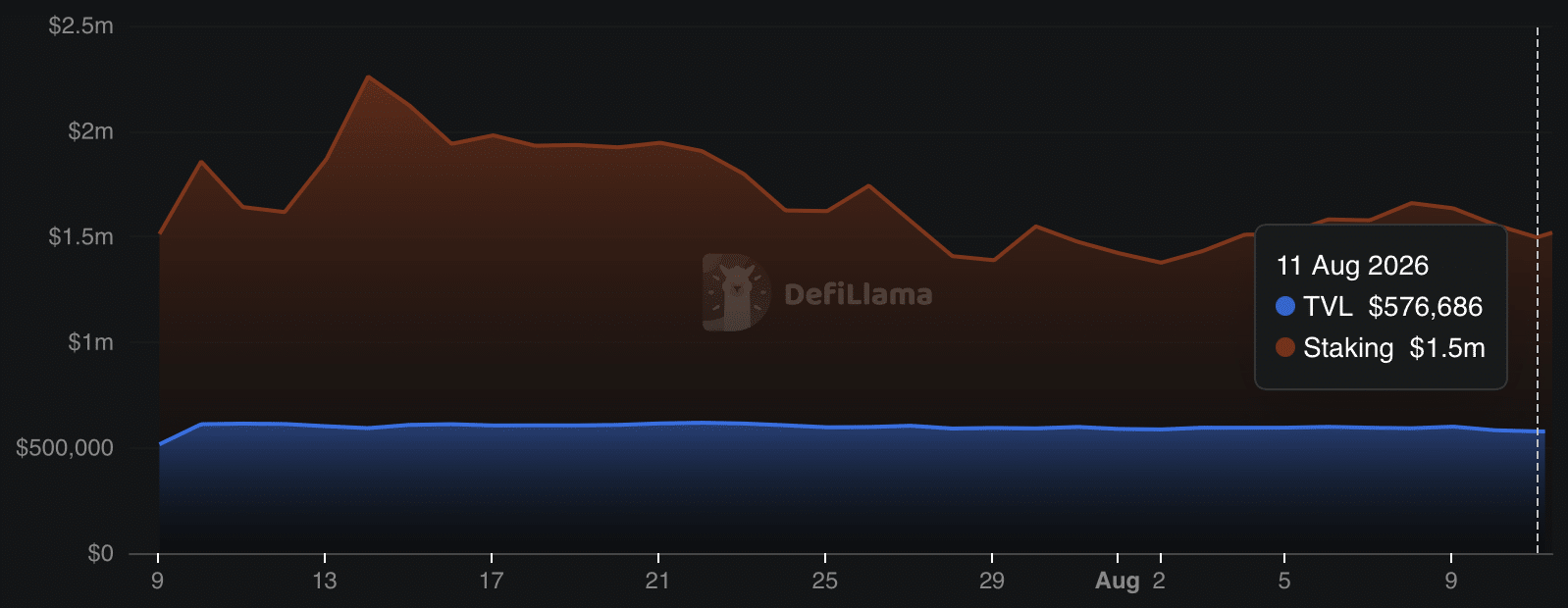
Over the past day, staked VELVET fell by $160,000 to roughly $1.5 million.
Since July 14th, the total has declined from $2.26 million. That represented a drop of nearly $760,000. The decline did not confirm direct token sales. However, holders can unstake tokens before selling, keeping profit-taking risk in focus.
Final Summary
- VELVET price rose 25% and extended its 90-day gains to 548%.
- Total staked value dropped to about $1.5 million, suggesting some holders may have reduced their yield positions.