Why are Strategy’s preferred securities falling despite Bitcoin’s recovery?
Strategy-linked securities remain under pressure as investors question liquidity strength and dividend sustainability.



Strategy-linked securities continue to weaken even as Bitcoin [BTC] holds near the $65,800 zone. This divergence is becoming harder for investors to ignore.
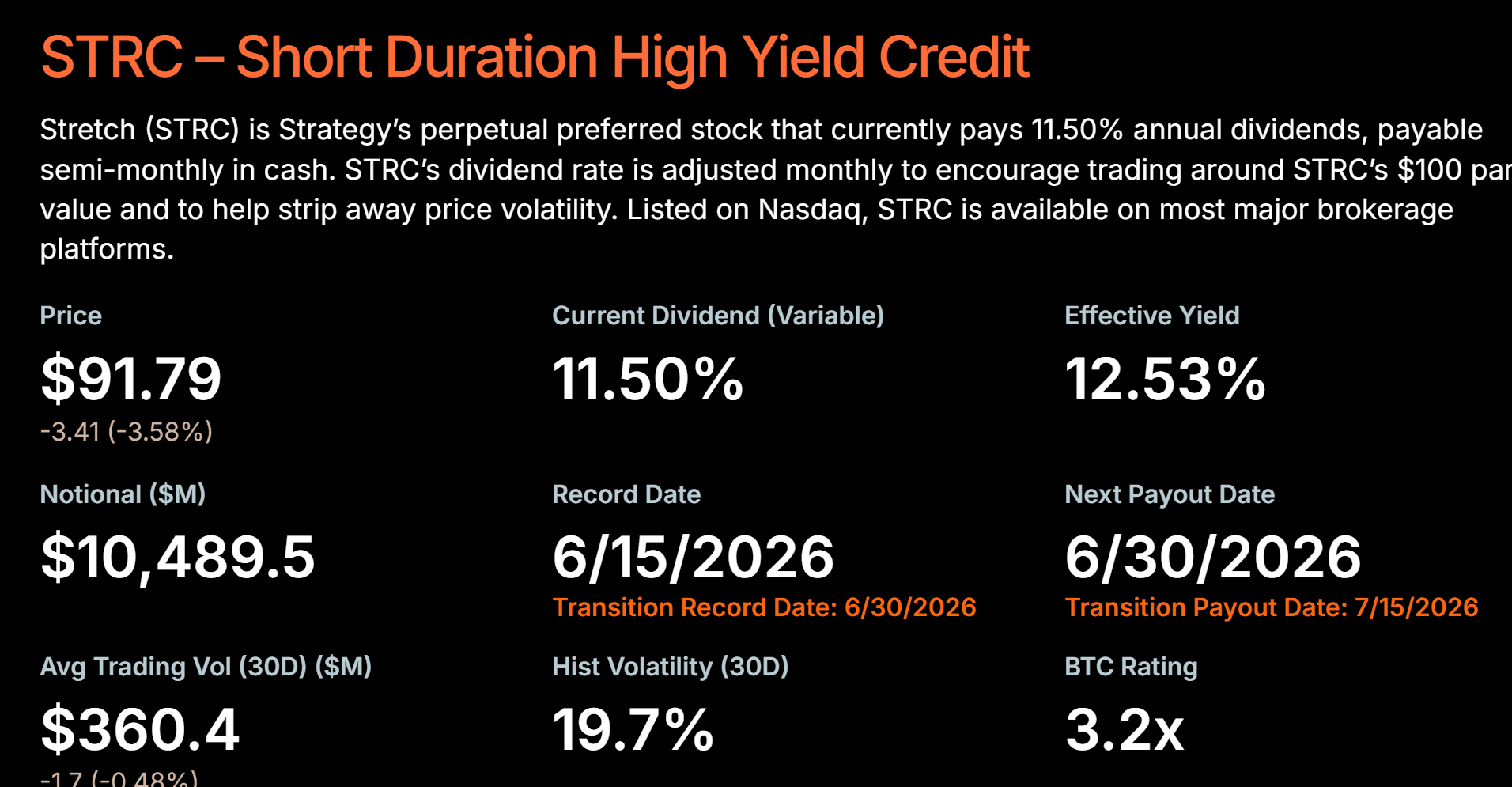
Stretch (STRC) has recently traded around $91-$95, still well below its $100 par value despite yields of more than 12%. Despite yields exceeding 12%, investors are pricing in Strategy-specific risks over Bitcoin exposure, eroding confidence across its capital structure.
That weakness suggests markets are pricing risks beyond Bitcoin’s direction. Meanwhile, pressure across Strife (STRF) and Stride (STRD) points to similar concerns as investors appear increasingly focused on leverage, dividend sustainability, and future issuance.
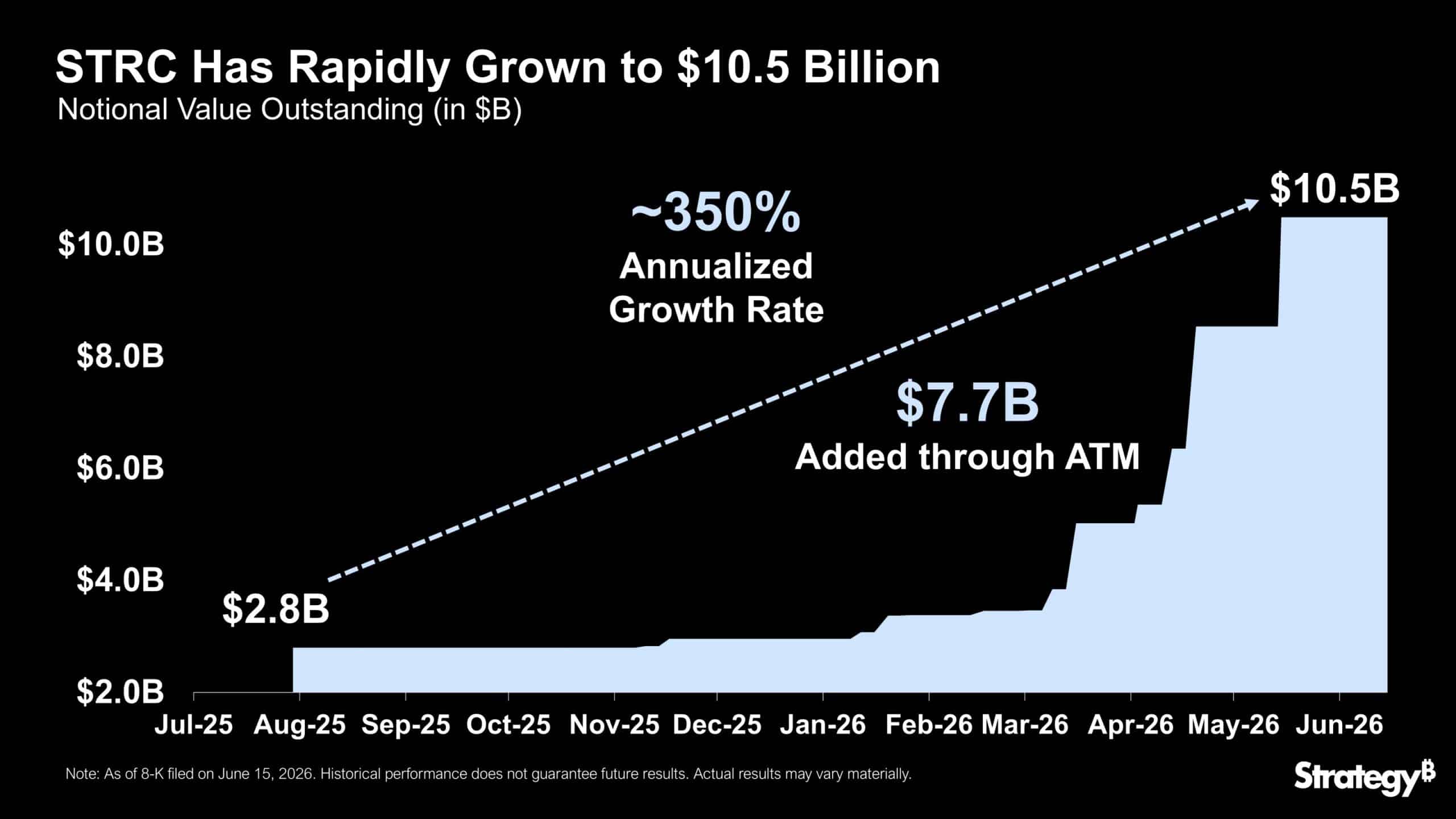
Meanwhile, STRC’s rapid growth from $2.8 billion to $10.5 billion suggests issuance is outpacing confidence, leaving markets wary of future obligations.
Although Strategy still holds roughly 847,000 BTC, confidence across the capital structure remains fragile. Hence, markets are demanding higher risk premiums for securities tied to the Treasury.
Unless liquidity concerns ease, these securities may continue lagging even if Bitcoin extends its recovery.
Rising yields fail to restore confidence
Weakness across Strategy’s preferred securities is increasingly becoming a confidence issue rather than a yield issue. At press time, STRC traded near $91.79, while STRD remained around $66-$68, pushing effective yields above 12% and 14.95%, respectively.
Normally, such yields would attract buyers. Instead, investors continue demanding deeper discounts. Meanwhile, cash reserves have grown to roughly $871 million following a recent debt repurchase.
However, markets appear more focused on future obligations than current liquidity. As a result, investors are questioning long-term dividend coverage, leaving the preferred stacks under persistent pressure despite improving cash buffers.
The market’s focus is gradually shifting from dividend support toward broader balance-sheet execution. Investors appear to be looking for stronger financial flexibility and reduced dependence on external capital.
Meanwhile, continued liability management and consistent liquidity growth could help rebuild confidence across the preferred stack. Bitcoin still provides the foundation of the structure, yet markets seem increasingly concerned with how that value is managed.
If Strategy demonstrates greater resilience through different market conditions, sentiment could improve. Until then, preferred securities may remain sensitive to execution risks and investor caution.
Final Summary
- Strategy-linked securities STRC, STRF, and STRD continue lagging Bitcoin as capital structure concerns outweigh treasury strength.
- Restoring confidence will likely require stronger liquidity coverage, not simply higher yields or dividend support.