Thailand tightens crypto rules, targets P2P transfers and self-hosted wallets: Details
Global crypto travel rules are meant to strip off the anonymity and trace illicit flows.


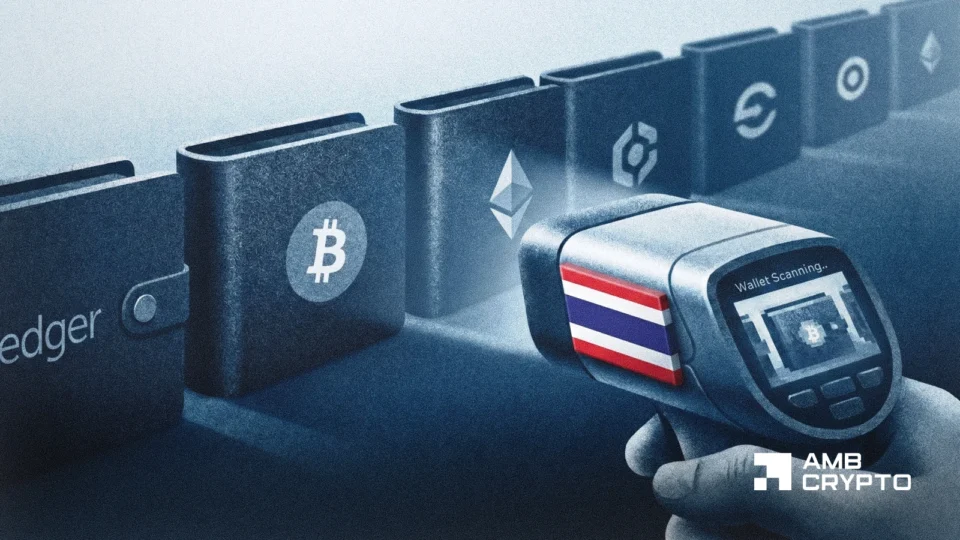
Thailand plans to tighten crypto rules for P2P crypto transfers and self-hosted wallets from 2027.
On the 2nd of September, the country’s market watchdog, Thailand’s Securities and Exchange Commission (SEC), published a new risk framework called the “Travel Rule for Digital Assets (TRDA).”
Commenting on the motive behind the new regulatory move, the SEC said,
To ensure that digital asset business operators (DA operators) have sufficient information to assess and manage money laundering risks in line with international standards.
The watchdog added that the plan will help prevent misuse of crypto platforms as channels for money laundering and related crimes.
According to the new guideline, the SEC wants licensed crypto platforms in Thailand to identify customers and their counterparties, including ownership of self-hosted wallets (self-custody).
Additionally, exchanges must submit information on the sender and beneficiary of each crypto transaction. And this data must be held for at least five years to allow authorities to quickly retrieve and examine it whenever necessary.
The regulations will take effect on the 27th of February, 2027. The regulator noted that the rest of H2 2026 is enough time for players to develop systems to ensure compliance with the latest guidelines.
How FATF is shaping global crypto rules
The update isn’t surprising. Most of the countries that had no prior rules, including the African region, either have a codified crypto framework or are in the process of drafting one. This is designed to help lift them from the Financial Action Task Force’s (FATF) greylist.
FATF is a global watchdog for anti-money laundering and terrorism financing. It also drafts standards for the same.
Although crypto accounts for a small portion of global illicit flows, its partial anonymity feature makes it attractive for some criminal elements.
In particular, how to trace P2P transfers and DeFi flows (including those from self-custodial wallets) has bothered regulators for a while. The best way to do so, at least as of 2026, is to time it when a user wants to cash out via an exchange or any licensed virtual asset service provider (VASP).
As such, most of the crypto travel rules around the globe, including Thailand’s, have turned crypto cashout points into a chokepoint to enforce anti-money laundering (AML) rules. While the intention is commendable, it also throws privacy out the window.
Notably, the European Union (EU) has similar crypto AML plans by mid-2027. In fact, South Africa has already activated its strict exchange capital controls linked to crypto funds.
Worryingly, the punishment for violating these crypto AML rules can be punitive to the extent of banning an entire country or region. It will be interesting to see how the industry navigates this changing regulatory landscape from 2027.
Final Summary
- Thailand wants crypto platforms to identify users, their P2P transfers, and self-custody wallets from 2027
- This is part of a global anti-money laundering campaign driven by the FATF.