South Korea’s stablecoin push raises questions about a potential crypto rally
South Korea’s stablecoin move could reshape the race beyond USDT and USDC.



The discrepancy between technicals and fundamentals isn’t exclusive to L1s anymore.
The stablecoin market is showing a similar trend this year. Technically, Tether’s USDT is down over 2.5% over the past 12 months. And with USDT accounting for more than 50% of the total stablecoin market, its outflows are still a major contributor to the stablecoin market’s almost $8 billion drop from its yearly opening market cap of $315 billion.
However, despite the outflows, stablecoin adoption has continued to gain ground. Notably, South Korea’s government and the Bank of Korea are planning to amend the Foreign Exchange Transactions Act this year to recognize stablecoins as payment instruments, underlining growing regulatory support around stablecoins.
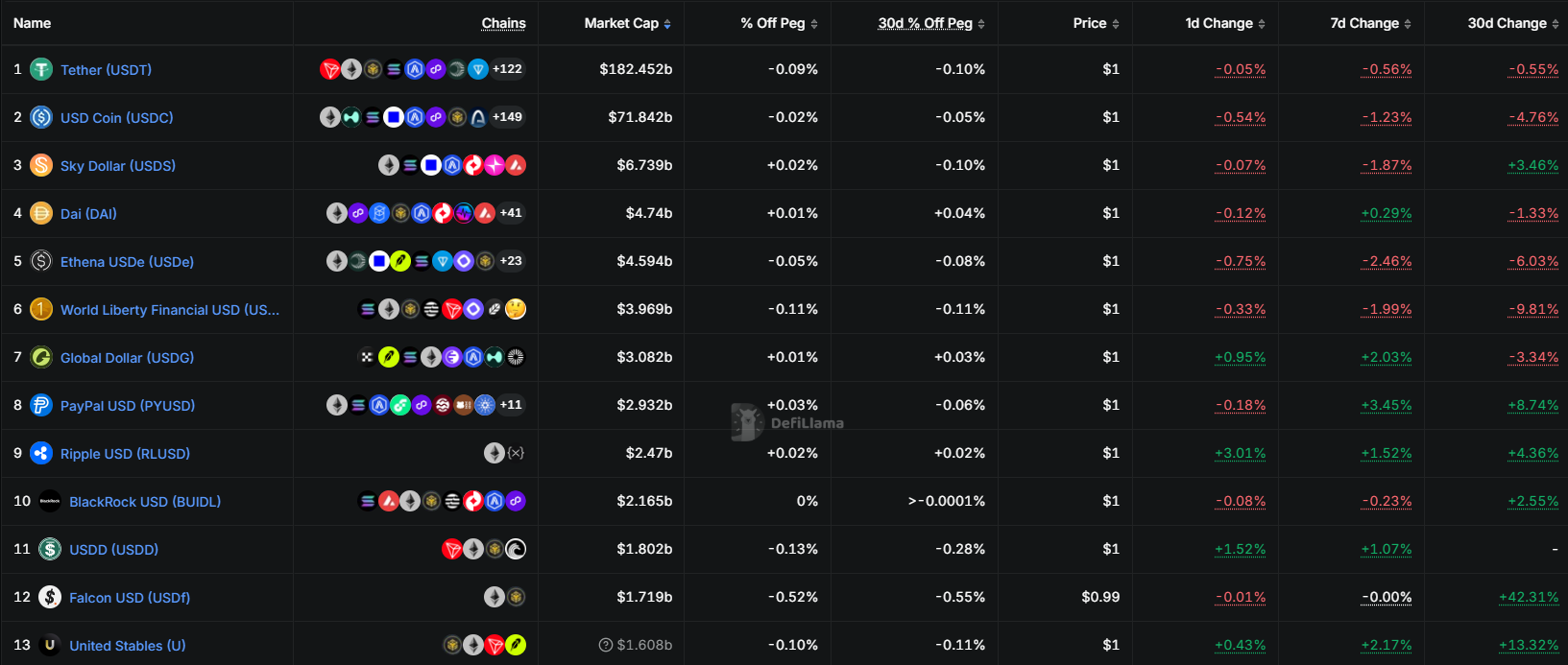
To understand why this divergence matters, the aforementioned chart could give us a clearer picture.
According to DeFiLlama, OG stablecoins have been recording a continuous outflow of capital over the last 30 days, with Circle-issued USDC recording a total of 4.7% net decrease. On the other hand, newer products, such as RLUSD, BUIDL USD, USDf, and U, have been witnessing inflows. In particular, Falcon USD [USDf] registered a whopping hike of over 42%, pushing its market value above $1 billion.
Notably, this is where South Korea’s move matters. The recognition of stablecoins as a means of payment may stimulate their use and demand. Given that some new stablecoins have already gained popularity, favorable regulations may drive their adoption and popularity to even greater heights. Now, the big question is whether these newer players can turn growing adoption into sustained market growth.
South Korea’s stablecoin push sparks debate over next crypto rally
South Korea’s stablecoin move is coming at a critical time.
Capital flows have been shifting, and unlike previous cycles where macro FUD sent investors to safe havens, gold and silver are under pressure. The spot price of gold was below $4,000/oz for the first time since 29th July, while silver was down 54% from its January all-time high and at its lowest since November.
Bitcoin, on the other hand, has been performing reasonably well. In fact, at the time of writing, BTC was up more than 23% from its late July low of $65K, even though it’s still around 36.5% below its $126K peak.
Compared to gold and silver, BTC has been flashing signs of some relative strength too. The catch? The stablecoin market cap has fallen back to its July levels over the same window, and still seemed to be about 5% below its $321 billion peak.
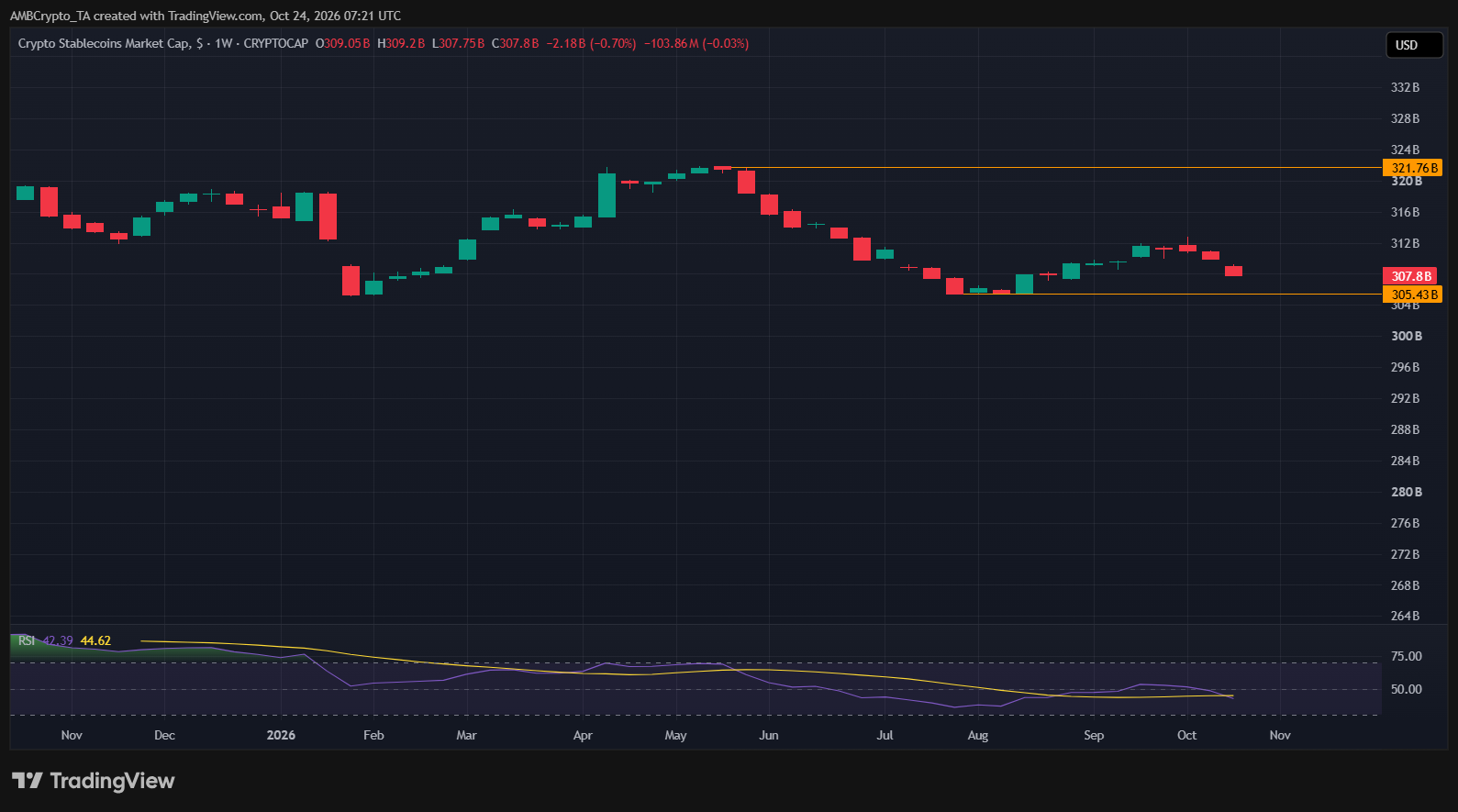
In short, crypto has been holding up despite stablecoin liquidity weakening across the board.
According to AMBCrypto, this is where South Korea’s move becomes important, as it adds to the growing gap between stablecoin adoption and market performance. BTC has exhibited resilience despite a drop in stablecoin market cap, suggesting that “adoption-driven” momentum could be supporting the market even as liquidity takes a hit.
Ultimately, South Korea’s support of stablecoins appears to be part of a broader market shift. Even though liquidity has been under pressure, rising adoption and growing interest in newer players suggests the market is evolving beyond its established leaders.
Combined with Bitcoin’s relative strength, this divergence might highlight how regulatory progress and adoption could shape the next phase of crypto market growth.
Final Summary
- Stablecoin adoption has been growing despite market outflows, with newer players gaining traction.
- South Korea’s stablecoin push could boost adoption as Bitcoin shows resilience despite falling liquidity.