BIS warns of ‘digital dollarization’ – What it means for USDT and USDC
Is USD stablecoin dominance a global sovereign monetary crisis in awaiting?



Bank for International Settlements (BIS) has changed its position on stablecoin payments.
On the sidelines of the Jackson Hole event, BIS head Pablo Hernández de Cos reiterated that stablecoins are not a credible payment method at scale compared to tokenized deposits (bank-led wholesale alternatives).
In particular, de Cos warned that U.S dollar stablecoins pose a risk to monetary sovereignty.
The growing adoption of dollar-pegged stablecoins has also raised concerns in some jurisdictions about monetary sovereignty and the potential for digital dollarization.
According to him, the widespread adoption of USD-based stablecoins outside the U.S would weaken the local domestic monetary policy of most countries.
Is BIS stablecoin risk valid or overblown?
Currently, the USD-based stablecoins dominate over 90% of the market supply, led by Tether and Circle.
But they are issued by private tech firms and mostly used by retail and some businesses. Notably, there’s significant traction in some emerging markets with high demand for the U.S dollar or collapsed local currencies.
Already, Tether’s USDT is widely used in most South American countries. In fact, Bolivia is considering making it a local tender.
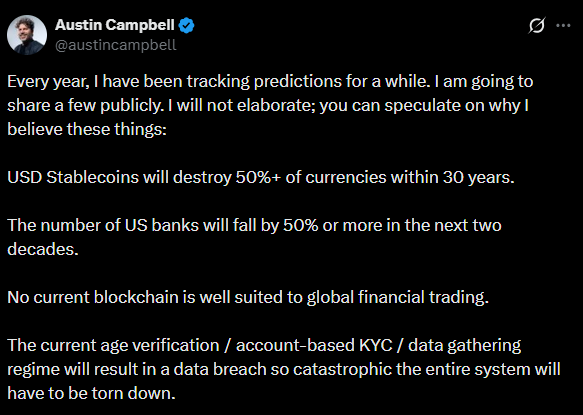
However, the BIS’s warning seems like a plausible risk that has been echoed by other analysts too. Austin Campbell, adjunct professor at Columbia Business School, shared a similar concern and noted,
USD stablecoins will destroy 50%+ of currencies within 30 years.
For BIS, stablecoins have limited commercial use. Instead, the global financial institution, commonly known as the central bank for central banks, vouched for bank-issued alternatives (tokenized deposits).
The BIS head de Cos believes tokenized deposits eliminate the inherent risk against sovereign monetary control associated with stablecoins.
Tokenised deposits offer a more direct path to harness tokenisation while preserving the monetary system’s foundations.
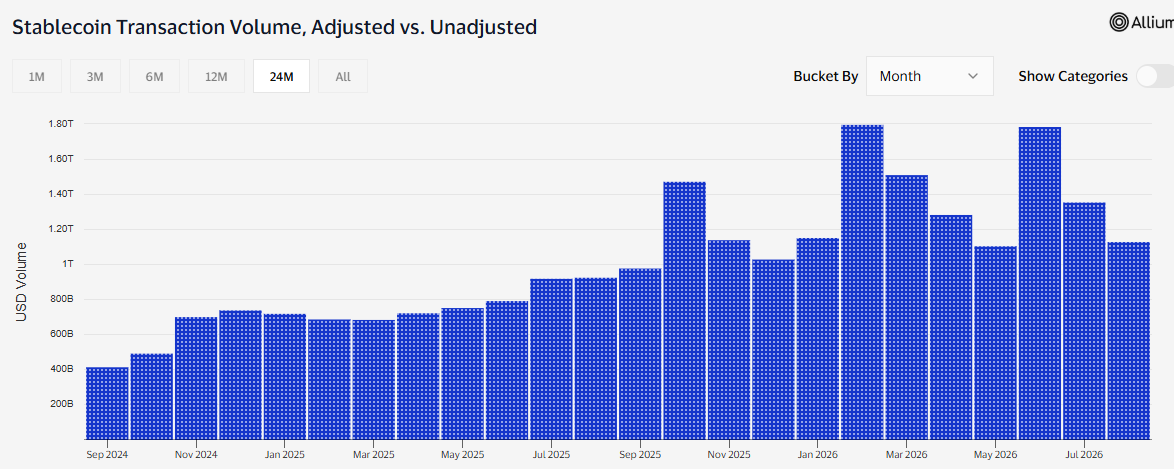
That said, stablecoin transactions dropped by 37% this summer, declining from $1.8T at the end of June to $1.13T in August. In other words, broader adoption and traction eased slightly.
Banks such as JPMorgan are already testing their tokenized deposits. Similarly, the ECB is pushing for central bank money to go on-chain, according to a Bloomberg report. Put differently, tokenized deposits and central-bank-issued money could hit the market soon.
But it remains to be seen whether tokenized deposits will rival the already entrenched USD-stablecoins.
Final Summary
- BIS head reiterated the risk of USD-based stablecoins and downplayed their global scale of usage
- Stablecoin volume dropped 37% this summer, with August making its 3-month low since June.