PYTH is the governance token of the Pyth Network, a decentralized oracle network. The network collects real-time financial data from crypto, forex, and commodities markets and delivers it to decentralized applications (dApps) and smart contracts.
It plays a key role in the blockchain ecosystem by bridging traditional financial markets and blockchain networks through real-time financial data.
Pyth Network was founded by the team of Jump Trading (the world’s leading high-frequency trading firm) and was announced on the 21st of April, 2021.
Primarily, the network provides highly accurate, institutional-grade pricing data to the DeFi market, including crypto lending platforms, exchanges, prediction markets, forex trading platforms, and other financial applications.
In August 2021, Pyth Network launched its mainnet on the Solana blockchain. Later, in July 2023, it became independent from Jump Trading and established Douro Labs.
The core founders are Michael Cahill, Jayant Krishnamurthy, and Ciaran Cronin.
Talking about PYTH, it serves as both a governance and utility token. This means that the token’s holders can participate in on-chain governance voting.
In simple terms, PYTH token holders are like a board of directors for the network, with the right to publicly vote on major decisions on the blockchain, ensuring that no single entity has complete control over the protocol.
To ensure speed and low transaction costs, PYTH operates on the Solana blockchain, which is well-suited for a network that needs to update price feeds and financial data hundreds of thousands of times per day.
Pyth Network generates revenue like traditional financial data providers such as Bloomberg, which charge banks and traders for access to financial data.
Instead of serving traditional financial institutions, the network charges blockchain applications, protocols, and institutions for access to real-time price feeds and other financial data. As network adoption grows and more applications use its data services, its revenue potential also increases.
So far, the network has over six revenue streams: Pull Oracle Fees, Pyth Pro Subscriptions, Express Relay Fees, Entropy Fees, Pyth Data Marketplace, and U.S. Government and Macro Data Publishing.
One key development that Pyth Network recently introduced is the PYTH Reserve program, launched in December 2025. The DAO allocates 33% (or one-third) of all protocol revenue to buy back tokens from the open market through the PYTH Reserve program.
This means the more revenue the network generates, the more tokens can be purchased from the open market.
Besides all this, Pyth Network has attracted major investors from both the traditional finance and crypto sectors. Investors from the crypto industry include Jump Trading, Virtu Financial, Multicoin Capital, CoinShares, as well as the now-defunct FTX and Alameda Research.
Meanwhile, investors from the traditional finance sector include Fidelity and Euronext. Their involvement suggests that major Wall Street and institutional players are also taking Pyth Network seriously.
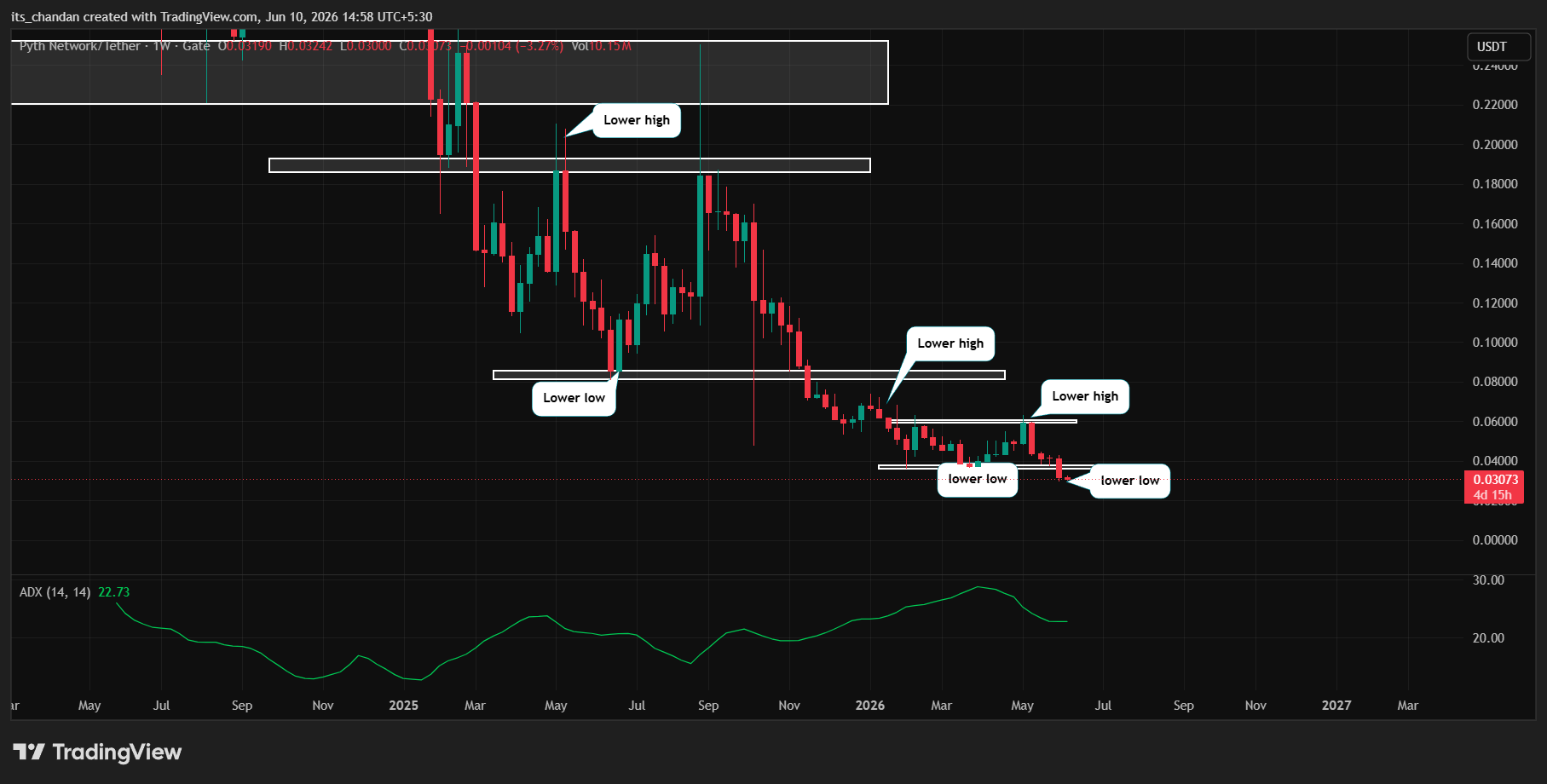
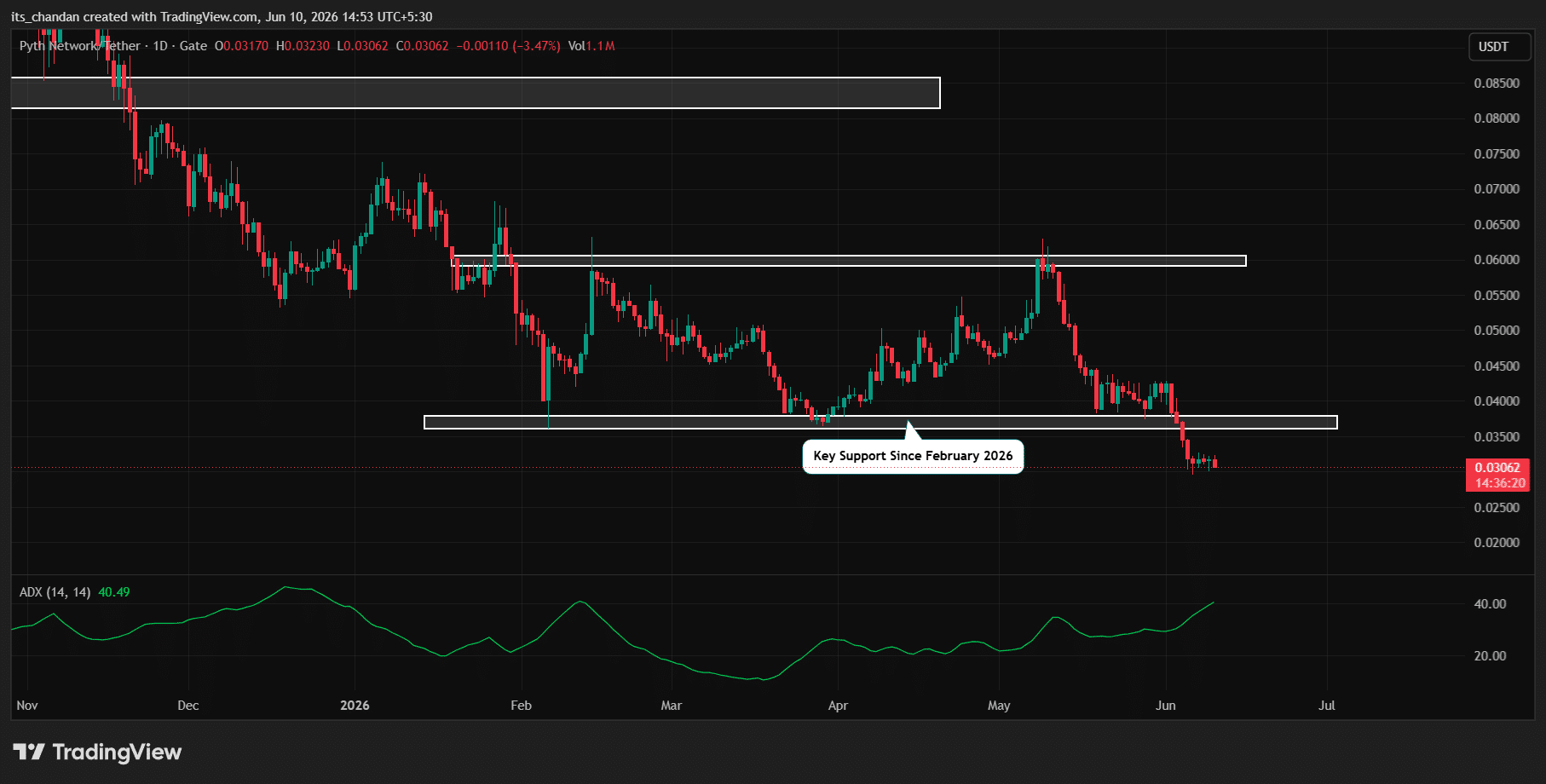
Despite these positive developments, one risk worth noting is the recent unlock of 2.13 billion PYTH tokens, valued at approximately $92 million.
This unlock, which occurred in May 2026, increased the token’s circulating supply by nearly 37% and intensified selling pressure amid ongoing geopolitical tensions in West Asia.
However, the network’s buyback program may help offset some of this selling pressure by purchasing PYTH tokens from the open market.